

What does basic obedience training actually look like for a chihuahua, and how is it different from training a larger breed? In one sentence: it is the same reward-based work, run in shorter sessions with smaller treats, with a closer attention to body language because a small dog signals discomfort sooner and louder than a Labrador. The mechanics of sit, stay, and come are not breed-specific; the cadence and the reinforcement are.
I am going to walk through the three foundational cues, the practical tweaks for a small dog, and the common mistakes I see in chihuahuas specifically.
Sit, the gateway cue
Sit is the simplest cue and is usually the first one I teach.
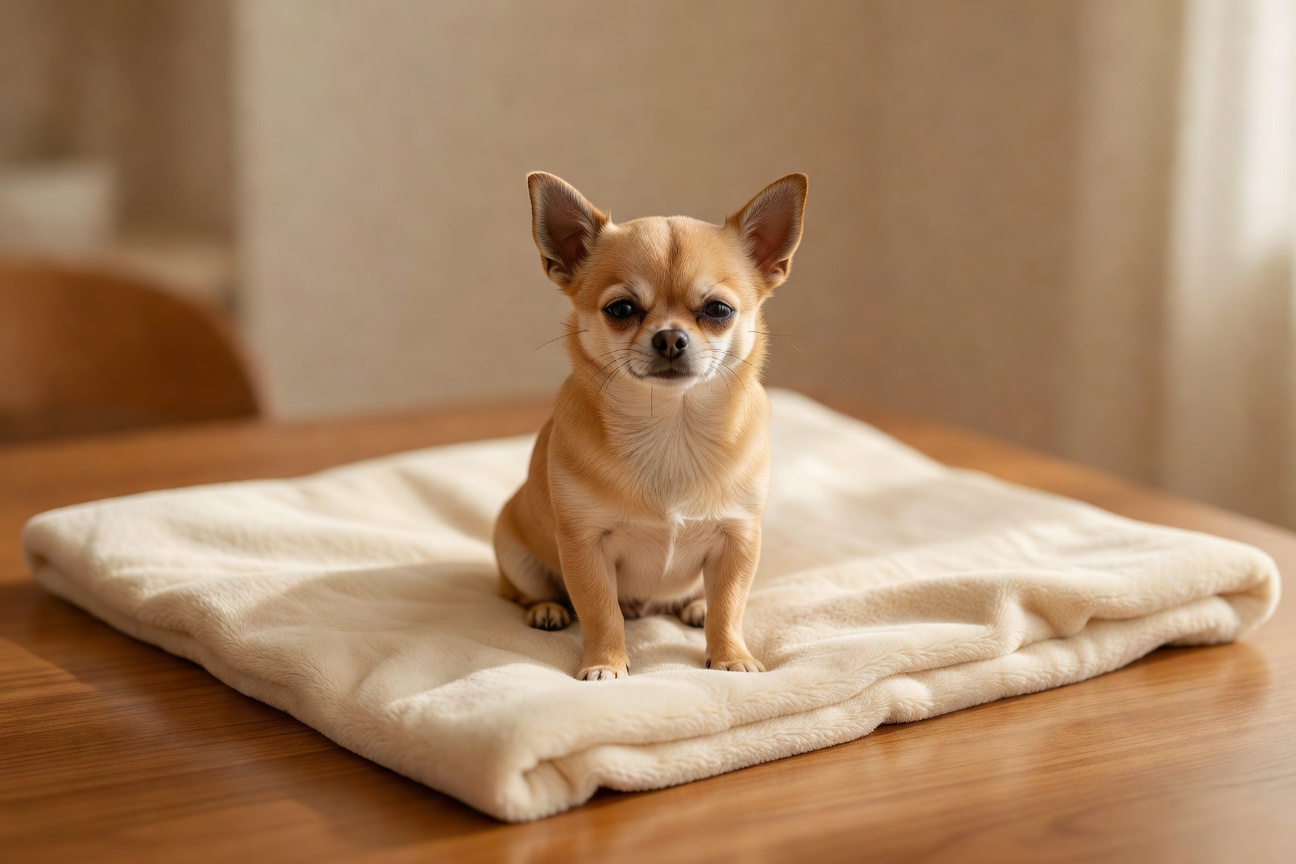
- Hold a small treat at the end of your dog’s nose.
- Move your hand slowly back over the head; the dog’s head follows up and back, and the rear naturally lowers.
- The moment the rear hits the floor, mark (with a clicker or a verbal "yes") and reward.
- Repeat five times. Stop the session.
- Add the verbal cue "sit" once the body movement is reliable, usually after a dozen successful repetitions.
A practical tweak for chihuahuas: keep the treat below your shoulder height. Reaching up at a small dog with a hand from above triggers a defensive lean in many small breeds; you do not need height for this lure.
Stay, the impulse-control cue
Stay is built on three variables, taught one at a time: duration, distance, and distraction. The most common mistake I see is owners cranking all three at once.
- Duration first. Cue sit, count to two, mark and reward while the dog is still sitting. Build to ten seconds in five-second increments.
- Distance second. Once duration is reliable, take a step back, wait, return, mark and reward. Build distance in single-foot increments.
- Distraction third. Once duration and distance are solid in a quiet room, add a single mild distraction (a soft sound, a person walking past). Stay generous with reinforcement.
If the dog breaks at any point, that is information; the variable you just added was too much. Drop back to the previous level and rebuild.
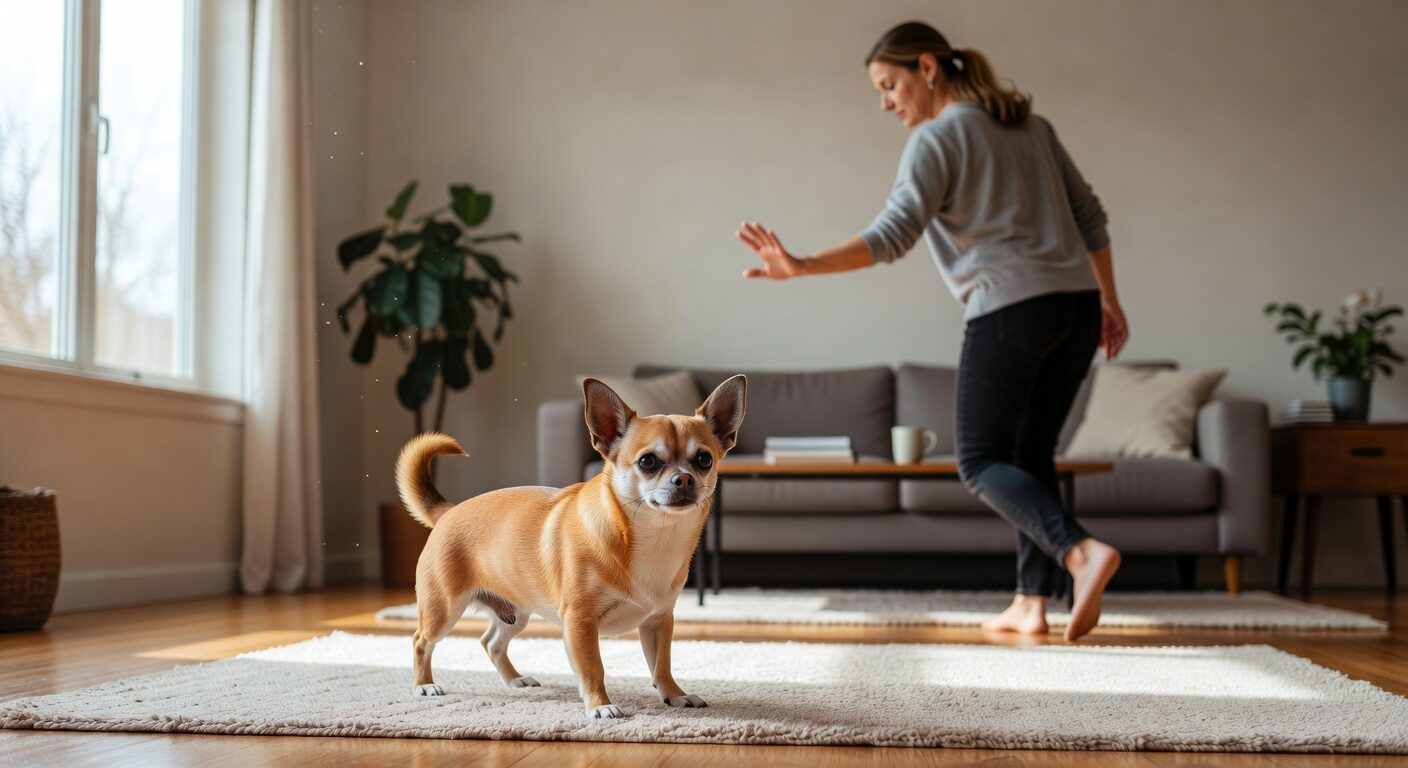
Come, the safety cue
Come, in my experience, is the cue with the highest stakes and the highest rate of poisoning by accident. The most common mistake is calling the dog and then doing something the dog does not like (clipping the leash to leave the park, putting on a harness, ending playtime). After a few repetitions of that, the dog learns that "come" predicts the end of fun, and the response goes downhill.
The clean version of the protocol:
- In a low-distraction environment, say the dog’s name in a happy tone, then "come."
- The moment the dog moves toward you, mark.
- When the dog arrives, reward with multiple small treats, not just one.
- Release the dog back to whatever she was doing.
The release back is the part most owners skip. If "come" reliably means "treats, then back to fun," the recall stays strong. If "come" means "treats, then leave the park," it weakens within a few repetitions. The AVSAB position on humane training covers the underlying mechanics.
Chihuahua-specific tweaks
A few small adjustments that make the protocol fit the breed:
- Smaller treats. A chihuahua’s daily caloric budget is small; a training session can blow through it. Pea-sized pieces of soft training treat are the right size.
- Lower hands. Hand cues from above produce ducking and avoidance in many small dogs. Cue from below the shoulder.
- Two-minute sessions. A chihuahua’s attention budget for explicit training is shorter than a Labrador’s. Two minutes, twice a day, beats one ten-minute session.
- Watch for stress signals. Lip licking out of context, head turn-away, lifted paw. If you see two or more, end the session on a small win and try later.
- Avoid punishment-based corrections. Aversive methods increase fear and reactivity in small breeds; on the available evidence, they make the picture worse over a year, not better.
Common mistakes I see in chihuahuas specifically
- Teaching "no bark" without teaching a replacement behavior. The dog escalates somewhere else.
- Reaching down quickly to pick up the dog at the moment of arrival on "come." This poisons the recall.
- Practicing in only one room. The cues do not generalize; train in three or four locations.
- Calling the dog "opinionated" or similar to describe a dog who is not performing. The dog is signaling that the variable was too high; she is not, in any documented sense, defying you.
A few stress-reduction protocols sit alongside obedience training; the calmer the dog, the faster the cues take. Ongoing socialization belongs in the same toolkit as obedience; the cues are easier to teach in a dog who is comfortable in the world.
Generalization, the boring secret of reliable cues
A cue that works in your kitchen and nowhere else is not, in any practical sense, a cue. The single biggest gap between dogs who appear well-trained and dogs who appear unresponsive in public is generalization: practicing the cue in different rooms, different houses, different weather, different times of day. Most owners run all their training in one location and then are surprised when the dog ignores the cue at the park.
The fix is built into the schedule: every fourth or fifth practice session, change one variable. A new room, a different sidewalk, a friend’s living room. Reward as if the dog is just learning the cue, because in the new context she effectively is. Within a few months, the cue genuinely works across contexts, which is what reliability actually means.
One thing to do this week
Pick the easiest cue (sit, for most dogs) and run two-minute sessions twice a day for five days. By Friday, your chihuahua is reliably sitting on cue in a quiet room. That is the foundation; everything else is just adding variables. The work is small. The compounding is large.
Gear That Works backpack
Harness (Not Collar)
A step-in harness is safer and more comfortable.
Lightweight Leash
4–6 feet gives freedom without losing control.
Treat Pouch
Keep rewards accessible and distraction-free.
ID Tag & Microchip
Always be prepared in case of separation.
Trainer Tip: Success on walks starts with reading your Chihuahua's signals and respecting their pace.
Was this guide helpful?
Was this guide helpful? Save the guide. Share it with one other chihuahua owner this week.
favorite