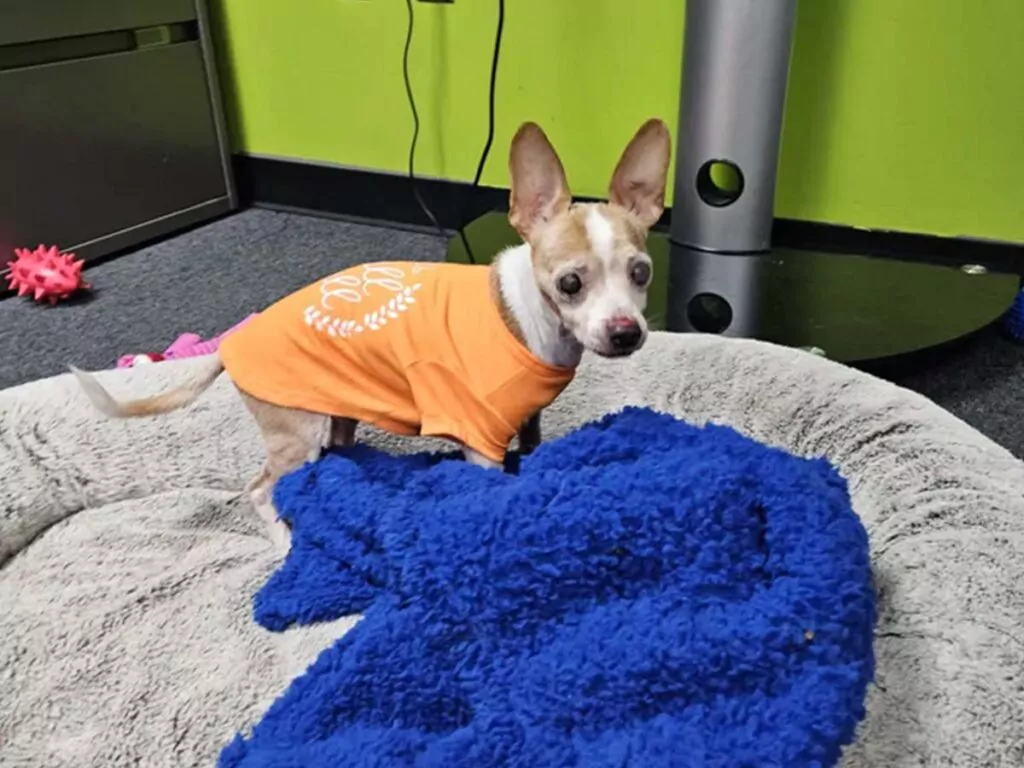
On a Tuesday morning in late January, behind a strip mall in Phoenix, Arizona, a maintenance employee named Carl Reyes opened the lid of the green dumpster behind a coffee shop and heard, from somewhere inside it, a small dry cry. He stopped. He looked. There was a soft-sided box, taped at the seams, in the corner under a pile of cardboard. He pulled it out. He cut the tape with a small folding knife. Inside the box was a chihuahua, approximately five years old, with cataracts in both eyes that the rescue veterinarian would later determine had rendered him almost completely blind.
Tag @ChihuahuaCorner if you know a chihuahua who needs a second chance. We follow up on every lead we can verify.
favoriteCarl carried the box to his truck. He drove to the regional animal control office, three miles east, and walked it in.
This is the story of how a chihuahua named Wilson got a name and a household, and the small chain of phone calls and short drives that put him there.
The intake
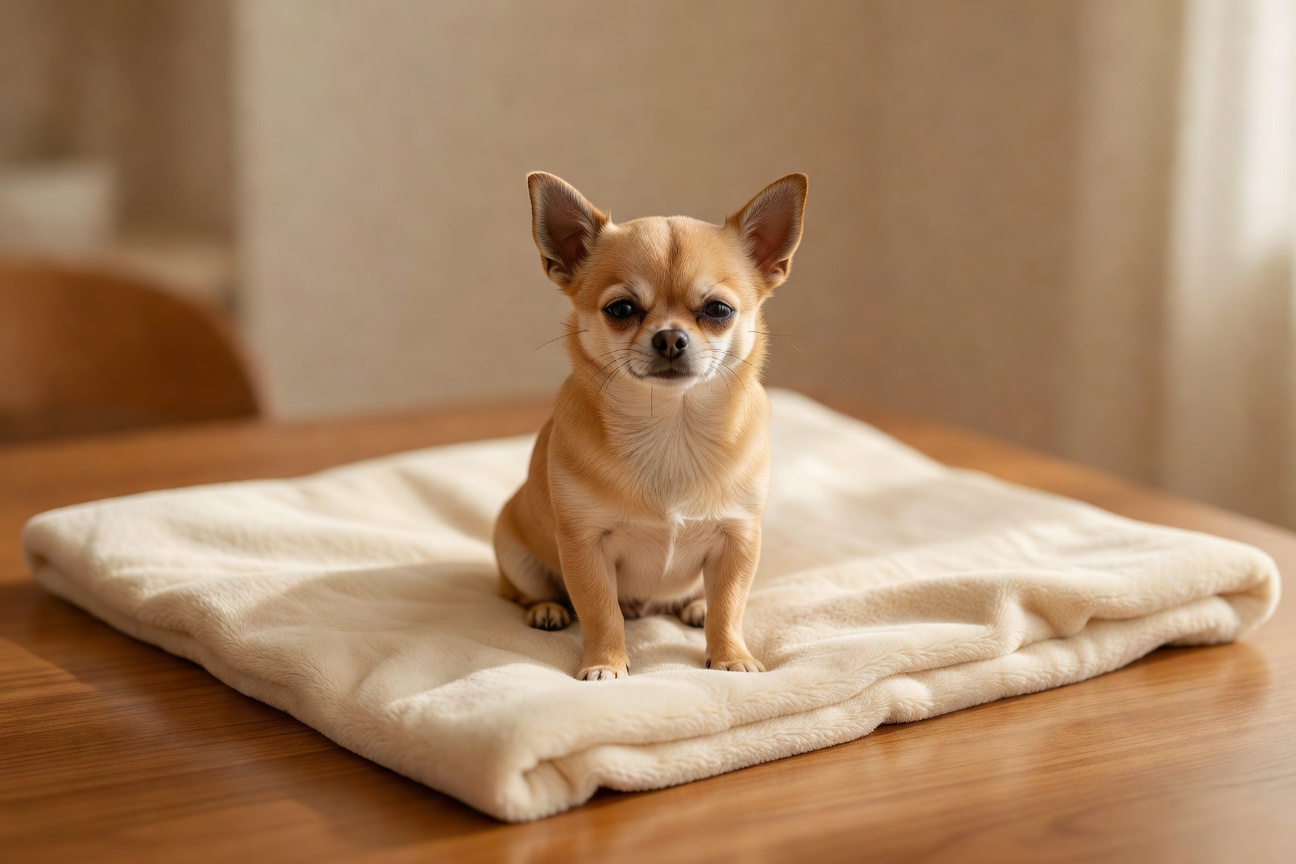
The animal control officer, a woman named Theresa Galbraith, has been at the office for nineteen years. She accepted the box, performed an initial intake, took two photographs, and called the regional small-breed rescue group whose number is third on her speed dial. The call was answered, on a Tuesday at 9:14 a.m., by a foster coordinator named Margaret Liu, who had two empty foster slots and one of them with a couple who specifically take blind and deaf dogs. By 11 a.m., Wilson was in a soft crate in the back seat of Margaret’s hatchback, and by 2 p.m., he was in a quiet living room in Tempe with a couple named Hal and Ana.
I am going to skip the parts of this story that involve speculating about how Wilson got into the box. The investigation is open; the speculation is not useful. What is useful is the cadence of the intake.
The medical course
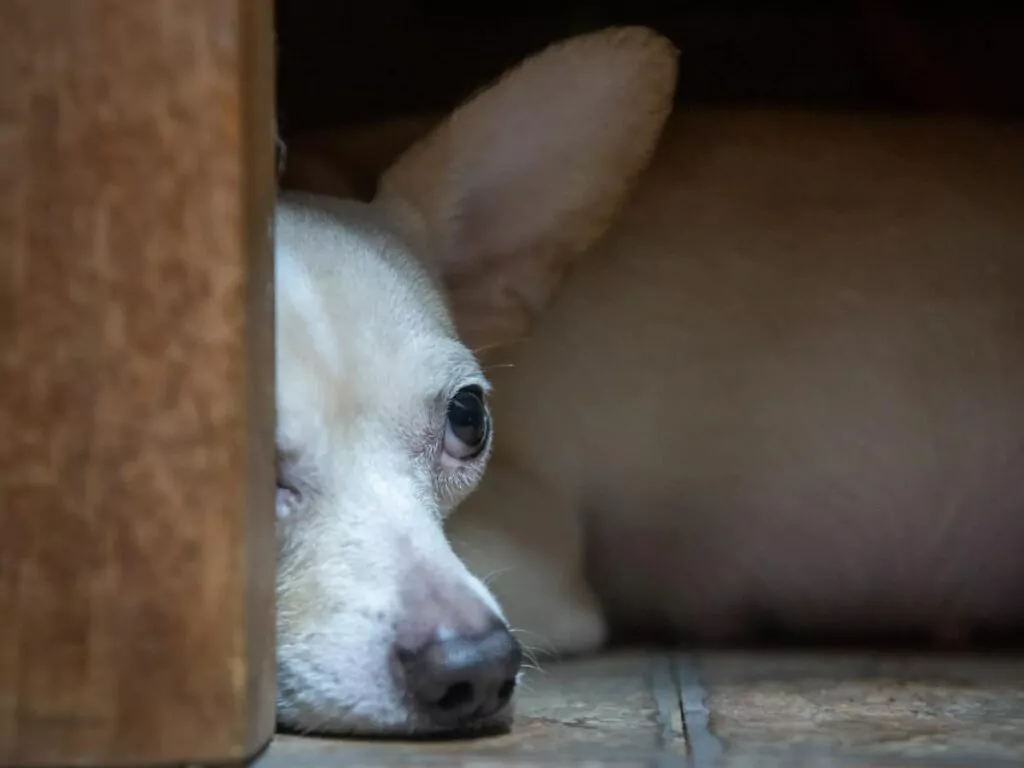
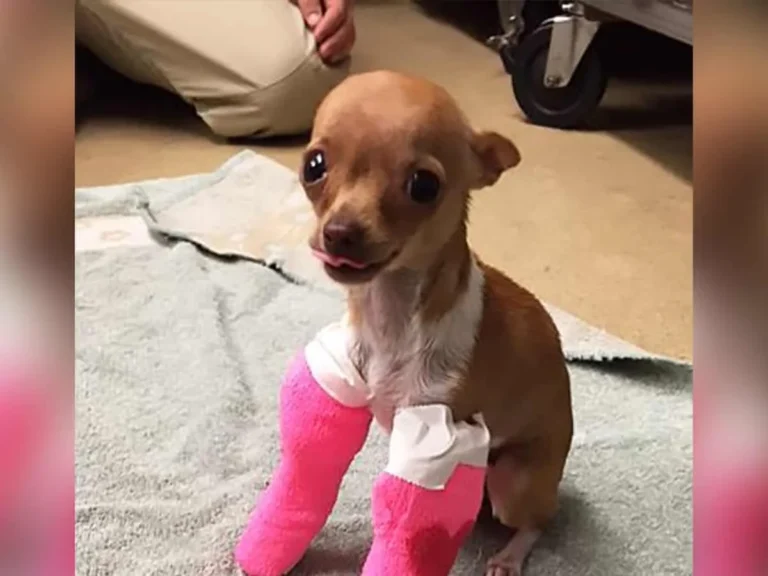
Hal and Ana drove Wilson to the rescue’s contracted veterinarian, a Dr. Helen Tao, the next morning. The exam found bilateral mature cataracts (functionally blind), moderate dental disease (he was missing several molars), an underweight body condition (3.2 pounds; the breed range is 3 to 7), and otherwise no immediate medical concerns. Bloodwork was unremarkable for his age. He was estimated at five years.
Wilson’s care plan, over the following six weeks, was straightforward. A dental cleaning under anesthesia, with three extractions. A senior bloodwork panel, repeated at four weeks. Slow weight gain to 4.5 pounds on a calorie-controlled small-breed diet. Daily handling, including paw, ear, and mouth, to build tolerance for medical care he had presumably not received. A consistent route through the house, with no rearranged furniture; Hal and Ana taped down a small mat at the entry to each room, so Wilson could feel the boundary with his paw and orient.
By week six, his weight was 4.7 pounds. His coat had filled in. He was sleeping on a small heated bed at the foot of Hal and Ana’s bed and had begun, on his own, to follow Hal to the kitchen at breakfast.
What care for a blind chihuahua actually looks like
A few practical notes from Dr. Tao and from Hal and Ana, since this article is going to be read, in part, by people considering a similar dog.
- Consistency of layout. Furniture stays where it is. Food and water bowls stay in the same spot. The dog learns the geography quickly and depends on it.
- Verbal cues, calmly given. A blind dog navigates by sound and smell; "step" before a door threshold, "stop" before an obstacle, said in the same tone, become reliable cues within a few weeks.
- Approach with sound. Speak before you reach to touch. A startled blind dog can react defensively; a sound-cued approach removes the surprise.
- Texture markers. Different rugs in different rooms; a textured mat at each doorway. The dog reads the floor with her paws.
- Veterinary cadence. Twice-yearly exams. The American College of Veterinary Ophthalmologists can refer for advanced cases; for a senior dog with mature cataracts, surgical correction is rarely the right choice, but the conversation belongs to the specialist, not the internet.
Pepito’s adoption story, which I wrote in the fall, ended with a similar sentence; the chihuahua who got his first bed at nine years old ended with another. The pattern is the same. The geography changes. The dogs change. The cadence does not.
Adoption finalized
Hal and Ana submitted the adoption paperwork at week eight. The rescue ran the standard reference and home checks. By week ten, Wilson was officially theirs. The maintenance employee who opened the dumpster, Carl Reyes, was sent a small framed photograph of Wilson on his new bed, with a note from Margaret Liu thanking him for the call. He keeps the photograph on his desk at the strip mall, where I saw it when I drove out to talk to him.
"I almost didn’t open the lid," he told me. "I had already passed it once."
He had opened it because he had heard something he could not, on the second pass, ignore. This is, in my experience, almost always the entire story. There is rarely an inspirational summary; there is usually a phone call, a short drive, and a couple in Tempe who had already cleared a corner of the living room.
The quiet ask
If you have read this far, the ask is small. Save the non-emergency line for your local police, and the number for your nearest animal control. Save the number for the small-breed rescue group nearest you, if your area has one. The next time you pass a dumpster, a yard, or a parked car and notice something you cannot, on the second pass, ignore, you will have what Carl had, which is a number to call and the willingness to call it.
Wilson is, as of this writing, asleep on the bed at the foot of Hal and Ana’s bed. The mat at the bedroom doorway has been replaced once, in week seven, with a slightly thicker rug. He found it the first time on the first try. The system is working.
How You Can Help volunteer_activism
Five concrete ways to help. Pick one and start this week.
Adopt
Adopt a chihuahua from a local rescue or transport network.
Foster
Foster a dog while the rescue finds a permanent home.
Donate
Recurring monthly donations cover the bills rescues plan around.
Volunteer
Offer your time and skills to a rescue near you.
Share
Share the dogs your local rescue is trying to place this week.
Frequently Asked Questions help
help_outline How do I start fostering a chihuahua? expand_more
Find the rescue closest to you, send in the foster application, and ask for a home check date. The process usually takes two to four weeks.
help_outline Why are chihuahuas so often in shelters? expand_more
Southern California shelter intake has been the largest single source for two decades, driven by backyard breeding and inconsistent spay-and-neuter access. Transport programs move dogs north to foster networks across the country.
help_outline What does a rescue actually need from a donor? expand_more
Recurring monthly support, foster homes, and in-kind donations of crates and exercise pens. Most rescues list the same three needs in the same order.
Share Hope’s Story Your share can be the reason another small dog gets home.
favorite