

If your chihuahua is nipping or biting, the research is clearer than the popular advice suggests. Mouthing in puppies is normal developmental behavior; in adult dogs, it almost always traces to fear, frustration, or pain. The 2008 AVSAB position statement on the use of punishment in animals is unambiguous: the dominance-theory framing that produces "show her who is alpha" advice is wrong, both in its premise and in its outcomes. The good news is that what actually works is straightforward, low-cost, and achievable at home.
Why Your Chihuahua Is Nipping
There are four common causes, and each calls for a different response. Mis-diagnose the cause and the intervention will not work.
1. Puppy mouthing (under six months)
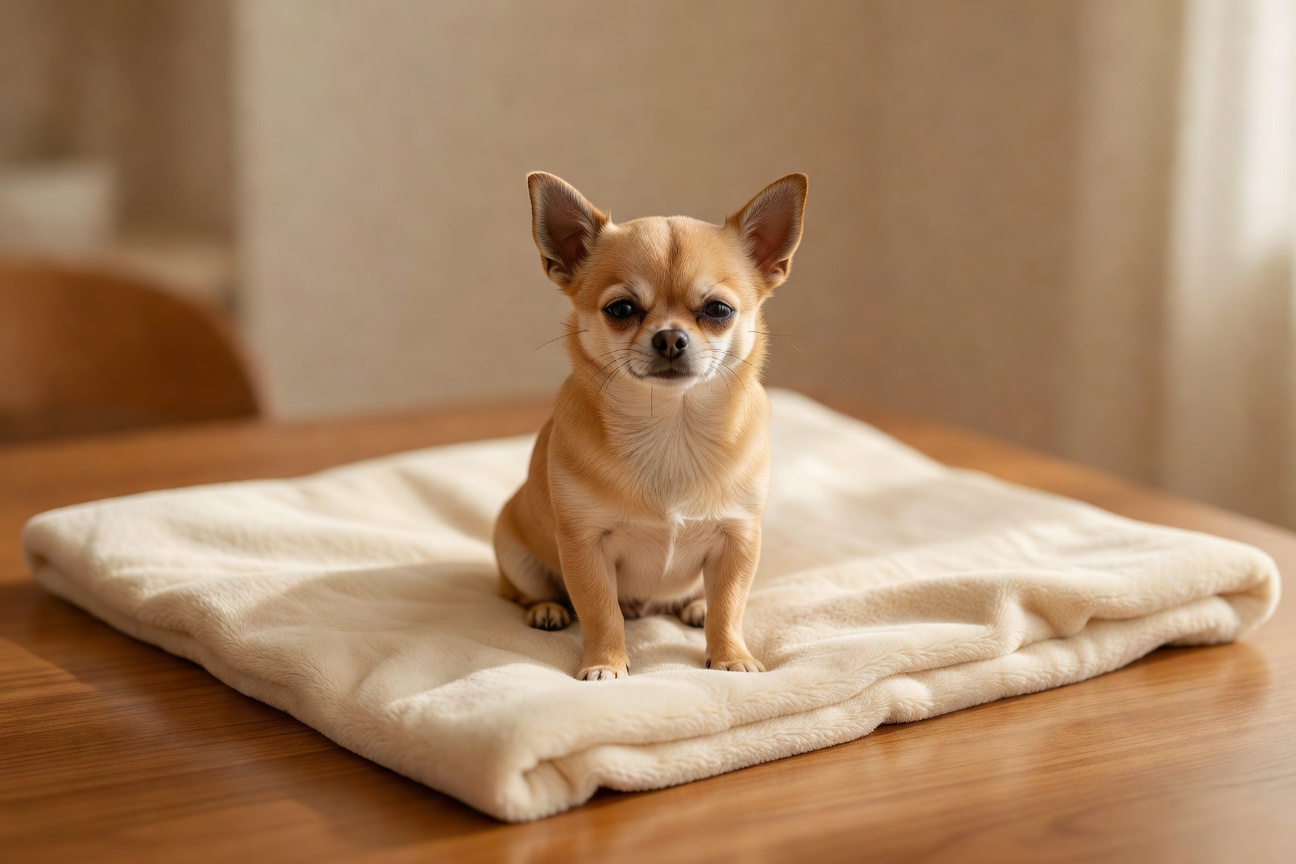
Puppies investigate the world with their mouths and learn bite inhibition from littermates and from the humans they interact with. Chihuahua puppy biting is normal between roughly eight and twenty weeks; the behavior diminishes if the puppy is given consistent feedback and an appropriate alternative. The behavior persists if the feedback is inconsistent or absent. The AKC puppy-biting guide treats this as the first-line response.
2. Fear-based nipping
The most common adult cause. A chihuahua who feels cornered, overwhelmed, or whose earlier signals have been ignored may nip as the last rung of an escalation ladder she has been climbing in plain view. Research by Reisner (2006), summarized in Journal of Veterinary Behavior, found that fear-based aggression accounts for the majority of bite cases in toy breeds presented to behavior referral services. The companion piece on the seven signs of nervous-aggressive escalation covers the body language to read before the nip.
3. Pain or medical cause
A dog who has been comfortable to handle and starts nipping when touched in a specific area is signaling pain until proven otherwise. The Merck Veterinary Manual treats acute behavior change as a medical work-up before a behavior plan; the most common findings in toy breeds are dental disease and orthopedic pain.
4. Frustration or over-arousal
Mouthing during play that escalates into hard nipping signals over-arousal. The intervention is to lower the play intensity, shorten sessions, and end before the dog tips over. The 2014 study by Rooney and colleagues, in Applied Animal Behaviour Science, documented the threshold-based approach in detail.
What Actually Works (and What Does Not)
The two interventions with the strongest evidence are redirection and management. Redirection: when the dog mouths, you offer a chew toy and, when she takes it, you praise. The behavior receives a clear alternative, and the alternative pays off.
Management: the dog cannot bite what she cannot reach. If your chihuahua nips visiting children, the intervention is a baby gate and a chew toy in the safe area, not a confrontation. The dog learns that visitors are predictable, neutral events, and the children are not at risk.
What does not work, with citations:
Punishment after the bite. The 2008 AVSAB statement and the 2014 Casey study, in Journal of Applied Animal Welfare Science, both document that punitive responses increase the bite recurrence rate. Yelling, scruffing, holding the muzzle shut, or "alpha-rolling" all fall in this category. The research is mixed on intensity but consistent on direction: more punishment produces more biting, not less.
Punishing growls. A growl is communication. A dog whose growl has been suppressed has not stopped feeling threatened; she has stopped warning. The next bite arrives without signal. Companion Animal Psychology has a useful summary of the underlying research.
The Practical Sequence
If the dog is mouthing during play: shorten sessions, end before over-arousal, redirect to a chew toy. If the dog is nipping when handled: get a vet exam to rule out pain. If the dog nips strangers, children, or specific situations: read the body language at the rung below the nip (lip lick, whale eye, freeze) and intervene there.
If your chihuahua has bitten and broken skin, contact a credentialed behavior consultant. The American College of Veterinary Behaviorists referral directory is the right resource. The four things to do when your chihuahua is stressed guide covers the immediate management; the behaviorist covers the long-term plan.
What to Do This Week
One practical action: stop using the word "stubborn" or "spiteful" to describe the dog's biting. The research is clear that those frames produce worse interventions than neutral, behavior-specific language. Replace them with "the dog nipped because" and finish the sentence with one of the four causes above. Diagnosis improves the protocol; the protocol improves the outcome.
Redirection, in Concrete Steps
Because "redirect to a chew toy" sounds easier than it is in the moment, the cleaner protocol is the one Donaldson described in The Culture Clash: when the dog's mouth makes contact with skin, the human becomes briefly boring. End the play, stand up, look away, count to ten silently, and then re-engage with a chew toy in your hand. The dog learns two things in the same beat. Mouthing skin ends the fun, and the chew toy starts it again.
The error owners most often make is escalating: a louder "no," a hand pulled back fast, a chase that the puppy reads as a game. The 2017 Vieira de Castro study, in PLoS ONE, measured cortisol in dogs trained with aversive versus reward-based methods and found persistently higher stress markers in the aversive group, weeks after training had ended. The implication for nipping is direct. The intervention that lowers the dog's arousal lowers the bite probability; the one that raises arousal raises it.
For more evidence-based training, browse the Training desk or subscribe to get the next study breakdown in your inbox.
Gear That Works backpack
Harness (Not Collar)
A step-in harness is safer and more comfortable.
Lightweight Leash
4–6 feet gives freedom without losing control.
Treat Pouch
Keep rewards accessible and distraction-free.
ID Tag & Microchip
Always be prepared in case of separation.
Trainer Tip: Success on walks starts with reading your Chihuahua's signals and respecting their pace.
Was this guide helpful?
Was this guide helpful? Save the guide. Share it with one other chihuahua owner this week.
favorite