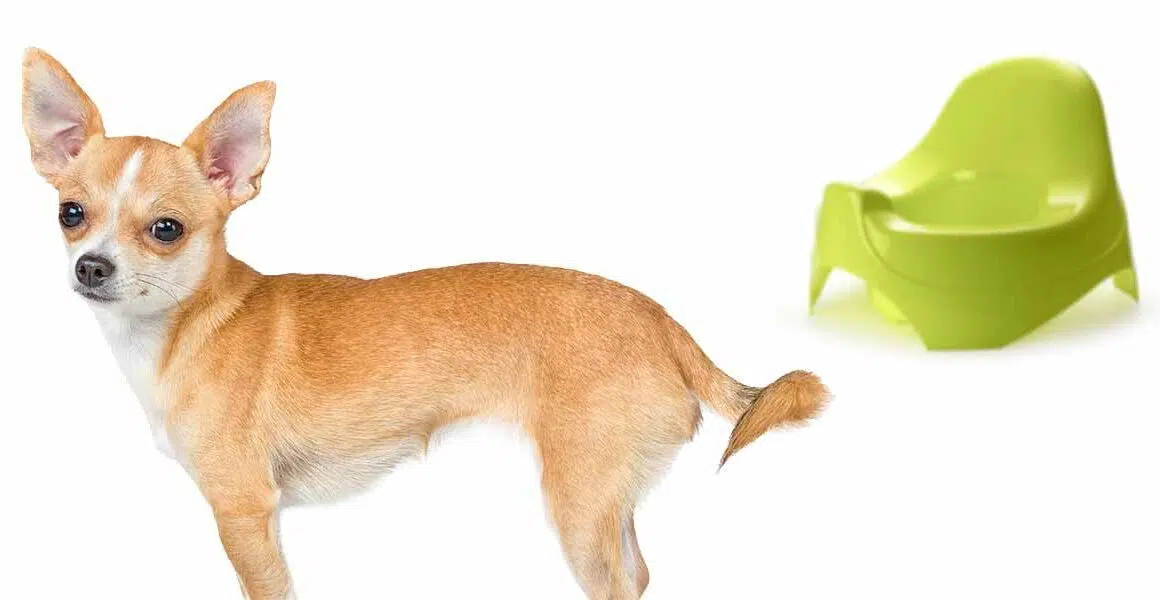


Why does potty training a chihuahua often take longer than owners expect, and what does a working plan actually look like? In one sentence: a small dog has a small bladder, signals less obviously than a Labrador, and produces accidents that are easier to miss; the plan that works is shorter intervals, cleaner reinforcement, and patience on a three-to-six-month timeline rather than a six-week one.
I am going to walk through what realistic timelines look like, why most home plans stall, and the protocol I use with the chihuahua puppies in my caseload.
A realistic timeline
The popular advice that puppies are "potty trained in eight weeks" is, on average, wrong for chihuahuas. A more accurate range, drawn from clinical experience and from the behavior literature, is twelve to twenty-four weeks for solid daytime reliability, with full overnight reliability often arriving later, around six months.
A few reasons the timeline runs longer in the breed:
- Bladder capacity. A small puppy has a small bladder. The "one hour per month of age" guideline is a ceiling, not an average; most chihuahua puppies need more frequent breaks.
- Signal subtlety. The "I need to go" signal in a chihuahua is often a quiet circling or a brief sniff, not a dramatic dance. Owners miss the signal and miss the window.
- Accident detection. A small dog produces a small accident that is easy to miss until the smell becomes a re-marking cue. The general puppy-training plan covers the related cadence.
- Weather sensitivity. Many chihuahua puppies will not focus on elimination in cold rain. Outdoor sessions need to be possible in actual local weather.
The protocol, in practice
The plan I run has four moving parts.
- A schedule. Out at waking, after every meal, after every play session, and every 60 to 90 minutes during waking hours. For a young puppy, that is a lot of trips. Set timers; do not rely on memory.
- One outdoor spot. Pick a single location and use it consistently. The smell becomes a cue. The dog learns that this is where elimination happens.
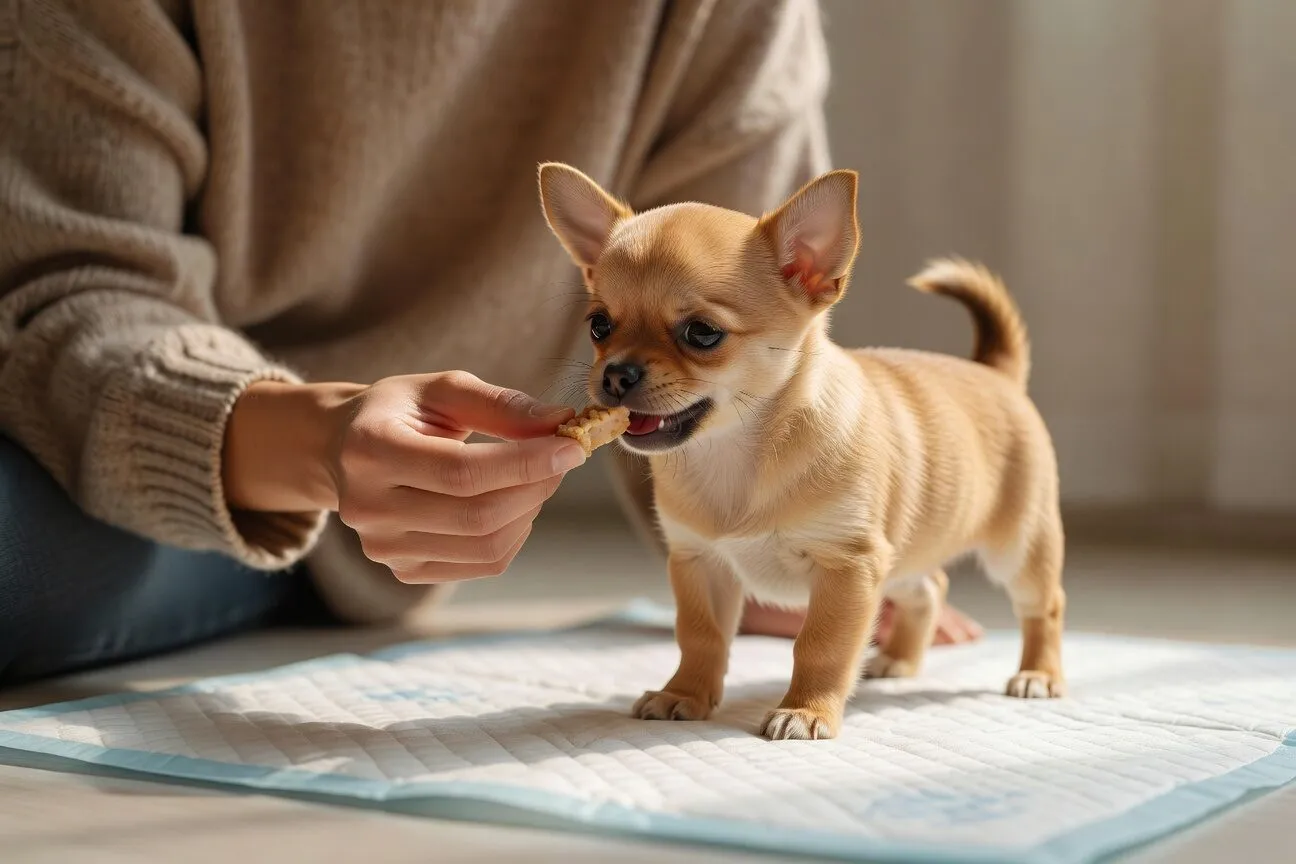
- Mark and reward. The moment the elimination begins, mark calmly ("yes" or a clicker), then reward the moment it finishes. The reward needs to be high-value and immediate.
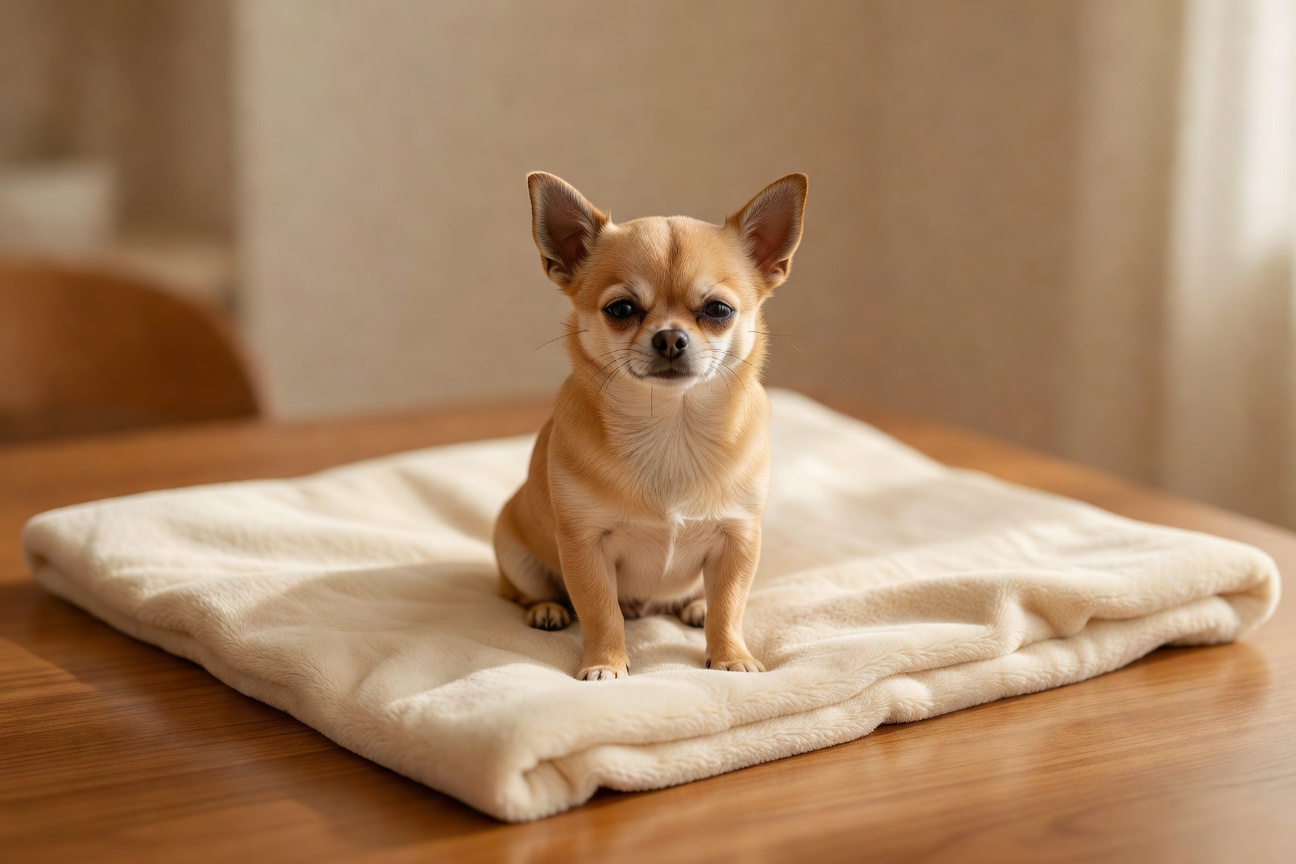
- Confinement when not supervised. A small crate with a soft blanket; a small playpen if you cannot supervise. The dog should not have free run of the house in the first three months.
Indoor pads, outdoor only, or both
A common question is whether to use puppy pads. My answer, after years of caseload, is that pads work as a transitional tool for very young puppies in apartment buildings or in extreme weather, but they extend the timeline if you want a fully outdoor-reliable adult dog. The dog learns that "elimination on a pad" is acceptable, and the transition off pads later is its own training project.
If your goal is outdoor reliability, my preference is to skip pads when possible and accept more outdoor trips in the first three months. If pads are necessary, place them near the door and gradually move them outside over a few weeks, then phase them out.
When things go wrong, and what to actually do
The most common failures in home plans:
- Punishment after the fact. Showing the dog a soiled spot and scolding does not work; the dog cannot connect the punishment to the earlier act. The behavior continues; the trust between you and the dog erodes. The AVSAB position on aversive training covers the underlying mechanics.
- Inconsistent schedule. A dog who goes out every 90 minutes some days and every four hours other days does not, in any reliable sense, learn a schedule.
- Too much freedom too soon. A dog with full house access in week three is rehearsing accidents you are not seeing.
- Skipping the enzymatic cleaner. Regular floor cleaner masks the smell to humans; the dog still smells the previous spot and re-marks. Use a true enzymatic cleaner on every accident.
Medical issues that look like potty problems
If a previously reliable dog starts having accidents, the first call is to your veterinarian, not the trainer. A few medical conditions present as housebreaking failure:
- Urinary tract infection.
- Diabetes (increased thirst leads to increased urination).
- Kidney disease (often paired with increased thirst).
- Cushing’s disease.
- Cognitive change in seniors.
A current bloodwork panel and a urinalysis are the right first steps. The common chihuahua health issues list includes several of these.
A short note on overnight reliability
Overnight is its own project. A young puppy under twelve weeks may need one nighttime trip; a puppy past sixteen weeks can usually hold the bladder for six to eight hours overnight if the last evening trip is right before bed and the first morning trip is immediate.
A few moves that help:
- Last meal at least three hours before bed. Reduces overnight bladder load.
- Water available but managed. Pull the bowl thirty to sixty minutes before bedtime; do not restrict water across the day.
- The crate next to your bed. A puppy who can hear and smell you sleeps more deeply and signals more clearly when she needs to go.
- One quiet trip if the puppy wakes. Carry her out, no play, no chatter, back to crate after elimination. The trip is functional, not social.
By month four, most puppies on this schedule are sleeping through. The pattern holds; the cadence does the work.
One thing to do this week
If you are at the start of potty training, set three timers on your phone for the next three days: every 75 minutes during waking hours. Take the puppy out, mark the elimination, reward the elimination. Track in a small notebook. By Friday, you will have data on the dog’s actual cadence, and the plan can be tuned to the dog’s real bladder rather than a generic one.
The work is small and unglamorous. The compounding, by month four, is real. Most of the chihuahua puppies in my caseload are reliable in the daytime by four months when this plan is run cleanly, and reliable overnight by six. The shortcuts, mostly, do not exist.
Gear That Works backpack
Harness (Not Collar)
A step-in harness is safer and more comfortable.
Lightweight Leash
4–6 feet gives freedom without losing control.
Treat Pouch
Keep rewards accessible and distraction-free.
ID Tag & Microchip
Always be prepared in case of separation.
Trainer Tip: Success on walks starts with reading your Chihuahua's signals and respecting their pace.
Was this guide helpful?
Was this guide helpful? Save the guide. Share it with one other chihuahua owner this week.
favorite