
Why is my chihuahua jumping on every visitor, and what is the protocol that actually replaces the behavior with a calm greeting? In short: the jump is a learned attention-seeking behavior reinforced over months by anyone who has scooped the dog up to "just say hi" on jumping. The fix is a four-sit protocol run consistently for two to four weeks, with the household and visitor management that the protocol requires.
The honest version of this conversation, which I have had with many small-dog households, is that the dog is doing exactly what she has been trained to do. The retraining is straightforward; the harder part is the visitor management.
Why the jumping pattern locks in
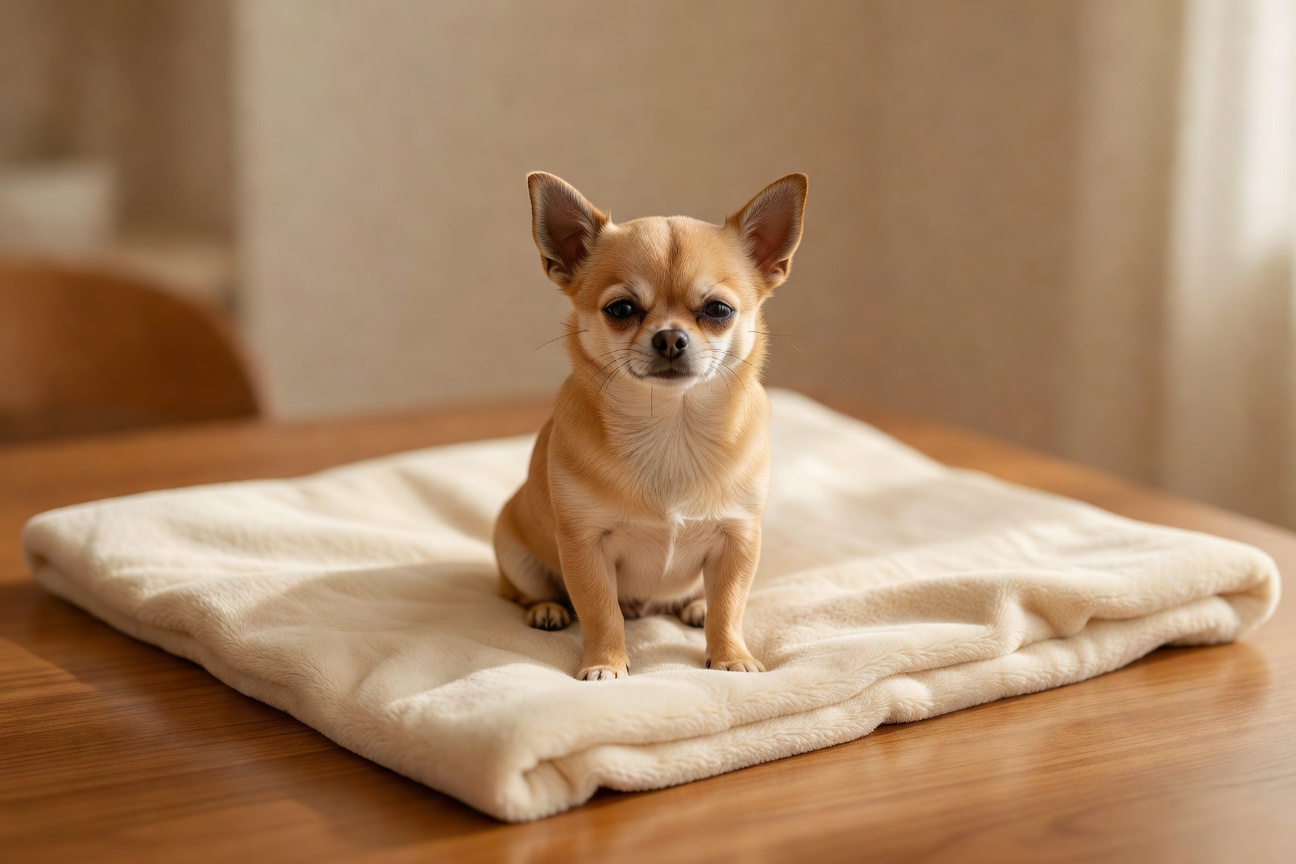
Chihuahuas are small enough that a jump is not, in most households, treated as a problem the way a fifty-pound dog's jump would be. The two-pound puppy stretches her front paws up your shin, and the human reflex is to scoop her up and say something pleasant. The puppy learns, accurately, that jumping produces lifting, attention, and a positive verbal reward.
This is reinforcement on a variable schedule, which is the most resistant kind to extinguish. Even after the household tries to stop the pattern, an inconsistent visitor reinforces it once and the behavior comes right back. The general socialization primer covers the broader behavioral framework; the jumping pattern is a specific application.
The four-sit protocol, plainly
The protocol below is what I run with most clients. Total duration: two to four weeks. Daily time investment: ten to fifteen minutes plus the actual greetings.
Step 1: Establish "sit" as a default greeting. Outside of any greeting context, work on a reliable sit on cue with high-value rewards. The dog should sit reliably for a treat, in a quiet room, before you can ask for it during a greeting. Most chihuahuas already have a sit; if not, work on it for a few days first.
Step 2: The household-member greeting. When you come home, do not interact with the dog until she is sitting. Walk in, ignore the dog, set down your bag, hang up your coat. The dog will, on the first few attempts, jump and vocalize. Wait. The moment she sits, even briefly, kneel down and greet her warmly. Reward.
Step 3: The four-sit pattern. Build duration. Once the dog can sit briefly for a household-member greeting, ask for four consecutive sits across the next minute, with brief release between each. The dog is learning that sustained calm produces sustained attention, which is, on her behavioral economics, the actual goal she has been after.
Step 4: Generalize to visitors. Once the household-member pattern is stable, add visitors. The visitor must agree, in advance, to ignore the dog until she is sitting. This is the part where households fail; the visitor will, with the best intentions, scoop the jumping dog up and undo a week of work. The script for visitors is below.
The visitor script, which is the harder part
The text I send guests in advance, which I am happy to have you adapt:
"We are working on greetings with the dog. When you come in, please ignore her completely until she is sitting. No eye contact, no talking to her, no reaching down. The moment she sits, you can kneel and pet her calmly. This sounds harsh; it is actually the kindest thing for her right now."
Most visitors comply; a small fraction will, in the moment, scoop the jumping dog up "because she is just so small and excited." The protocol survives a few of these but not many. If you have a household member or frequent visitor who will not run the protocol, the dog goes behind a baby gate or in a crate during their visit until the pattern is stable.
Why not to use the "knee in chest" or other corrections
The older training literature recommended kneeing the jumping dog in the chest, stepping on the dog's back paw, or other physical corrections. The current behavioral consensus, summarized by the AVSAB, is that punishment-based methods produce more anxious dogs and do not extinguish the underlying attention-seeking pattern.
In practical terms with a chihuahua, the math is also physical. A knee to a four-pound dog's chest can produce real injury. The replacement protocol (sit produces attention; jumping produces ignored) is, on the available data, more reliable and substantially safer for a small dog.
Management during the protocol, briefly
While running the four-sit protocol, manage the situations where you cannot control the dog's behavior:
- Strangers in public. Pick the dog up before they reach you, or step off the path. The protocol is not yet ready for the random sidewalk interaction.
- Children visiting the household. Children typically cannot run the protocol. The dog goes behind a baby gate during high-energy child periods.
- The "she is so cute" friend. The friend who will not comply is best handled by managing the situation rather than the friend. Crate the dog during their visit.
The stress-management piece covers the body-language reading you are using during the protocol; an overstimulated dog is going to fail the protocol regardless of how good the training is, and a brief reset is more useful than continued attempts.
The two-to-four-week trajectory you should expect
Week 1. The dog is jumping consistently. The protocol is, in this week, mostly about you (the human) staying patient through the jumping and waiting for the brief sit. Most reps end with a brief sit and a reward.
Week 2. The dog starts to sit on entry without much vocalization. Visitor reps begin.
Weeks 3 to 4. The default greeting pattern is in place for household members and consenting visitors. Random visitors and strangers are still inconsistent; the protocol generalizes over the next few months as exposure accumulates.
If you are at week six and not seeing this trajectory, something else (under-tired dog, household inconsistency, undiagnosed anxiety) is in play. Talk to your veterinarian or a credentialed force-free trainer.
The bottom line, with the usual caveat
Chihuahua jumping is a learned attention-seeking pattern that responds well to a structured four-sit replacement protocol. The honest difficulty is the visitor side; the dog can be retrained in two weeks, the household and frequent visitors take a bit longer to align. Talk to your veterinarian or a credentialed trainer if anything in your dog's pattern is concerning; the general protocol is the starting point, and the local read is the refinement.
Gear That Works backpack
Harness (Not Collar)
A step-in harness is safer and more comfortable.
Lightweight Leash
4–6 feet gives freedom without losing control.
Treat Pouch
Keep rewards accessible and distraction-free.
ID Tag & Microchip
Always be prepared in case of separation.
Trainer Tip: Success on walks starts with reading your Chihuahua's signals and respecting their pace.
Was this guide helpful?
Was this guide helpful? Save the guide. Share it with one other chihuahua owner this week.
favorite