
Why does your chihuahua follow you to the bathroom, the kitchen, the porch, the laundry room, and back? In most cases, the short answer is that you are the dog’s primary attachment figure, and chihuahuas are a breed that takes that role seriously. The longer answer, which is what most owners want, is how to tell normal "velcro" attachment from separation distress, and what to do about either one.
I am going to walk through what the research actually says, and what you can do this week if you live with a small dog who is uncomfortable when you are out of sight.
What the attachment research actually shows
The clearest dog-to-human attachment research comes out of the strange-situation paradigm, originally developed for human infants and adapted for dogs. Topál and colleagues (1998) showed that dogs display the same secure-base behaviors with their primary owner that infants show with primary caregivers; the dog explores when the owner is present, shows mild distress when the owner leaves, and recovers quickly when the owner returns.
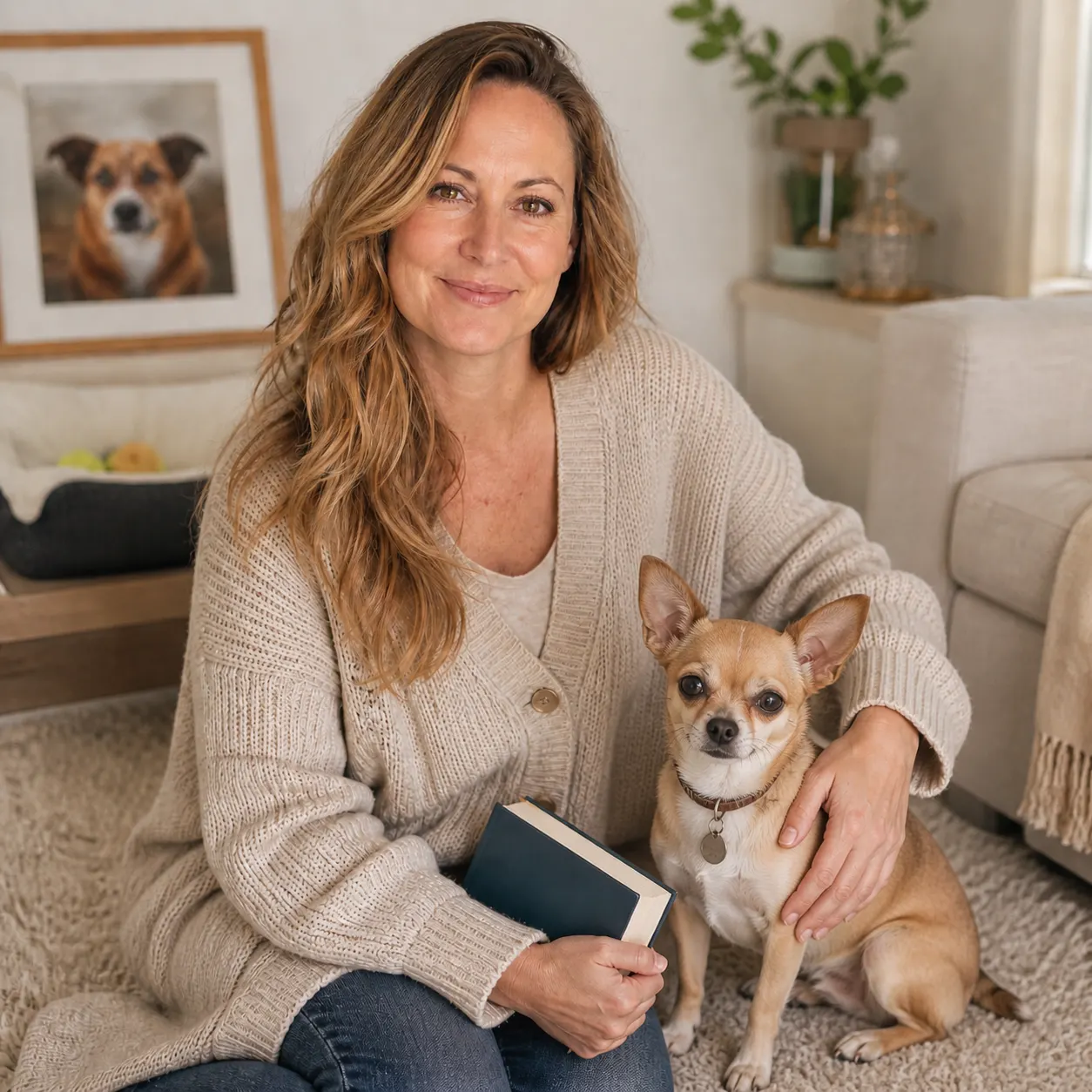
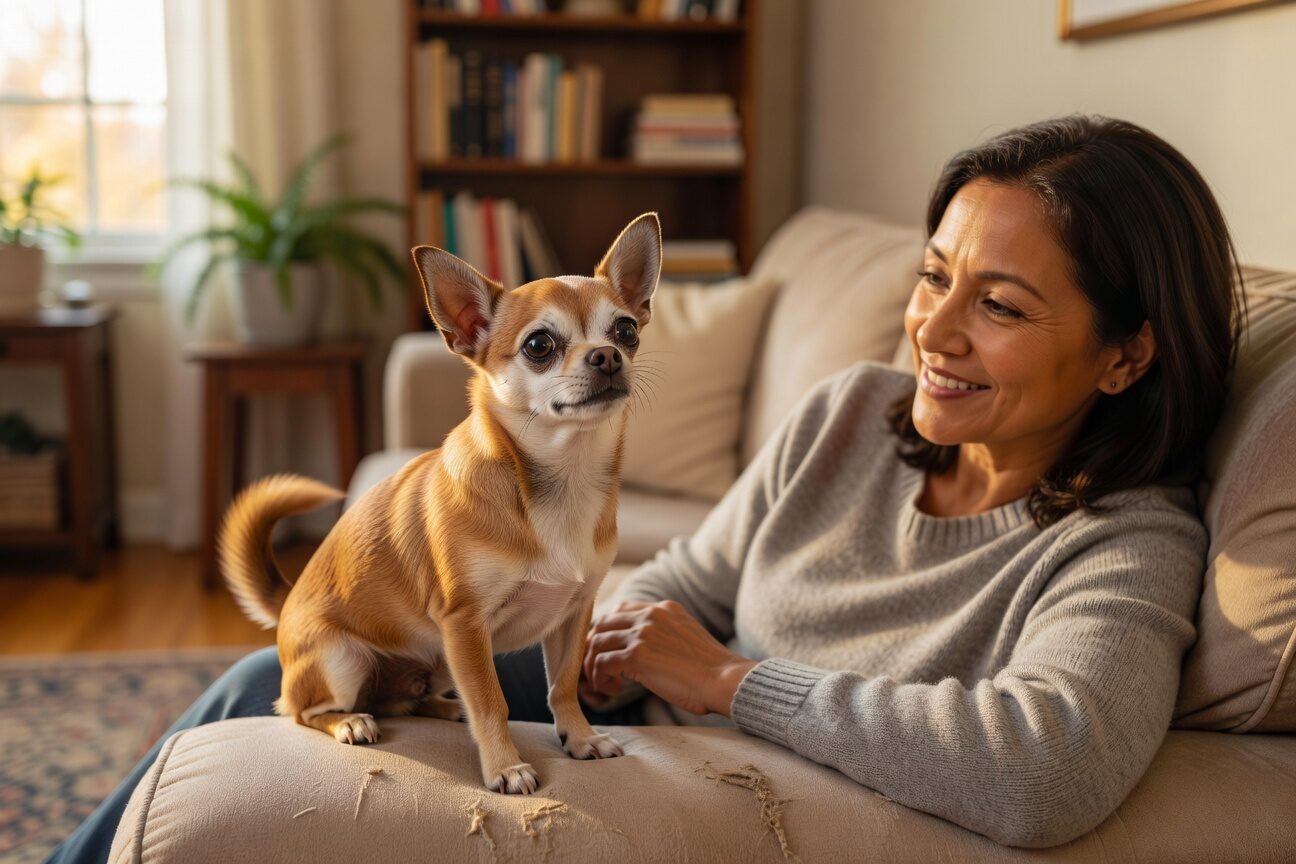
That secure-base behavior is what most chihuahua owners are describing when they say their dog is "attached." Following you around, settling near your feet, checking on you when you change rooms: these are normal expressions of the bond, not symptoms of a problem. Zazie Todd’s plain-language summary at Companion Animal Psychology walks through the literature in non-academic terms and is worth reading.
Why a chihuahua does this more visibly than, say, a Labrador is partly behavioral and partly physical. A four-pound dog can fit on a foot, in a chair, in a fold of a blanket; a 70-pound dog has to make a different choice. The breed is also alert and notably people-focused, which is reinforced by the fact that an indoor chihuahua spends most of the day within a few feet of a person.
Velcro versus separation distress
Here is where the distinction matters. Following you around when you are home is normal. Panic when you leave is not, and the difference is observable.
A securely attached chihuahua, who happens to be small enough to physically be on you most of the day, will:
- Follow you, then settle, when you sit down somewhere.
- Sleep when you are working in the same room.
- Greet you at the door, then return to a normal activity.
- Be calm in your absence, based on a video or a kind neighbor’s report.
A chihuahua experiencing separation-related distress is doing something different. The signs, drawn from the ASPCA’s separation anxiety reference and the veterinary behavior literature, include:
- Vocalizing (whining, barking, howling) for extended periods after departure.
- Pacing, drooling, panting, or self-injury when alone.
- Destructive behavior focused on exit points (doors, windows, crates).
- House-soiling in a dog who is otherwise reliably trained.
- Refusing food while alone, even high-value food.
If you see two or more of those, this is no longer a "velcro" article; it is a separation-distress conversation, and it is worth a call to your veterinarian or a credentialed behavior consultant. The current evidence (Sargisson, 2014; de Assis et al., 2020) is that mild-to-moderate cases respond well to a graduated absence protocol; more severe cases sometimes need short-term medication alongside the behavior plan, which is a veterinary decision.
What actually helps a securely attached chihuahua
Most chihuahuas described as "too attached" are not in the distress category. They are securely attached small dogs who find the lap convenient. The thing that helps, gently, is making the dog’s world a little wider while keeping the bond intact.
A few practical moves, drawn from force-free protocols I trust:
- Predictable departures and returns. Pick up your keys at neutral times, not only when you are leaving. Walk out for thirty seconds and come back, several times a day, with no fanfare. The goal is to make the door an everyday event.
- One independent enrichment ritual a day. A frozen Kong, a snuffle mat, or a long-lasting chew, given in a separate room while you are home. The dog learns that being a few feet away is a place where good things happen.
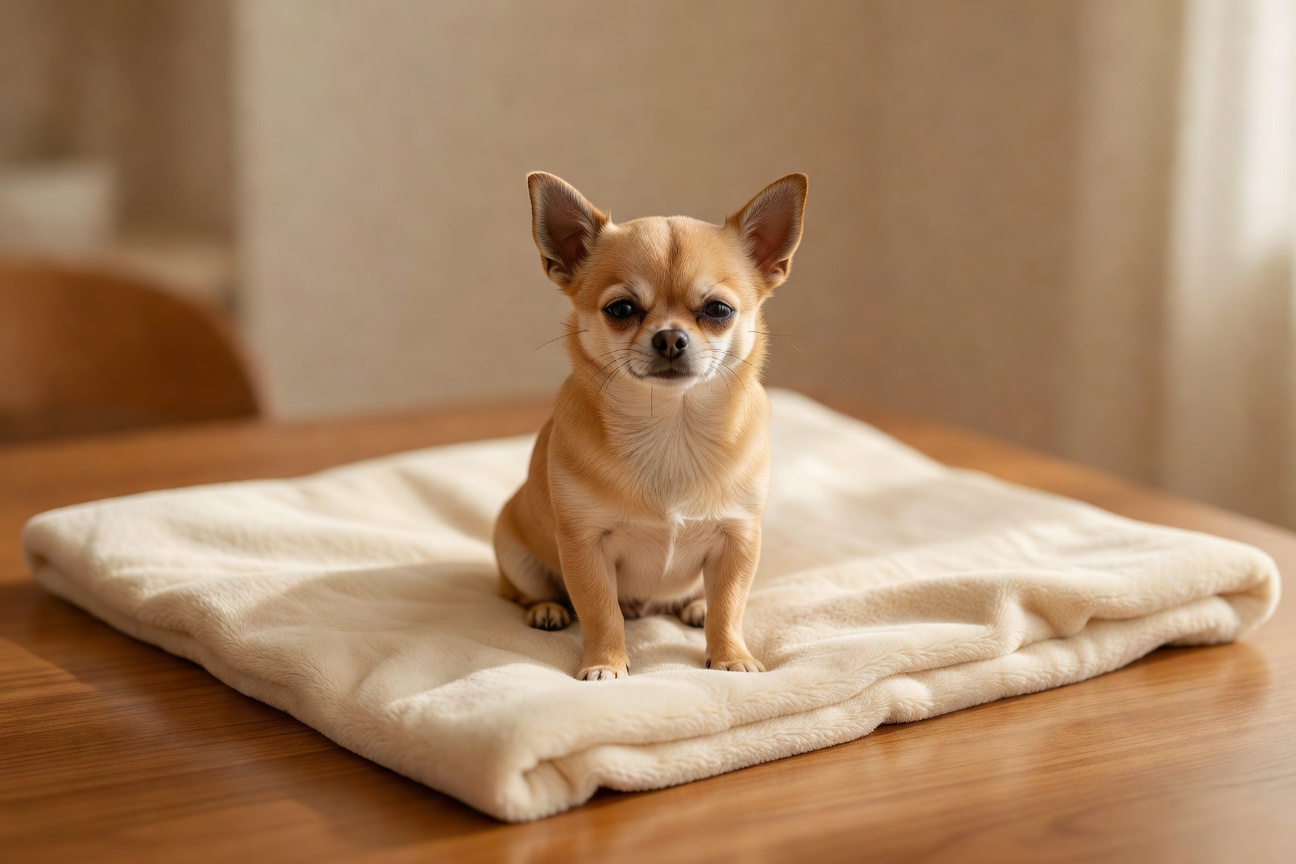
- A predictable resting place that is not on you. A small bed near where you usually sit, with a soft blanket the dog already likes; reinforce settling there with a calm scratch and a treat. Calm-down protocols are similar to the ones I use with reactive small dogs.
- Movement together that is not lap time. A short, low-impact walk, a sniff routine in the yard, or one of a few gentle bonding games. The bond does not require physical contact every minute.
When the home plan is not enough
If you are doing a graduated-absence plan in good faith for a few weeks and your dog is not improving, please call a veterinary behaviorist (DACVB) or a credentialed behavior consultant (CDBC, IAABC). The research is mixed on which behavior modifiers work best for any one dog; what is not mixed is that early professional support shortens the timeline.
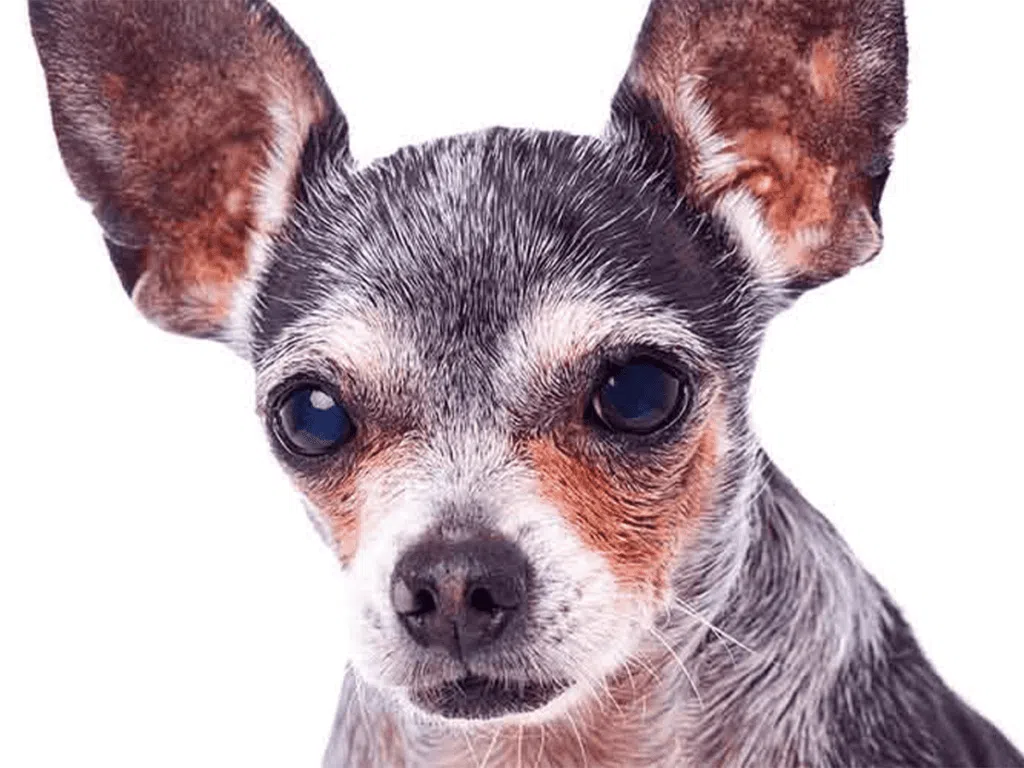
This is also a moment to rule out medical contributors. Pain, especially dental pain or joint pain, increases clinginess in small dogs in ways that look like attachment but are not. A senior chihuahua who has become more "velcro" in the last six months should have a current bloodwork panel and an oral exam.
One thing you can do this week
Try this. Tomorrow morning, when you walk to the kitchen, leave your chihuahua in the room she is in. Walk back. Walk forward. Repeat for a minute. Drop a piece of kibble in her bed when you pass. By Friday, the bed is a small island where good things appear at random, and you are doing what the literature calls building secure independence.
If at any point you see distress signals (panting, drooling, vocalizing, refusal to eat), stop the exercise and call your veterinarian. Otherwise, keep going. The dog who is allowed to be a little farther away from you, on her terms, is the dog who is most secure when you do have to leave.
Gear That Works backpack
Harness (Not Collar)
A step-in harness is safer and more comfortable.
Lightweight Leash
4–6 feet gives freedom without losing control.
Treat Pouch
Keep rewards accessible and distraction-free.
ID Tag & Microchip
Always be prepared in case of separation.
Trainer Tip: Success on walks starts with reading your Chihuahua's signals and respecting their pace.
Was this guide helpful?
Was this guide helpful? Save the guide. Share it with one other chihuahua owner this week.
favorite