
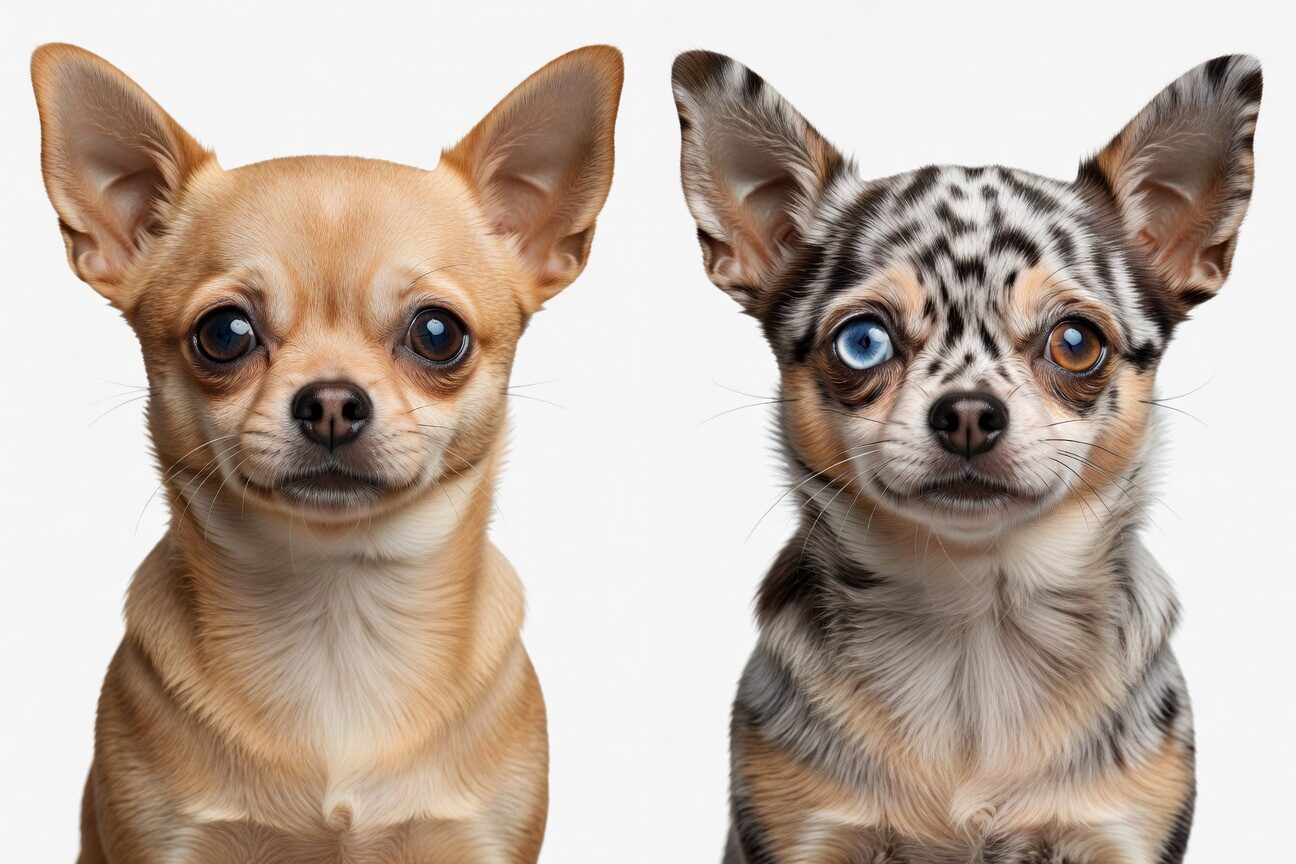
What colors and patterns can a chihuahua come in, and which are recognized by the breed standard? In short: the chihuahua is one of the most color-permissive breeds in the AKC, with the standard accepting "any color, solid, marked, or splashed." The marketing language around rare colors, however, is a different conversation, and one specific pattern (merle) carries documented welfare consequences that the breed-history desk would prefer to address head-on.
I am going to walk through the recognized colors, the genetics behind the more interesting variants, and the small set of color-related health conversations.
The AKC position, briefly
The AKC chihuahua breed standard recognizes the breed in any color, solid, marked, or splashed, with both smooth and long coat varieties. The standard does not penalize specific colors, with the notable exception of merle, which the AKC parent club excludes from the standard on welfare grounds.
article_in_feed
A handpicked find for your tiny companion.
The most common colors in the pet population, in rough order:
- Fawn (pale gold to deep red-brown).
- Black.
- Cream.
- Chocolate.
- Tan or sable.
- White.
- Tri-color (typically black, white, and tan).
- Brindle (irregular dark stripes on a lighter base).
- Blue (a dilute black, with a bluish-gray cast).
- Lavender or isabella (a dilute chocolate, with a pale grayish-brown cast).
The marketing labels, plainly
A few terms used in advertising that are worth understanding:
- "Rare" colors. Blue, lavender, and merle are sometimes marketed as rare and priced accordingly. They are uncommon, but the rarity is mostly a function of selection, not biology. The fuller taxonomy of chihuahua variants covers the conformational and color spectrum.
- "Pure white." A genuinely solid-white chihuahua is uncommon and is sometimes associated with congenital deafness, similar to other breeds with white-spotting genetics.
- "Albino." True albinism is extremely rare in chihuahuas and carries health concerns including light sensitivity and skin issues. Most "albino" chihuahuas in advertising are actually pale fawn or pure white.
- "Tri-color" and "merle tri." Color combinations that owners often request specifically. Tri-color is a normal pattern; merle tri inherits the merle welfare conversation discussed below.
The merle conversation, with the welfare math
Merle is a distinctive coat pattern of mottled patches, often with blue eyes, governed by a dominant gene (PMEL/SILV). The pattern is not historically part of the chihuahua breed; it appears to have been introduced through cross-breeding in the early 2000s and has been controversial in the breed community since.
The welfare math is the part that matters. Dogs with two copies of the merle allele (homozygous merle, MM) have a documented elevated risk of deafness, blindness, ocular abnormalities, and other developmental issues. The risk in dogs with one copy (heterozygous merle, Mm) is lower but not zero. The AKC chihuahua parent club excludes merle from the standard for these reasons; reputable breeders do not breed merle to merle, and many do not breed merle at all.
This is not a moralistic position; it is a documented welfare profile. The conversation matters because merle puppies are often marketed at premium prices, which creates the very breeding incentive that produces the homozygous welfare cases.
White spotting and the deafness conversation
A separate, smaller welfare conversation involves white spotting. The piebald gene, common in chihuahuas, can produce a small risk of pigment-related congenital deafness in dogs with extensive white. The risk is much smaller than in some other breeds (Dalmatians, for example), but a chihuahua with very extensive white markings or a true solid-white coat is worth a baseline BAER hearing test in puppyhood, particularly if any concerning behaviors are noted.
Color and temperament, the myth
A persistent piece of folklore holds that certain colors are calmer or more affectionate than others. This is not, in any documented sense, supported by the breed-temperament literature. Coat color and temperament are governed by different genes; the correlation owners sometimes observe is small-sample anecdote, not pattern.
If a breeder is selling you on the temperament of a specific color, the breeder is selling marketing. The temperament conversation is about lineage, socialization, and individual dog assessment, not color.
Practical takeaways, briefly
A few items worth carrying away from this:
- Color is, with the merle exception, mostly cosmetic. Pick a dog you meet and like; the color will not change your daily life.
- Pay attention to merle marketing. If a breeder is producing merle litters at premium prices, ask about parent testing and homozygous outcomes. The pre-adoption primer covers the broader breeder conversation.
- "Rare" pricing is, in most cases, a marketing premium, not a value premium. The dog is the same breed regardless of coat shade.
- White-spotted dogs benefit from a baseline hearing assessment in puppyhood, just to know the baseline.
A note on dilute coats and color-dilution alopecia
Two specific colors, blue and lavender, are dilutions of the standard black and chocolate. Both are produced by the same dilution gene (MLPH). A small subset of dilute-coated dogs develop color-dilution alopecia (CDA), a condition where the hair shafts in the affected areas become brittle and break, producing a thin or patchy coat over months to years.
The condition is not life-threatening but is incurable; management is supportive grooming and skin care. If you are considering a blue or lavender chihuahua, ask the breeder whether the line has produced CDA cases, and plan for the possibility. A working grooming primer covers the supportive routine. Most dilute chihuahuas never develop CDA; the risk is a real but minority outcome.
The honest bottom of the question
The chihuahua's color permissiveness is one of the breed's quiet pleasures. The dog you adopt may be fawn, black, brindle, cream, chocolate, or any combination, and the AKC standard is not, with one exception, going to mind. The exception is merle, and the exception exists because the welfare math is real and the breeding incentives have been distorted by marketing.
If you are considering a chihuahua and have a color preference, that is fine. If a breeder is selling you on the color rather than the dog, that is, in my experience, the wrong end of the conversation. The color is the surface; the dog is the rest.
Is this Chihuahua right for you? auto_awesome
Want to learn more about your Chihuahua? Compare breeds and find your perfect match.
favorite