

Every chihuahua sheds. The variable is not whether, but how much, and the answer is set by coat type, season, and genetics, none of which are mysterious once you know what to look for. Owners who arrive at the breed expecting a non-shedding toy dog are working from a marketing assumption, not a kennel-club one. The American Kennel Club (AKC), which has recognized the chihuahua since 1904, places no hypoallergenic claim on the breed.
What follows is the plain-English version of what your groomer would tell you, organized by the two registered coats and the two seasons that actually matter.
The breed standard, on coat
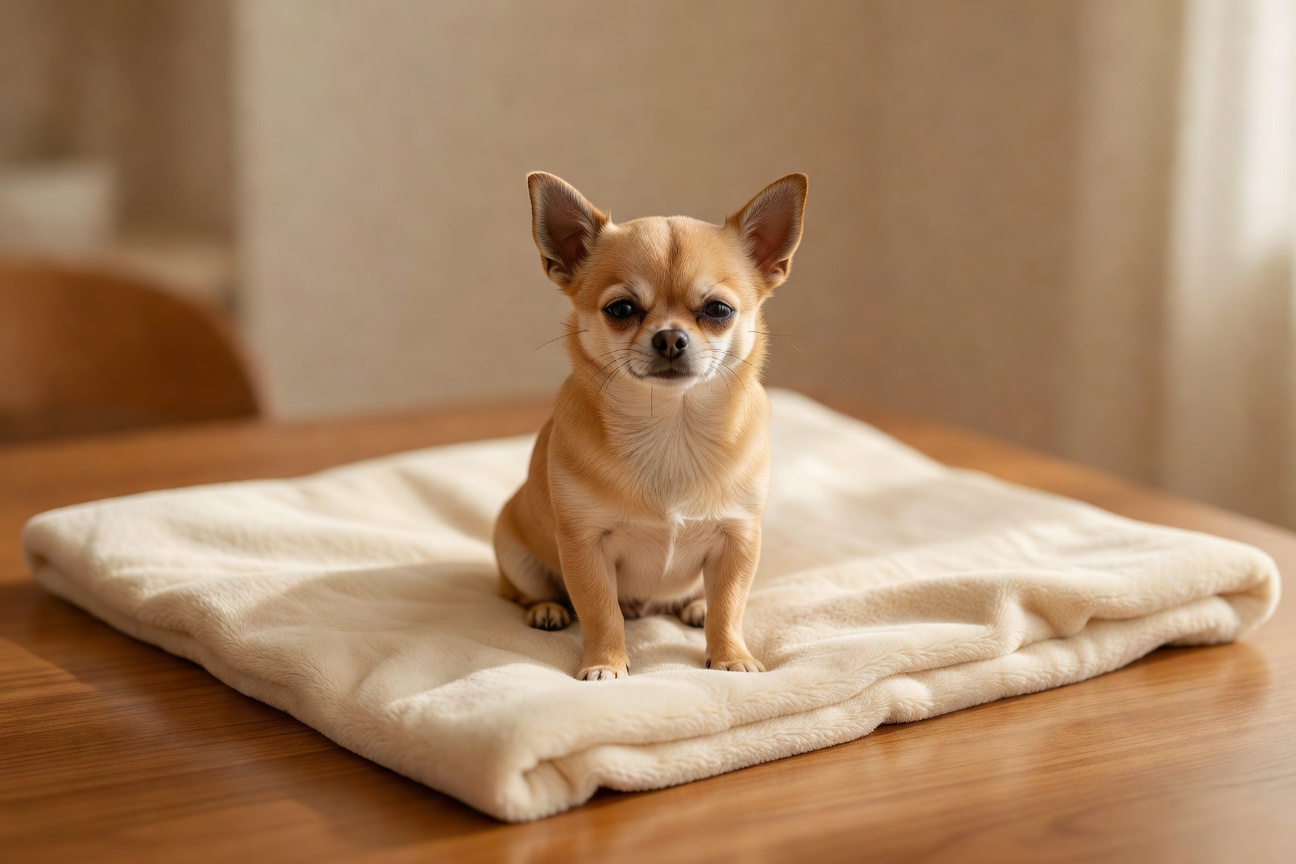
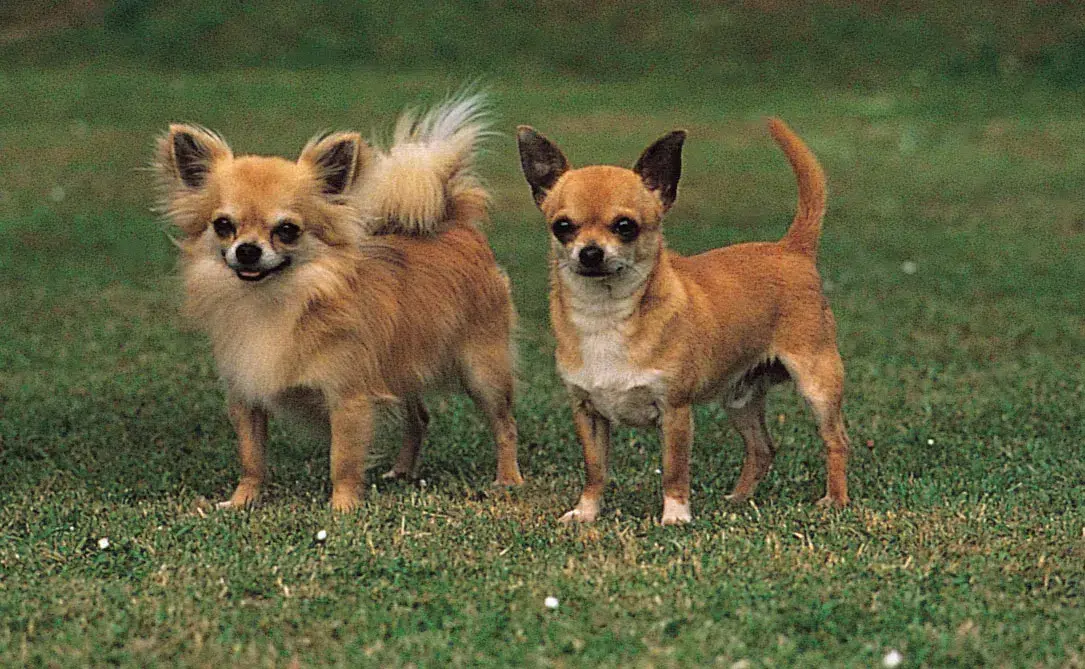
The AKC breed standard recognizes two coat varieties in the chihuahua: smooth and long. They are judged as a single breed, registered the same way, with the same conformation expectations except for the coat itself. The smooth-coat is short, close-lying, glossy, and slightly rougher in texture than it looks. The long-coat is soft, flat or slightly wavy, with feathering on the ears, legs, feet, and tail. Both come in any color or combination the standard recognizes (essentially, every color).
What the standard does not say, but every chihuahua-club judge knows, is that both coats shed. The smooth-coat sheds short hairs more or less continuously. The long-coat sheds longer hairs less often but more visibly. Neither variety is hypoallergenic in any kennel-club sense, and the American Veterinary Medical Association (AVMA) has been clear for over a decade that no dog breed is truly hypoallergenic. The allergen is dander and saliva protein, not the hair itself.
The smooth coat
A smooth-coat chihuahua carries a single layer of short, dense hair, about half an inch long at most. The shed pattern is steady and low-volume. Owners report finding short hairs on dark clothing, on furniture upholstery, and in the crevices of car seats. The hairs are short enough that they tend to weave into fabric rather than sit on top of it, which makes vacuuming less effective than a lint roller for most owners.
Smooth-coats shed slightly more in spring and fall, the two transitional seasons that trigger most double-coated and single-coated breeds. The seasonal increase in a smooth-coat chihuahua is real but mild, on the order of fifteen to twenty percent more loose hair than the baseline.
The smooth-coat is, on the available evidence, the lower-maintenance variety on shedding. The trade-off is that the hairs are harder to remove from textiles once shed.
The long coat
The long-coat chihuahua has a coat that grows to roughly two inches at the body and longer on the feathered areas. The undercoat is sparse to absent (the breed standard prefers a single coat with a hint of undercoat, depending on the line), which means the dramatic spring "blow-out" common in nordic and double-coated breeds does not happen here. The long-coat sheds longer, finer hairs, in smaller volume than the smooth variety in most weeks.
Owners who have kept both varieties usually report that the long-coat sheds less in total volume, but the shed hairs are more visible because of their length. The grooming requirement is the inverse: the long-coat needs weekly brushing to prevent feather mats, while the smooth-coat can go a month between brushings without consequence.

Seasonal shedding, spring and fall
Both coat varieties go through a noticeable seasonal change in spring (typically March through May in the Northern Hemisphere) and fall (typically September through November). The mechanism is photoperiod-driven: the change in day length triggers the hormonal cascade that releases the previous season's coat. Indoor dogs experience a milder version of this cycle because artificial lighting partially overrides the photoperiod cue, but the cycle is never fully suppressed.
The practical reading for owners: expect two roughly four-week windows each year where shedding doubles or briefly triples its baseline volume. The increase usually peaks in week two or three of the window and tapers off naturally. Brushing during this window collects most of the loose hair before it lands on the couch.
When shedding is a problem
Most chihuahua shedding is cosmetic. A few patterns are not, and they are worth knowing by name.
- Bald patches. Round or oval bare spots on a chihuahua's coat are not normal shedding. They can indicate a fungal infection (ringworm, despite the name, is a fungus), a mite condition (demodex or sarcoptes), an endocrine issue (hypothyroidism is one of the more common in toy breeds), or a contact allergy. Talk to your veterinarian.
- Diffuse coat thinning. A coat that gets generally thinner over months, without a clear shedding-season trigger, can be an early sign of hypothyroidism or Cushing's disease, both more common in older chihuahuas. The diagnostic is a blood panel.
- Hairs coming out in clumps with the skin visible underneath. This is not the seasonal blow-out pattern that nordic breeds show. In a chihuahua, this is a veterinary visit.
- Excessive shedding paired with scratching, redness, or odor. Allergy, parasite, or skin-infection territory. Time-bounded action: schedule the visit within the week.
What actually helps
The shed pattern is genetic. Owners cannot eliminate it. What owners can do is collect more of the hair before it leaves the dog.
- A weekly brushing routine, with a soft slicker brush for the long-coat and a rubber curry mitt for the smooth-coat. Five minutes is enough.
- Twice-weekly brushing during the spring and fall windows. Ten minutes is enough.
- A complete diet that meets the AAFCO standard for the dog's life stage. The coat is downstream of nutrition.
- Regular dental care, because periodontal inflammation can affect coat quality over time. The connection is indirect but real.
- Bathing once a month at most. Over-bathing strips the natural oils that hold the coat to the skin and triggers more shedding, not less.
For deeper reading on the breed itself, the chiweenie breed-mix guide covers the parent-breed inheritance pattern that applies when the chihuahua coat shows up in a cross. The shed math is similar; the maintenance is not.
Is this Chihuahua right for you? auto_awesome
Want to learn more about your Chihuahua? Compare breeds, check the standard, and find the chihuahua that matches your home.
favorite