

If your first attempt at trimming a chihuahua's nails ended with a small thrashing dog, an apologetic owner, and a quiet decision to delegate this task forever, you are not alone. The chihuahua-grooming learning curve is real, and the gap between a YouTube tutorial and the actual experience of restraining a three-and-a-half-pound dog with strong opinions is meaningful. Below is the household-tested approach that, after a few rough first attempts, has held up for me and for several friends.
The honest version is that grooming a chihuahua is mostly about the introduction protocol rather than the technical skill. A dog who is comfortable with handling tolerates the procedures; a dog who is not comfortable does not, and no amount of restraining technique closes the gap. Below is the approach by component.
Nails, the most-feared component
Most owner anxiety about grooming centers on nails, partly because of the quick (the blood vessel and nerve inside the nail) and partly because most chihuahuas, on first attempt, react strongly. A few specifics:
- Use small clippers sized for a chihuahua's nail diameter. Larger clippers compress the nail rather than cutting it cleanly. A small guillotine-style or scissor-style clipper, sized for cats or very small dogs, is appropriate.
- Cut a small amount at a time. One small slice off the tip is much safer than attempting a full trim in one cut. If the dog has clear nails, the quick is visible as a pink area; cut a millimeter or two short of the pink.
- Have styptic powder on hand. A small jar of styptic powder (or cornstarch in a pinch) stops the bleeding if the quick is nicked. It will happen at some point in the dog's life; the powder makes it a brief inconvenience rather than a major event.
- Use a grinder if the dog tolerates it. A small Dremel-style grinder removes nail material slowly and is, in many households, less stressful for the dog than a single sharp cut. The introduction protocol is similar to the clippers.
The introduction protocol: handle the paws daily for a week with no trimming, paired with treats. Introduce the clipper or grinder near the paws without using it. After a week, attempt one nail per day, rewarding heavily. Build from there.
Baths, less often than you would think
Most chihuahuas need a bath every four to eight weeks, depending on coat length, activity level, and skin condition. Bathing more often than this can dry the skin and produce its own dermatologic issues.
The practical setup:
- A small basin or kitchen sink with a non-skid mat. The dog is more comfortable on a surface with traction than on slippery porcelain.
- Lukewarm water, tested on your wrist before involving the dog.
- A small dog shampoo rated for sensitive skin. Human shampoo is too acidic for most dogs and can produce skin irritation.
- A handheld sprayer or small cup for rinsing. A thorough rinse is more important than the shampoo step; residual shampoo causes most post-bath itching.
- A small absorbent towel for initial drying. A small dog dries fairly quickly with toweling and ambient air; avoid hair dryers near the face.
The introduction protocol for a dog who is bath-resistant: handle and reward in the empty sink first; add a few inches of water and reward; then proceed with brief baths over weeks rather than attempting a full bath on day one.
Brushing, by coat type
Chihuahuas come in two coat varieties (long and short), and the brushing approach differs:
- Short-coat chihuahuas need brushing roughly weekly with a soft bristle brush or a rubber grooming mitt. The mitt is, in my experience, better tolerated by most short-coats than a brush. The session takes three to five minutes.
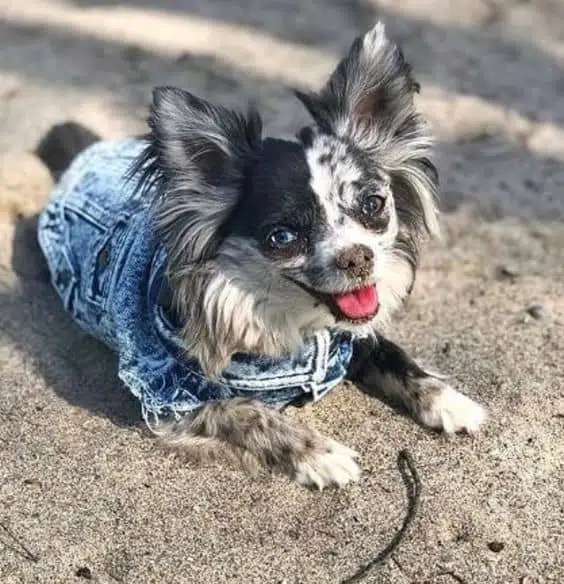
- Long-coat chihuahuas need brushing two or three times weekly with a pin brush or a slicker brush, with attention to the ear feathering and the tail. Mats can develop in the long coat behind the ears and at the legs; check these areas regularly.
The long-hair-versus-short-hair piece covers the broader differences between the varieties; the grooming differences flow from the coat differences.
Ears, briefly
Chihuahua ears are upright and well-ventilated, which means they typically need less cleaning than drop-eared breeds. A weekly visual check and a gentle wipe of the visible part of the ear with a damp cotton pad is, for most chihuahuas, sufficient.
When to clean more thoroughly: visible debris, mild odor, the dog scratching at the ear repeatedly, or a head-tilt. A veterinary ear cleaner, applied per the bottle's instructions and never with a cotton swab inserted into the ear canal, addresses most mild issues. Anything that looks more involved (red inflamed ear canal, brown discharge, head-tilt persistent) is a vet call.
The AKC ear-cleaning guide covers the broader technique; the chihuahua application is mostly the same with a smaller scale.
Dental, separately
Daily dental care is its own component and warrants the dedicated treatment in the brushing-teeth piece. The grooming routine should include a weekly dental check (looking at the teeth and gums) even on days you do not brush.
When to use a professional groomer, briefly
Most chihuahua grooming can be done at home with the basic supplies and the introduction protocols above. Situations where a professional groomer is the better choice:
- Long-coat chihuahuas with significant mats that have developed beyond home-brushing. A groomer can address these without injuring the dog.
- Dogs who are genuinely fearful of home grooming despite the introduction protocol. A professional groomer who specializes in small dogs may have better techniques for the specific dog.
- Dogs with significant skin or coat conditions that warrant a specialized bath product or a longer professional session.
- Households where the time required at home is genuinely not available. The professional groomer is a reasonable alternative if the at-home routine is not happening.
A separate piece on shampoo selection covers the product side; the technique side is what the introduction protocols above address.
The bottom line, with the usual caveat
Chihuahua grooming is mostly the same as for any small dog, with attention to the introduction protocols that keep the small dog calm. The nails are the highest-anxiety component for most owners; the baths are infrequent; the brushing varies by coat. Talk to your veterinarian if your dog has any skin or coat changes during the routine; small issues caught early are easier to address than larger issues caught later.
Health at a Glance: What to Watch monitor_heart
| Condition | Key Signs | Prevention Tips |
|---|---|---|
| Dental Disease | Bad breath, tartar, red gums | Daily brushing, dental treats |
| Patellar Luxation | Limping, skipping, leg lifting | Weight control, avoid high jumps |
| Tracheal Collapse | Dry cough, gagging | Harness walking, avoid smoke |
| Heart Disease | Coughing, fatigue, fainting | Regular check-ups, heart-healthy diet |
| Hypoglycemia | Shaking, weakness, lethargy | Small, frequent meals |
Community Insights – FAQ help
help_outline When should I call my vet about a behavior change? expand_more
Sooner than feels reasonable. A change in appetite, energy, or routine that lasts more than 48 hours is worth a phone call, not a wait-and-see.
help_outline How often should a healthy adult chihuahua see the vet? expand_more
Once a year through age seven. Twice a year from eight on. Dental checks are part of every visit.
help_outline Do chihuahuas need different care than larger breeds? expand_more
Yes. Smaller medication dosing, more frequent dental work, and closer monitoring for tracheal and patellar issues are standard in toy-breed care.
Have a health question? Ask your question in the comments. We will bring it up with the vet team.
favorite