
Can your chihuahua catch the flu from you, and should you actually worry about transmission? In short: human-to-dog flu transmission is documented but rare, the more relevant respiratory illnesses for chihuahuas are canine-specific, and the most common cause of dog sneezing is not the flu at all. The honest clinical answer to "she sneezed seven times in a row, did she catch my flu?" is almost always no.
I am going to walk through what the literature actually says about cross-species respiratory transmission, what dog respiratory illnesses are worth knowing about, and the practical owner-side decision tree when your chihuahua is showing respiratory signs.
What the literature actually says about human-to-dog flu
A small number of cases of human influenza A transmitting to dogs have been documented, mostly during major flu seasons and mostly involving close-contact households. The transmission is real but inefficient; the human and canine influenza viruses have different receptor preferences in their respective hosts.
article_in_feed
A handpicked find for your tiny companion.
In practical terms: if you are sick with the flu and live in close contact with your chihuahua, the probability of transmission is low but not zero. The clinical course in dogs, when transmission does happen, is typically mild and self-limiting. The Merck Veterinary Manual covers the underlying virology; the practical implication is that basic hygiene (handwashing before handling food bowls, not letting the dog lick your face when you are actively coughing) is sufficient precaution.
The canine-specific respiratory illnesses, briefly
The respiratory illnesses that more commonly affect chihuahuas are not human flu but a small set of canine-specific pathogens:
- Canine influenza (CIV). A separate virus from human flu, with two main strains (H3N8 and H3N2). Transmits dog-to-dog at boarding kennels, dog parks, and grooming facilities. A vaccine is available and recommended for dogs with frequent exposure to other dogs.
- Bordetella (kennel cough). A bacterial respiratory infection, also dog-to-dog. The honking cough is distinctive. A vaccine is available and is required by most boarding facilities and groomers.
- Canine parainfluenza. Often part of the kennel cough complex; included in the standard distemper combination vaccine.
- Canine respiratory coronavirus. A separate virus from SARS-CoV-2; produces mild respiratory signs and is usually self-limiting.
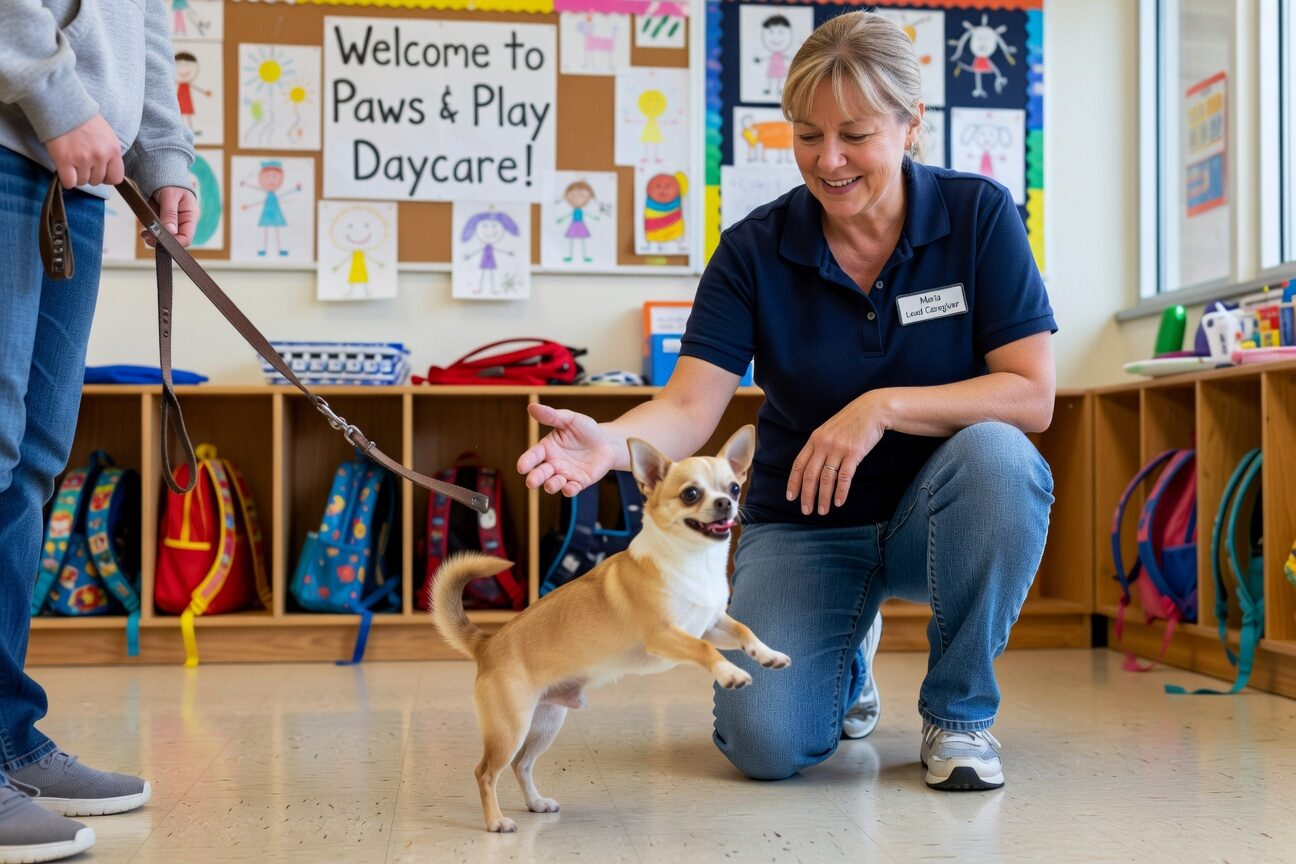
If your dog has been at a boarding facility, dog park, or groomer in the last seven to ten days and develops respiratory signs, the dog-to-dog pathogens are substantially more likely than transmission from your own flu.

What is far more likely than flu in a sneezing chihuahua
The single most common cause of repeated sneezing episodes in a chihuahua is not infectious at all. It is the reverse sneeze, a sudden snorting inhalation triggered by mild irritation of the soft palate. The chihuahua sounds primer covers the reverse sneeze in detail; the short version is that it sounds alarming and is, in most cases, benign.
Other common causes of sneezing or congestion in chihuahuas:
- Mild allergens (dust, pollen, cleaning products, scented candles).
- A foreign body in the nasal passage (a grass seed, a small piece of debris).
- Dental disease involving the upper teeth, where the roots are close to the nasal sinus. The dental-care primer covers the underlying anatomy.
- Tracheal collapse producing a honking cough that owners sometimes interpret as flu.
When the respiratory signs warrant a vet call
A reasonable owner-side decision tree:
Same-day vet call: Difficulty breathing at rest, blue or pale gums, persistent honking cough, lethargy paired with respiratory signs, fever (rectal temperature over 103.5°F), refusal of food and water, or any sign of distress that has progressed in less than 24 hours.
Vet call within the next few days: Persistent mild sneezing or coughing for more than three days, nasal discharge that is yellow or green, recent boarding/grooming/dog-park exposure with new respiratory signs, or the senior dog with a new respiratory pattern.
Watch and wait: Occasional reverse sneeze that resolves quickly, brief sneezing fits with no other signs, mild congestion that improves over 24 to 48 hours.
The general warning-signs primer covers the broader watch-list.
The prevention conversation, briefly
For chihuahuas who go to boarding facilities, doggy daycare, dog parks, or groomers, the relevant vaccines beyond the standard core series are bordetella and canine influenza. Talk to your veterinarian about which vaccines are appropriate based on your dog's exposure pattern; the vaccines are not universally needed, but they are very useful for the right population.
The full vaccination schedule reference covers the core series and the optional ones; canine influenza and bordetella are in the optional category and should be discussed case by case.
What to do when you, the human, are sick
If you have the flu and want to be cautious about your dog:
- Wash hands before handling food bowls, water bowls, or treats.
- Avoid face-to-face contact while you are actively coughing.
- Maintain the dog's normal routine as much as possible; the dog's stress baseline is the more relevant variable for her overall immune function.
- Watch for new respiratory signs in the dog over the following week; if any appear, mention the household flu in the vet call so they can consider it on the differential.
You do not need to isolate from the dog or move her to another household. The transmission risk is low, and the disruption to her routine is, on balance, a larger negative than the small positive of separation.
The bottom line, with the usual caveat
Human-to-dog flu transmission is real but rare; the more likely causes of chihuahua respiratory signs are reverse sneeze, mild allergens, dental issues, and dog-to-dog respiratory pathogens. Trust the gut feeling that something is off if signs are escalating; the cost of a clinic call that turns out to be nothing is small. Talk to your veterinarian about your specific dog and exposure pattern; the right answer for your dog is more useful than any general article.
Health at a Glance: What to Watch monitor_heart
| Condition | Key Signs | Prevention Tips |
|---|---|---|
| Dental Disease | Bad breath, tartar, red gums | Daily brushing, dental treats |
| Patellar Luxation | Limping, skipping, leg lifting | Weight control, avoid high jumps |
| Tracheal Collapse | Dry cough, gagging | Harness walking, avoid smoke |
| Heart Disease | Coughing, fatigue, fainting | Regular check-ups, heart-healthy diet |
| Hypoglycemia | Shaking, weakness, lethargy | Small, frequent meals |
Community Insights – FAQ help
help_outline What should every Chihuahua owner know about Health? expand_more
Stay observant — small changes in routine, energy, or appetite are usually the first signal something needs attention.
help_outline Is a tailored approach really necessary for Chihuahuas? expand_more
Yes. Their tiny size means smaller portions, gentler activity, and more frequent check-ins than larger breeds.
help_outline How often should we revisit our routine? expand_more
At least quarterly, and any time you notice a change. Small dogs, small adjustments — early and often.
Have a health question? Ask in the comments and we’ll bring it up with our vet team.
favorite