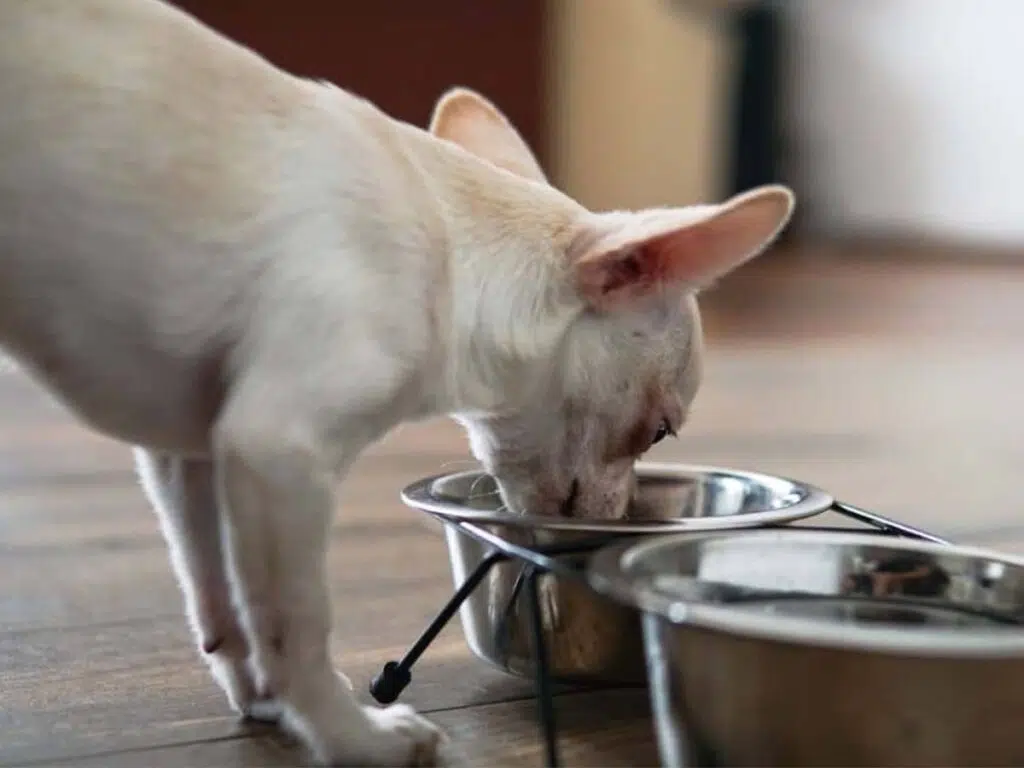


Why does a chihuahua's mouth need so much attention compared to a Labrador's? In one sentence: the breed packs the same forty-two adult teeth into a jaw a fraction of the size, which produces dental crowding, accelerated periodontal disease, and a rate of tooth loss that, untreated, materially shortens lifespan. The fix is unglamorous: daily home brushing, regular professional cleanings, and a willingness to do the small work that prevents the large work later.
I am going to walk through why the mouth matters, what daily care actually looks like, and the cadence your veterinarian is recommending.
Why the mouth matters more than most owners think
The American Veterinary Dental College reports periodontal disease in roughly 80 percent of dogs by age three. In toy breeds, the curve is steeper. The structural reason is dental crowding: a chihuahua's jaw is small but the teeth are not proportionally smaller, so the spacing between teeth is reduced, plaque accumulates faster, and gum disease starts earlier.

Periodontal disease is not, on the available evidence, a cosmetic problem. It is associated with chronic systemic inflammation, increased risk of cardiac and renal disease, and significant pain in the late stages. Dental disease is at the top of the breed's common health issues list for a reason.
Daily home care, what actually works
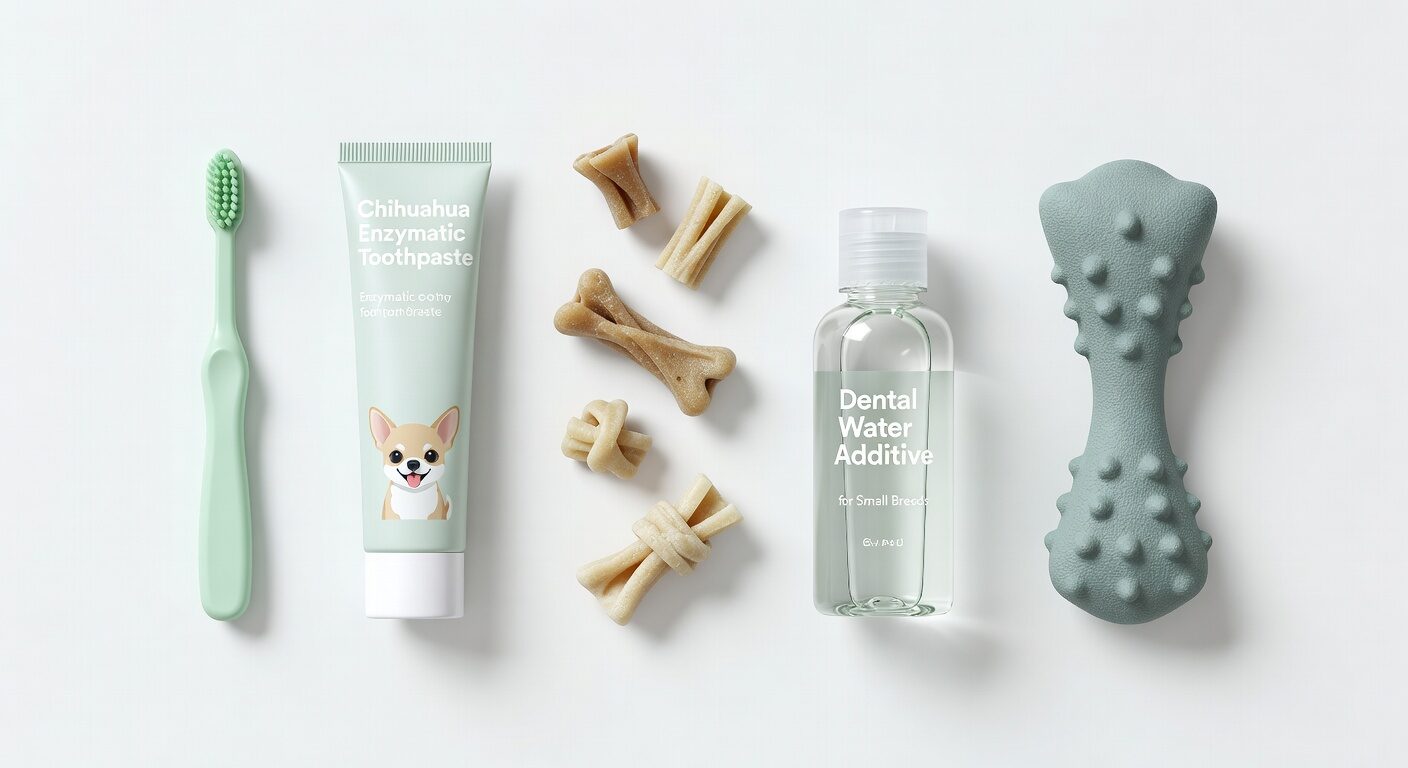
The single most effective intervention is daily brushing with a soft toothbrush and an enzymatic dog toothpaste. (Human toothpaste is not safe for dogs; xylitol and fluoride are problems.) The mechanics, briefly:
- Pick a brush sized for a small dog. A finger brush works for very small mouths; a soft pediatric toothbrush works for the slightly larger.
- Pick an enzymatic toothpaste. Poultry or beef flavored options are well-tolerated by most dogs.
- Start short. Thirty seconds, on the outside of the front teeth only, with a treat at the end. Build to one minute, on the outsides of all teeth, over two weeks.
- Run daily after that. Skipping days is fine; skipping weeks loses the gains.
A dog who actively resists brushing is a different conversation. The protocol is incremental desensitization, not force. Most chihuahuas, in my experience, accept brushing within two weeks if the introduction is gentle and rewarded.
Adjuncts: chews, water additives, and dental diets
A few supplemental tools that can help, with realistic expectations:
- VOHC-accepted dental chews. The Veterinary Oral Health Council maintains a list of dental products with documented plaque or tartar reduction. The VOHC accepted-products list is the document to consult; products without the seal often have weaker evidence.
- Water additives. Mixed evidence. Some products show modest plaque reduction; the effect is smaller than brushing.
- Dental diets. Veterinary dental diets are formulated with kibble that mechanically scrapes the teeth. They are real but supplemental; do not replace brushing.
- Bones and antlers. Generally not recommended for chihuahuas. The breed's teeth fracture relatively easily on hard chew items.
Professional cleanings, the cadence
Even with diligent home care, most chihuahuas need professional cleanings under anesthesia every 12 to 24 months. The cleaning includes scaling above and below the gum line, polishing, full-mouth dental radiographs, and any indicated extractions.
A few notes:
- Anesthesia is the standard. "Anesthesia-free" cleanings are not, on the available evidence, equivalent; they cannot clean below the gum line, where most disease lives. The American Veterinary Dental College position is unambiguous.
- Pre-anesthetic bloodwork. Standard before any cleaning, especially in seniors.
- Cost. $400 to $1,200 in most U.S. practices, more for cleanings that include extractions or advanced procedures.
- Cadence varies. A chihuahua with diligent home care may go 18 to 24 months between cleanings; a chihuahua without home care often needs annual cleanings.
Signs the mouth is in trouble
A short watch-list:
- Bad breath that does not improve with chews.
- Brown buildup at the gumline.
- Reluctance to chew on one side, food preferences shifting toward soft.
- Drooling, especially with blood streaks.
- Pawing at the face.
- Sneezing or nasal discharge (advanced periodontal disease can affect the nasal passages).
- Behavioral changes; pain in the mouth often presents as irritability or hiding before it presents as visible distress.
If two or more of these are present, the mouth is the next vet conversation. The general warning-signs primer covers the broader pattern.
Extractions and the honest cost
A chihuahua who has gone several years without dental care often arrives at the first cleaning needing significant extraction work. Multiple extractions, particularly of molars, can run the cost of a single cleaning visit into the $1,500 to $2,500 range, and the dog will spend a few days on soft food and pain management afterward.
The medical reality is that an extracted infected tooth is, almost always, a relief for the dog rather than a loss. Chihuahuas with extracted teeth eat well, live well, and often show personality changes within a week of recovery as long-standing pain resolves. The cost of catching up on missed dental care is real; the cost of not catching up is, in most cases, worse.
A note on cost management: many regional veterinary teaching hospitals offer dental services at reduced rates as part of training programs, and some practices offer payment plans for major dental work. The conversation belongs to your veterinarian; ask before assuming the price is fixed.
One thing to do this week
If you are not currently brushing your chihuahua's teeth, buy a finger brush and a small tube of enzymatic dog toothpaste this week. Do thirty seconds on the outside of the front teeth tonight. Treat after. Repeat tomorrow. By Friday you have a small habit; by month two, the habit is a routine and the dog has stopped resisting.
A chihuahua's dental care is not optional. It is the single highest-leverage thing you can do for the breed's lifespan, and it costs, in time, about a minute a day. The compounding, over fifteen years, is the difference between a senior with most of her teeth and a senior with six.
Health at a Glance: What to Watch monitor_heart
| Condition | Key Signs | Prevention Tips |
|---|---|---|
| Dental Disease | Bad breath, tartar, red gums | Daily brushing, dental treats |
| Patellar Luxation | Limping, skipping, leg lifting | Weight control, avoid high jumps |
| Tracheal Collapse | Dry cough, gagging | Harness walking, avoid smoke |
| Heart Disease | Coughing, fatigue, fainting | Regular check-ups, heart-healthy diet |
| Hypoglycemia | Shaking, weakness, lethargy | Small, frequent meals |
Community Insights – FAQ help
help_outline When should I call my vet about a behavior change? expand_more
Sooner than feels reasonable. A change in appetite, energy, or routine that lasts more than 48 hours is worth a phone call, not a wait-and-see.
help_outline How often should a healthy adult chihuahua see the vet? expand_more
Once a year through age seven. Twice a year from eight on. Dental checks are part of every visit.
help_outline Do chihuahuas need different care than larger breeds? expand_more
Yes. Smaller medication dosing, more frequent dental work, and closer monitoring for tracheal and patellar issues are standard in toy-breed care.
Have a health question? Ask your question in the comments. We will bring it up with the vet team.
favorite