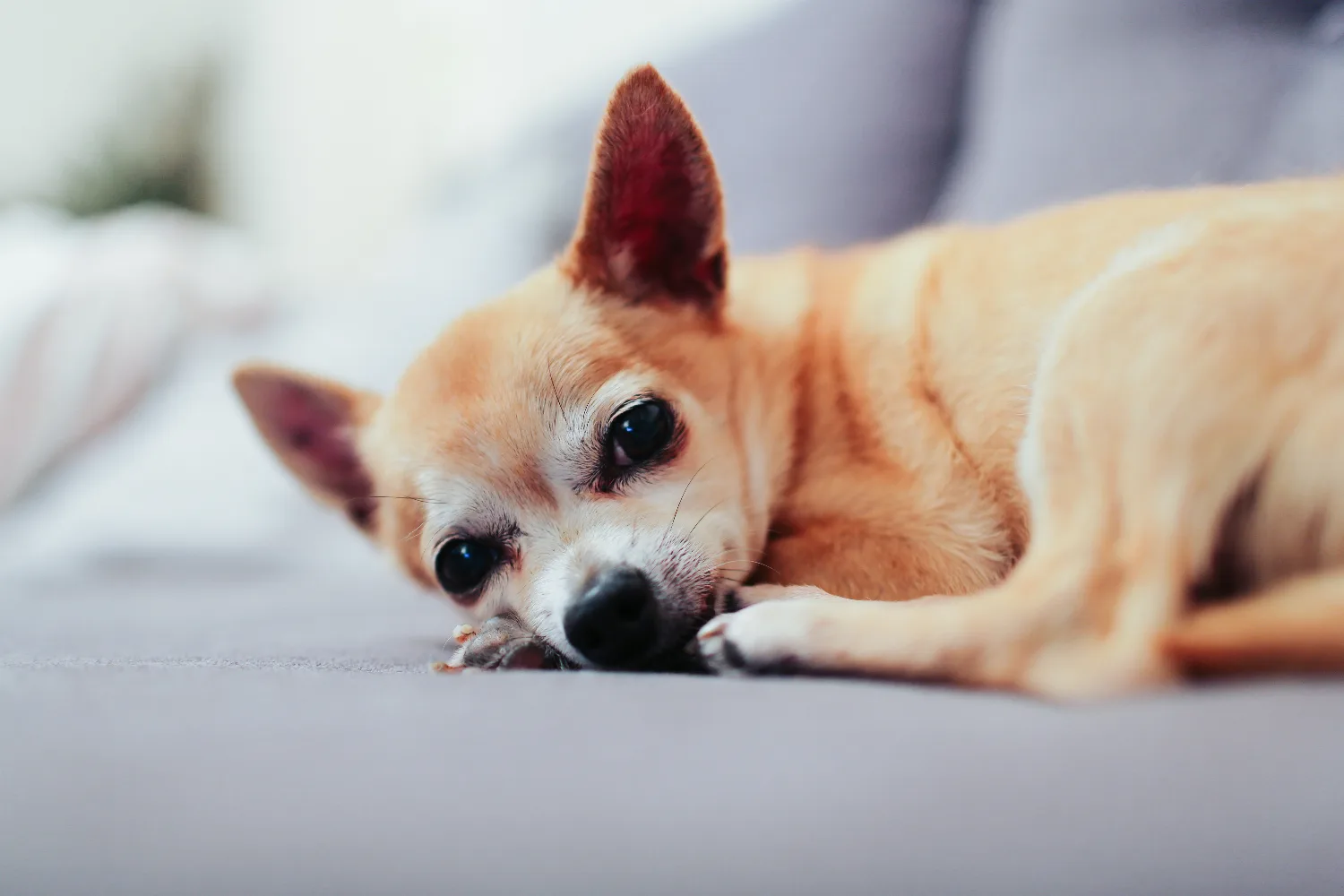
If you keep watching your gray-muzzled Chihuahua and wondering whether he is still happy, here is the honest answer: quality of life is not something you have to guess at every night. It is a pattern you can watch, write down, and support. Much of what worries owners of old Chihuahuas is manageable, and small changes at home can stretch the good days. One note first: this guide helps you observe and brief your veterinarian, not replace an examination.
Quick answer: Quality of life is a pattern you can track, not a nightly guess. Keep a good-day and bad-day calendar alongside a short list of three to five things your dog still enjoys, watch the trend over three or four weeks, and score it with your veterinarian using the HHHHHMM scale. Incontinence on its own is usually a management problem rather than a signal, and out-of-character snapping when touched is very often pain rather than dementia.
Normal aging versus changes that deserve attention
A good life for an old Chihuahua can look very different from his life at three: warmth, a predictable routine, food he enjoys, and his person nearby can be plenty. Several common changes are usually manageable rather than signs of suffering:
- Sleeping more and playing in shorter bursts
- A cloudy blue-gray eye tint, often a normal lens change, worth confirming at a checkup
- Hesitating on stairs or before a jump he used to make
- Selective hearing that is really early hearing loss
- A grayer face and a pickier appetite
One stiff morning after a cold night is not a verdict. Still, new behavior changes in an older dog can be the first sign of pain or illness, which is why the American Veterinary Medical Association advises that senior pets see a veterinarian twice a year or more. A steady slide across appetite, movement, and engagement over several weeks is the real signal to book a visit, not one bad afternoon.

Keep a good-day, bad-day record
The most useful habit is also the simplest. At the end of each day, mark it good or bad. A good day means he ate, moved comfortably, and seemed like himself. A bad day means obvious pain, refused meals, hiding, or distress you could not settle. Use a fridge calendar or a phone note.
This is not a home invention. End-of-life planning guidance shared by the LSU veterinary teaching hospital recommends exactly this: mark good and bad days on a calendar, list three to five things your dog loves, and watch whether he can still enjoy them. That worksheet draws in part on the HHHHHMM quality-of-life scale created by veterinary oncologist Dr. Alice Villalobos, which scores Hurt, Hunger, Hydration, Hygiene, Happiness, Mobility, and More good days than bad.
One day tells you almost nothing; three or four weeks of marks shows the real shape of things. Our companion piece on when it is time to say goodbye to a senior Chihuahua covers the harder decision, and weeks of real data beat one frightened memory.
When the mind changes: cognitive dysfunction
Sometimes the change is in his mind. Canine cognitive dysfunction, or CCD, is a brain aging syndrome loosely compared to dementia in people, and confusion often worsens in the evening and overnight. Veterinary behavior specialists group the signs under the acronym DISHAA, described by VCA Animal Hospitals:
- Disorientation: stuck in corners, lost in a familiar room
- Interaction changes: new clinginess, irritability, or less interest in greeting you
- Sleep-wake changes: pacing or crying at night, sleeping all day
- House soiling: accidents from a previously reliable dog
- Activity changes: aimless wandering or repetitive movements
- Anxiety: new restlessness when nothing has changed
Two cautions. These signs overlap with treatable problems, so veterinarians rule out pain, organ disease, and failing senses before settling on CCD. And an out-of-character snap during handling is very often pain talking, not proof the end has come. Dental disease is a common hidden ache in small seniors, so read up on the risks and realities of anesthesia for a dental cleaning before ruling one out.
Small comfort changes that stretch the good days
Most of what lengthens the comfortable days happens at home, and a tiny, easily chilled dog responds quickly to small adjustments.
Traction and movement. Slick floors punish stiff joints, so lay non-slip runners or yoga mats along his usual paths. A supportive harness spares his neck, and ramps or pet steps to the couch protect his joints; introduce them gently.
Warmth, bedding, and meals. Orthopedic bedding in a draft-free spot does real work for achy joints in a cold-sensitive breed. Keep food, water, and bed on one level, and try smaller, more frequent meals for an older stomach.
Incontinence and fading senses. Accidents are a management problem: more frequent potty breaks, washable bedding, and belly bands or diapers cover most of it, and scolding helps nothing. For dimming eyesight, night lights and furniture that stays put let him navigate from memory.
On supplements, go slowly: evidence for many products marketed to senior dogs, including CBD, is still limited, and natural does not mean harmless. Run anything new past your veterinarian first.
When to call your veterinarian
Call the same day if he refuses food for more than a day, cries or snaps when touched, cannot settle, or strings several bad days together. Seek emergency care now for labored breathing, collapse, repeated vomiting, a first or prolonged seizure, or gums that look blue, gray, or very pale.
For everything slower, ask your clinic for a quality-of-life consultation, an appointment for exactly these tracking and comfort questions. If clinic trips overwhelm a nervous senior, in-home veterinary hospice and palliative care exists in many areas, and your veterinarian can refer you. If you are considering an older dog, see our guide to adopting a senior or hospice Chihuahua, and when comfort care is no longer enough, there is gentle help in Chihuahua grief and pet loss support.
Frequently asked questions
How do I measure my senior Chihuahua's quality of life at home?
Keep the good-day, bad-day calendar and a short list of three to five things he loves, then watch the trend over three or four weeks. That record, plus the HHHHHMM scale your veterinarian can score with you, gives an honest picture.
Does incontinence on its own mean it is time?
No. On its own it is usually a management problem, and belly bands, washable bedding, and more frequent breaks handle it for many dogs. It still deserves a veterinary visit, since some causes are treatable. What matters is the whole picture of comfort, appetite, and engagement.
My old Chihuahua snapped at me during a bath. Is that dementia?
It might be confusion, but out-of-character snapping when touched is very often pain. Dental disease, arthritis, back trouble, or patellar luxation, a kneecap that slips out of place, can all make handling suddenly hurt. Treat it as a reason to book a pain exam, not a verdict on your dog.
Can canine cognitive dysfunction be treated?
It cannot be cured, but it can often be managed with a therapeutic diet, steadier routines, enrichment, night lights, and in some dogs medication. Earlier attention usually means more ways to help.
You have more power here than the worry lets you feel. Watch the pattern instead of panicking at one hard night, reshape a few rooms so his body has less to fight, and involve your veterinarian before anything feels urgent. For many old Chihuahuas, warm, fed, and close to their person is a genuinely good life. Start the calendar tonight, and let it do some of the talking at his next senior checkup.
