

If you live with a chihuahua and you also exercise, the research is more useful than the marketing. Daily physical activity for the breed is non-negotiable; the question is how to structure it without straining the dog. The 2018 review by Westgarth and colleagues, in BMC Public Health, summarized the literature on shared dog-owner exercise: the cardiovascular and behavioral benefits are real for both species when the activity is matched to the dog's size and condition. The chihuahua-specific corollary is that you cannot run a chihuahua at human running pace; the joint stress is meaningful and the heat dissipation is poor.
Below are the activities with documented evidence for toy breeds, and the ones that get owners to the emergency clinic.
Five Chihuahua-Appropriate Workouts
The list is conservative because the joints, pads, and respiratory tolerance of a five-pound dog are conservative. A chihuahua workout is not a small version of a Labrador workout; it is a different category.
1. The Twenty-Minute Brisk Walk
Two walks of twelve to twenty minutes each, at a brisk pace your dog can sustain without panting hard or pulling, are the foundation. Brisk means above sniff-pace; not above the dog's comfort. AKC's exercise reference for toy breeds confirms the cadence.
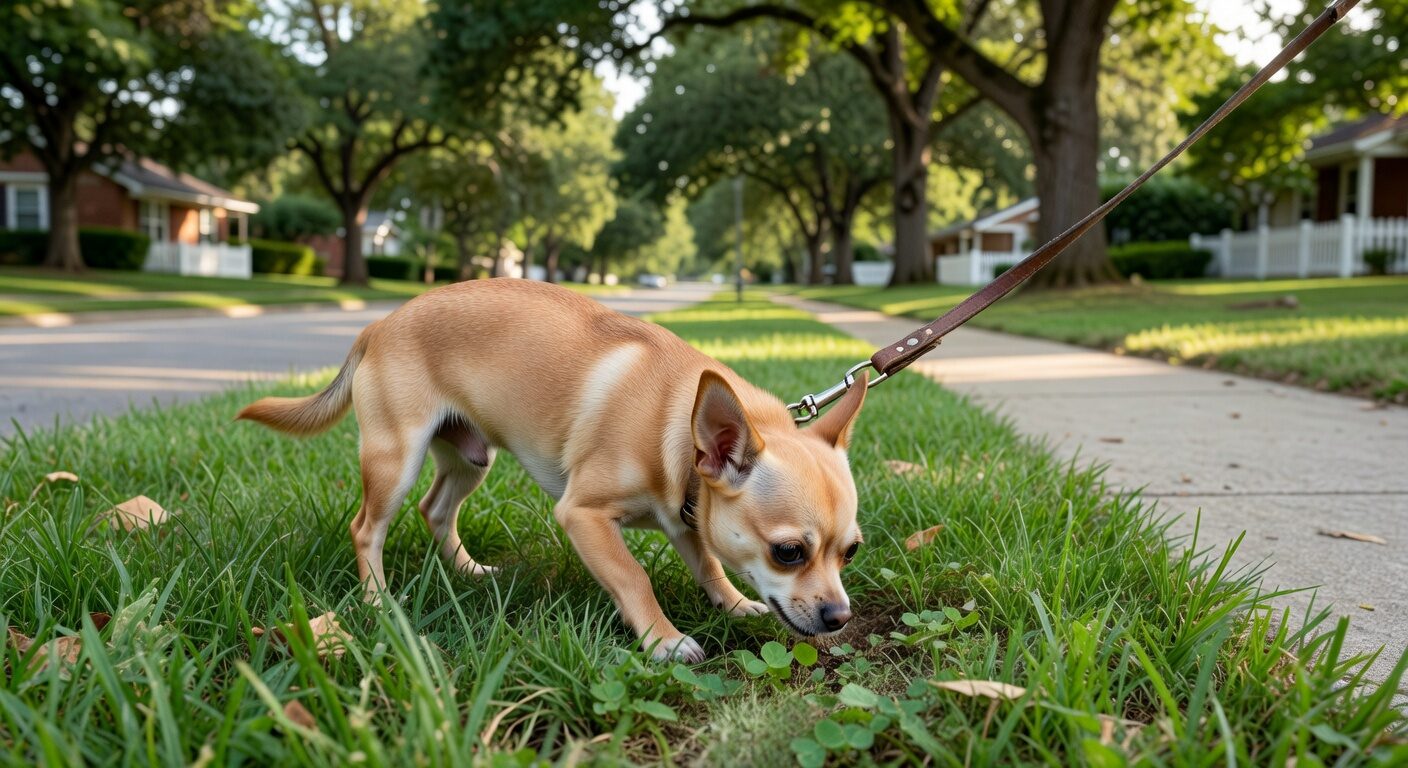
2. Sniffari Walks
Lower physical intensity, higher mental load. Twenty minutes of permission-led sniffing produces equivalent fatigue to twice the duration of pace-driven walking; the 2019 study by Duranton and Horowitz in Applied Animal Behaviour Science documented the energy-expenditure ratio. The companion piece on entertaining your chihuahua covers the broader enrichment framework.
3. Indoor Fetch
A small squeaky ball, three to five throws across a single room, two to three sessions per day. End before the dog's interest drops. The companion ten games piece covers fetch in detail.
4. Trick Training Blocks
Five-minute structured sessions twice a day. Sit, down, spin, paw, station, place. The cognitive load produces measurable fatigue; Companion Animal Psychology summarizes the underlying training research. The companion nipping and biting piece covers the redirection version of the same technique.
5. Stair-Free Indoor Obstacle Courses
Couch cushions, cardboard boxes, a low ramp. Built around the chihuahua's anatomy, not against it. The fundamental rule: no jumps that would land the dog harder than a step from your knee height. Patellar luxation risk is real in this breed; the Merck Veterinary Manual entry on patellar luxation covers the mechanism.
Workouts to Avoid in Toy Breeds
Long jogging or running. The chihuahua's stride is too short to keep up with a person's running pace, and the joint stress on small carpals and tarsals is documented. Walk briskly; do not run.
Hot-pavement walks. Asphalt above 86°F can burn pads in under sixty seconds; the companion paw care guide covers the back-of-hand pavement test.
Repeated jumping. Couch jumps, off-bed jumps, off-stairs. The breed's knees are not selected for repetitive impact load.
Swimming, in most cases. Some chihuahuas tolerate shallow water; many do not. Hypothermia onset in a wet small dog is fast.
What to Do This Week
One concrete action: pick the two walk windows on your calendar (one morning, one evening), and protect them. The walks are non-negotiable; everything else on this list is optional. Two short walks a day, paired with a five-minute trick block, will move the breed's fitness baseline within four weeks.
Gear, Dose, and Stop-Cue for Each Workout
For the brisk walk: a Y-front harness rather than a back-clip collar reduces tracheal pressure on a breed prone to collapsing trachea. Twelve to twenty minutes, twice a day. End the walk if panting does not regulate within thirty seconds of pausing, or if the dog begins to lag half a step behind your pace.
For the sniffari: a six-foot fixed-length leash, not a retractable. The retractable cord makes calibration of permission impossible; the dog cannot anticipate when the line will jerk. Twenty minutes once a day is the documented enrichment threshold from Duranton and Horowitz (2019). Stop when the dog stops voluntarily and looks back at you, which usually signals satiation rather than discomfort.
For indoor fetch: a small soft squeaky ball, three to five throws across one room, two to three sessions a day. End before the dog's interest drops, not after; the goal is leaving the dog wanting one more throw.
For trick training: pea-sized soft treats, a quiet room, a defined start cue and end cue. Five minutes is genuinely five minutes. End the session when the dog offers a trained behavior more slowly than the previous repetition, or starts offering an unrequested behavior in its place.
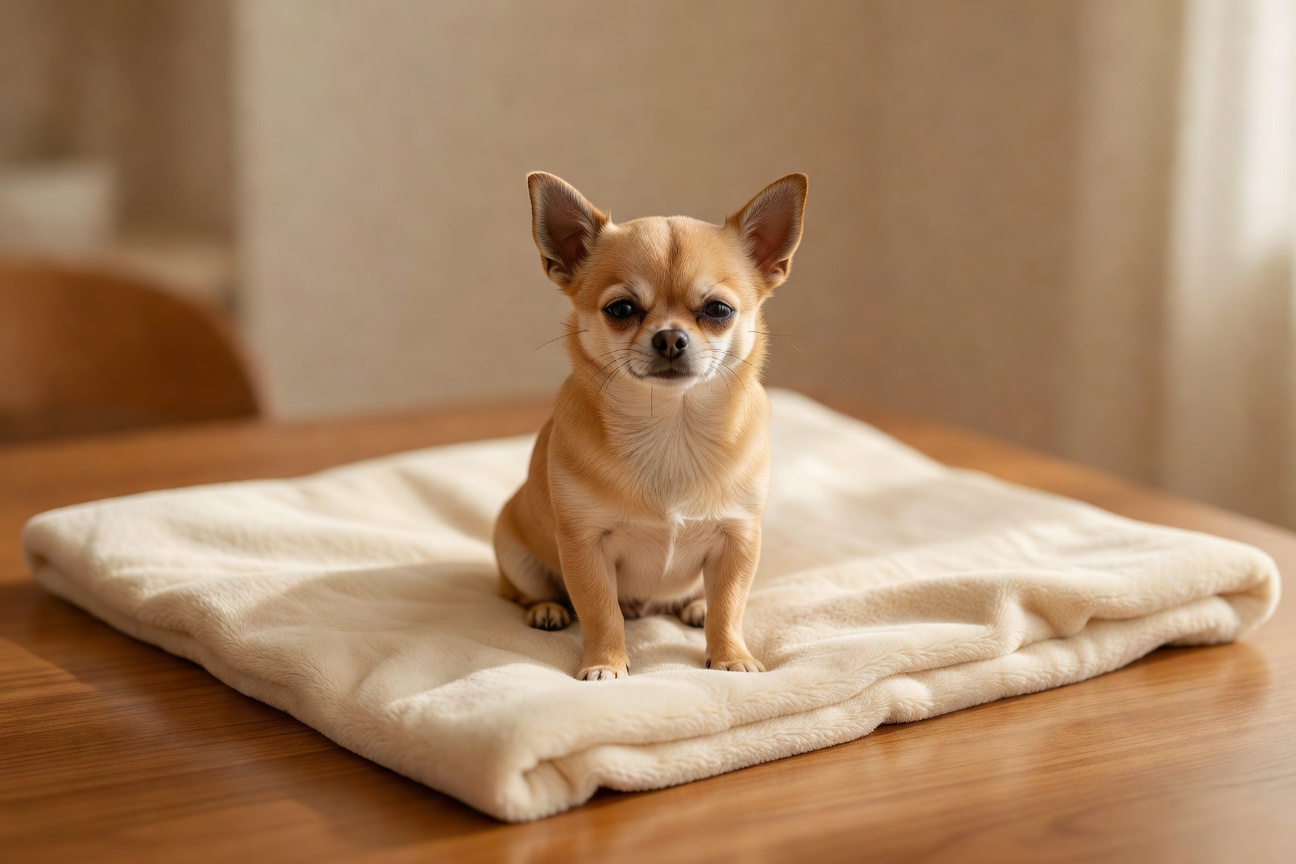
For the indoor obstacle course: a folded blanket as a tunnel cover, a low cushion, a wide book for a balance plank. Nothing taller than the dog's chest. Three to five minutes once a day. Treat any hesitation at a station the dog cleared yesterday as data, and lower the obstacle by half before the next session.
The pattern across the avoid list is also simple, as Murphy and colleagues note in their 2017 review in Topics in Companion Animal Medicine: any activity built around a larger dog's anatomy is the wrong template for a five-pound chihuahua. The breed needs cardiovascular and cognitive load at toy-dog scale, not scaled-down versions of medium-dog activity.
For more evidence-based training, browse the Training desk or subscribe for the next dispatch.
Gear That Works backpack
Harness (Not Collar)
A step-in harness is safer and more comfortable.
Lightweight Leash
4–6 feet gives freedom without losing control.
Treat Pouch
Keep rewards accessible and distraction-free.
ID Tag & Microchip
Always be prepared in case of separation.
Trainer Tip: Success on walks starts with reading your Chihuahua's signals and respecting their pace.
Was this guide helpful?
Was this guide helpful? Save the guide. Share it with one other chihuahua owner this week.
favorite