

Confession to start. The first time I left a chihuahua alone in an apartment for six hours without enrichment, in 2011, I came home to a methodically unraveled throw blanket distributed across three rooms. The chihuahua sat in the center of the largest pile with the small fixed expression of someone who had been very busy and would not be apologizing. The lesson was not that the dog was destructive; it was that I had under-budgeted the chihuahua personality.
The chihuahua is not, by selection, an idle breed. The dog is alert, opinionated, and equipped with a working memory long enough to find the precise corner of the throw blanket she has been working on for three days. The practical question is what to do about it.
What "Entertainment" Actually Means in This Breed
The chihuahua personality runs on engagement, not exercise. Mental stimulation produces a calmer, more contented dog faster than physical exercise does. The 2009 study by Bradshaw and colleagues, summarized in Applied Animal Behaviour Science, documented that ten minutes of focused problem-solving produces measurable reductions in stress-related behaviors equivalent to roughly thirty minutes of leashed walking.
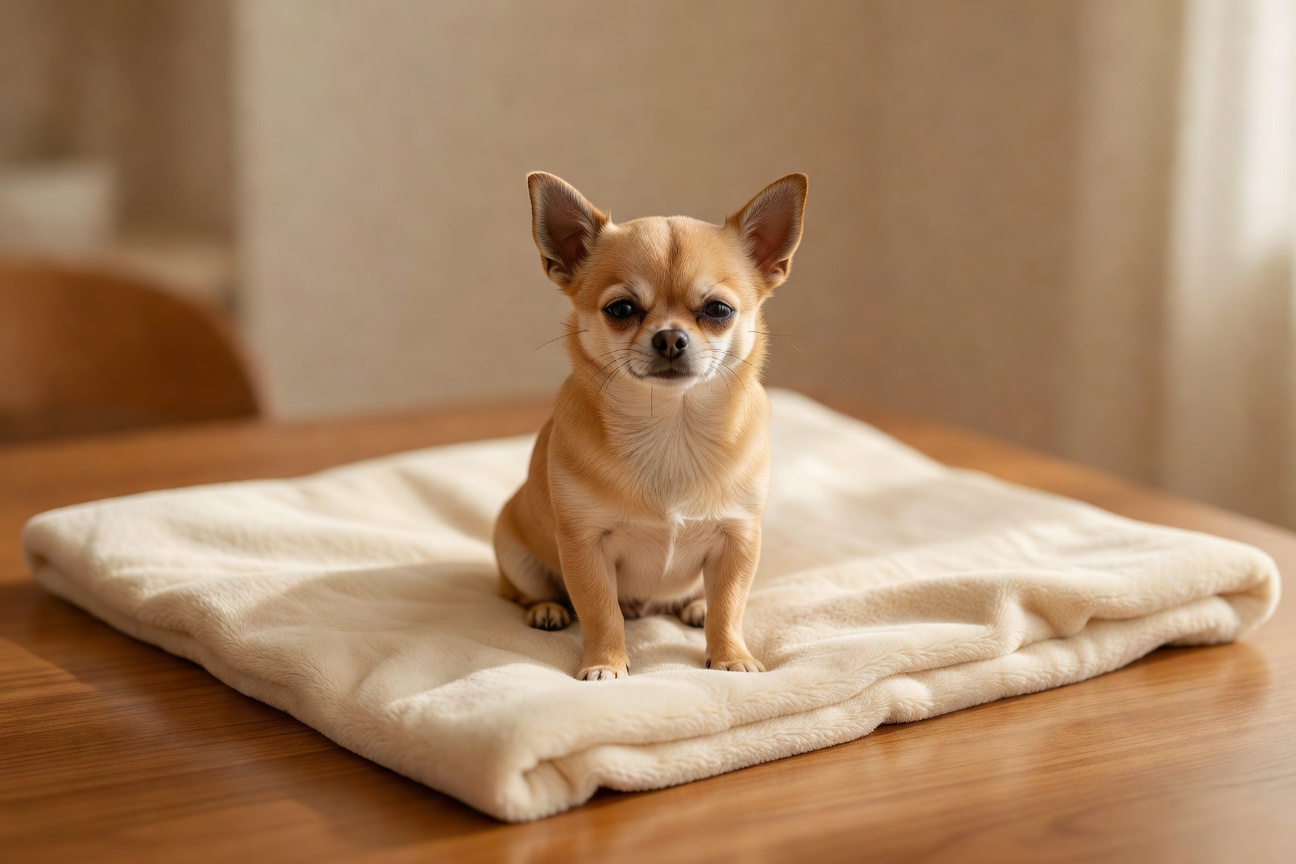
Translation: a tired chihuahua is a quiet chihuahua, and the most efficient route to tired is the puzzle, not the path.
Five Practices That Hold Up Over Time
1. The food puzzle, rotated
A small-breed-sized treat dispenser used at every meal turns a forty-second eating event into a six-to-ten-minute working session. The companion piece on ten games to play with your chihuahua covers the specific games and the cadence; the central rule is rotation, because a puzzle the dog has memorized is no longer a puzzle.
2. The two short walks
Two walks of fifteen to twenty minutes outperform one of forty-five. The reason is sniff-time: the chihuahua's sensory bandwidth runs faster than her stride, and a shorter walk with permission to sniff will tire the dog more thoroughly than a longer route at pace. AKC's sniffing-as-enrichment reference confirms the protocol.
3. Trick training, in five-minute blocks
The chihuahua learns reliably and remembers what she has learned. Sit, down, spin, paw, target, place, station: each can be built in five-minute sessions with high-value treats. The breed responds to positive-reinforcement training cleanly; the same dog will refuse to engage with aversive methods.
4. The "find it" game
Toss three or four small treats around a room while the dog watches. Release her to find them. The work is olfactory, not physical, and the breed's nose is more capable than her size suggests.
5. Window perches and scheduled boredom
Chihuahuas like to watch. A safe, elevated perch by a window provides hours of self-directed enrichment for a breed selected over centuries to keep an eye on the perimeter.
What Under-Enrichment Looks Like
The signs to read for: barking at low-stimulus events; destructive chewing of household objects; persistent following of the owner from room to room with low-grade restlessness; sleep that fails to progress to deep sleep. The companion seven nervous-aggression signs piece covers the body-language vocabulary; the under-enriched chihuahua often presents as a marginally nervous chihuahua.
What to Do This Week
One concrete step: introduce a single new puzzle toy and run a five-minute session before each meal for the next seven days. The behavioral effect is observable within the first week, and it is, in this breed, durable. The companion twenty-five chihuahua facts guide covers the breed-history reasons the working brain matters.
For more on the breed, explore the Breed desk or subscribe for the next dispatch.
Is this Chihuahua right for you? auto_awesome
Want to learn more about your Chihuahua? Compare breeds, check the standard, and find the chihuahua that matches your home.
favorite