
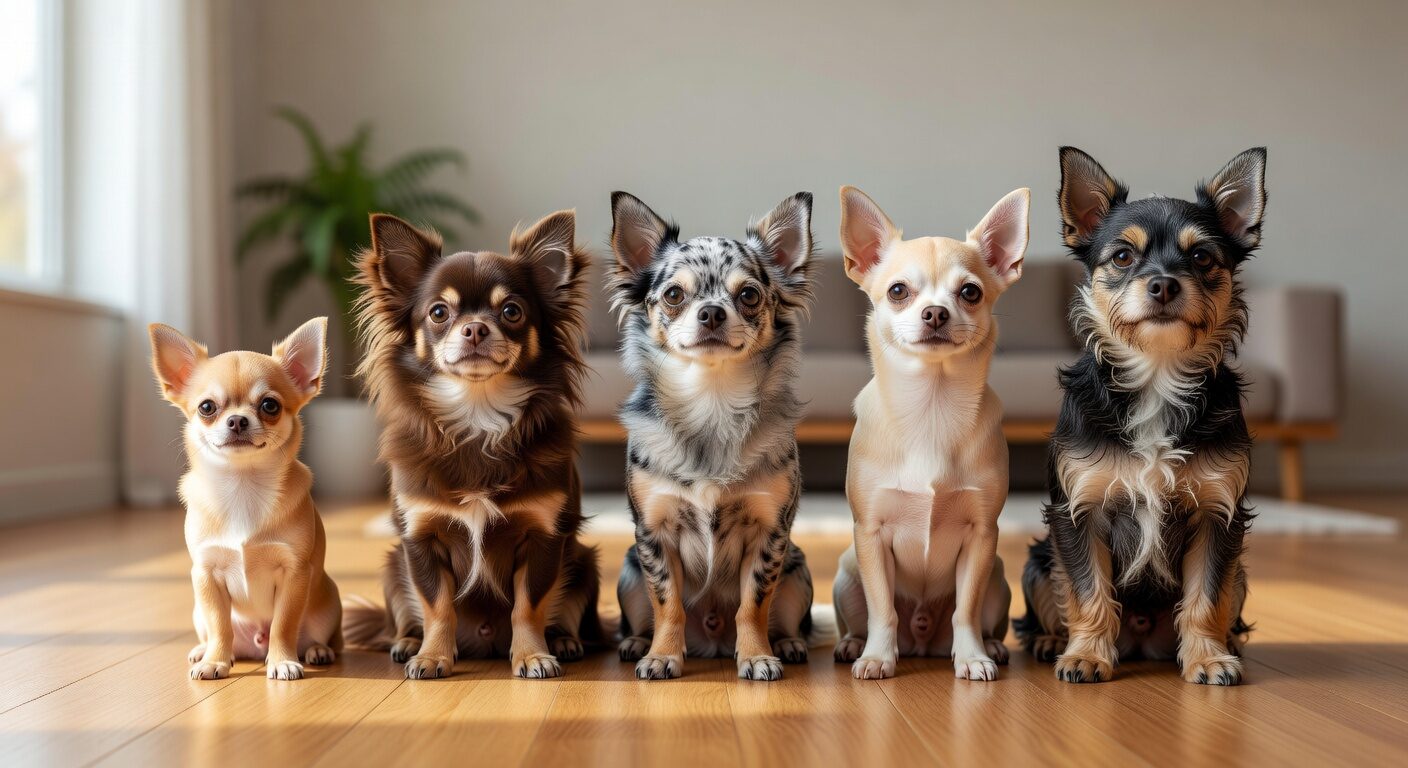
The question "what other breeds are similar to a chihuahua" is, in my experience, asked by two kinds of people: someone who already loves a chihuahua and is curious what near-neighbors exist, and someone who is interested in a chihuahua but worried about the popular caricature and looking for an alternative. Both are reasonable. The honest answer requires being precise about what kind of similarity we are talking about, because a breed can be similar in size, in temperament, in ancestry, or in conformation, and those overlap less than you would think.
I am going to walk through ten breeds that live near the chihuahua on at least one of those axes, in roughly descending order of true similarity, and try to be honest about where the comparison fails.
The true neighbors: size, temperament, and a touch of ancestry
These three are the closest matches across the most axes.
article_in_feed
A handpicked find for your tiny companion.
- The Russian Toy. Often confused with the chihuahua at distance; the Russian Toy is a separate breed with a similar size profile (under six pounds), erect ears, and a lively, owner-focused temperament. The differences are subtle and largely cosmetic; conformationally, the Russian Toy has a longer leg-to-body ratio and a less domed skull. The temperament is closer to the chihuahua’s than any other breed on this list.
- The Toy Fox Terrier. A smaller relative of the Smooth Fox Terrier developed in the United States in the early 20th century. Toy Fox Terriers share the chihuahua’s confidence, alertness, and people-orientation, with a slightly higher prey drive and a more terrier-like willingness to chase. Size is comparable; conformational variation is narrower in the Fox Terrier line.
- The Papillon. A toy spaniel with a long history in European courts. Papillons are notably trainable (they consistently rank in the top of toy-breed obedience trials), highly people-focused, and at the small end of the size distribution, though typically a little larger than a chihuahua at 5 to 10 pounds. Long-coated, butterfly-eared, and a different ancestry, but the day-to-day living experience overlaps.
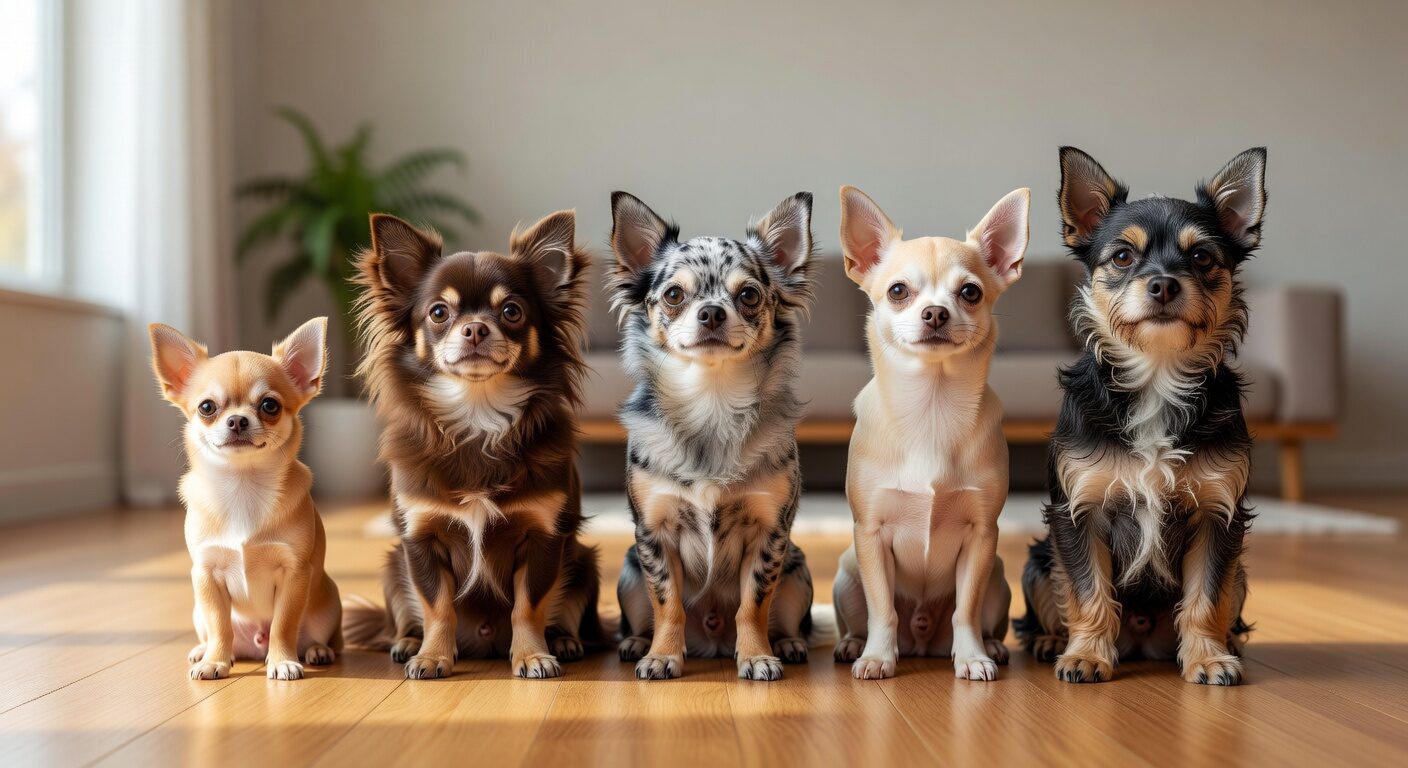
Size cousins, with different temperaments
These are similar in size but live in a different temperament neighborhood.
- The Maltese. Comparable size (4 to 7 pounds), long white coat, ancient lineage. Maltese tend to be gentler, less reactive, and more lap-oriented than chihuahuas; the breed is one of the older toy companions in the Western record, with continuous documentation back to the Mediterranean classical period.
- The Pomeranian. A spitz-type at the bottom of the size distribution (3 to 7 pounds), with a thick double coat and a fox-like face. Pomeranians are alert and vocal in similar ways to chihuahuas, but the coat care requirements and the vocal patterns differ.
- The Yorkshire Terrier. Comparable in size to the chihuahua (4 to 7 pounds), with a long fine coat and a terrier temperament. Yorkies are more independent and more chase-driven; the daily experience is similar in scale but different in flavor.
- The Miniature Pinscher. Often confused with chihuahuas at distance; the Min Pin is a smaller relative of the German Pinscher, not (despite the popular misconception) of the Doberman. The breed is more athletic, more independent, and more terrier-oriented. The Chipin cross is a real and reasonably common combination.
The ancestry cousins, near the New World line
A small subset of breeds share with the chihuahua a fragment of pre-Columbian American dog ancestry, established in the 2018 Ní Leathlobhair et al. paper in Science.
- The Xoloitzcuintli (Xolo). The Mexican hairless dog, in three sizes (toy, miniature, standard). The toy Xolo is comparable in size to a chihuahua and shares the deepest pre-Columbian genetic signature of any modern breed. The temperament differs; Xolos are typically calmer, more reserved with strangers, and less reactive.
- The Peruvian Inca Orchid. Another hairless breed of South American origin, with a documented archaeological record older than the modern AKC chihuahua. Smaller specimens overlap in size; temperament tends toward the gentle and reserved end.
An honorary mention, for the record
- The Italian Greyhound. Not closely related, but lives in the same household neighborhood: small, sleek, sensitive, and often bonded to one person. The IG is taller and more athletic than the chihuahua, but the day-to-day rhythm of life with one is recognizable to a chihuahua owner. The AKC breed standard is the right place to read further.
What these comparisons are actually good for
I would not, in general, recommend choosing a breed by similarity to another breed. The list above is most useful in two situations: when an owner of a chihuahua is curious which other small breeds might fit a future household, and when someone considering a chihuahua wants context for the temperament. In neither case is the list a substitute for meeting a few individual dogs of any breed; the practical facts of living with a chihuahua are not entirely captured by the comparison.
Most of the people who write to me asking this question already have a chihuahua. They are looking, often without quite saying so, for a second small dog that will live well alongside the first. The Russian Toy, the Toy Fox Terrier, and the Papillon are the three I most often suggest, in that order, for that purpose. None of them is a chihuahua. That, in the end, is not a problem. The chihuahua is the chihuahua. A second small dog can be its own thing, and the household, at six pounds plus six pounds, is still light on its feet.
Is this Chihuahua right for you? auto_awesome
Want to learn more about your Chihuahua? Compare breeds and find your perfect match.
favorite