
The history of the chihuahua is, in popular telling, a tidy line from the Aztecs to the modern lap. The actual record is messier, more interesting, and considerably better documented than the popular telling suggests. I am going to walk through what the genetic evidence actually says, what the archaeological record actually shows, and the parts that we still do not know, all of which a careful breed history should hold without trying to smooth over.
The honest version of this story is more honest about the gaps than the standard version. I think it is also more interesting.
The Techichi, and what we know about it
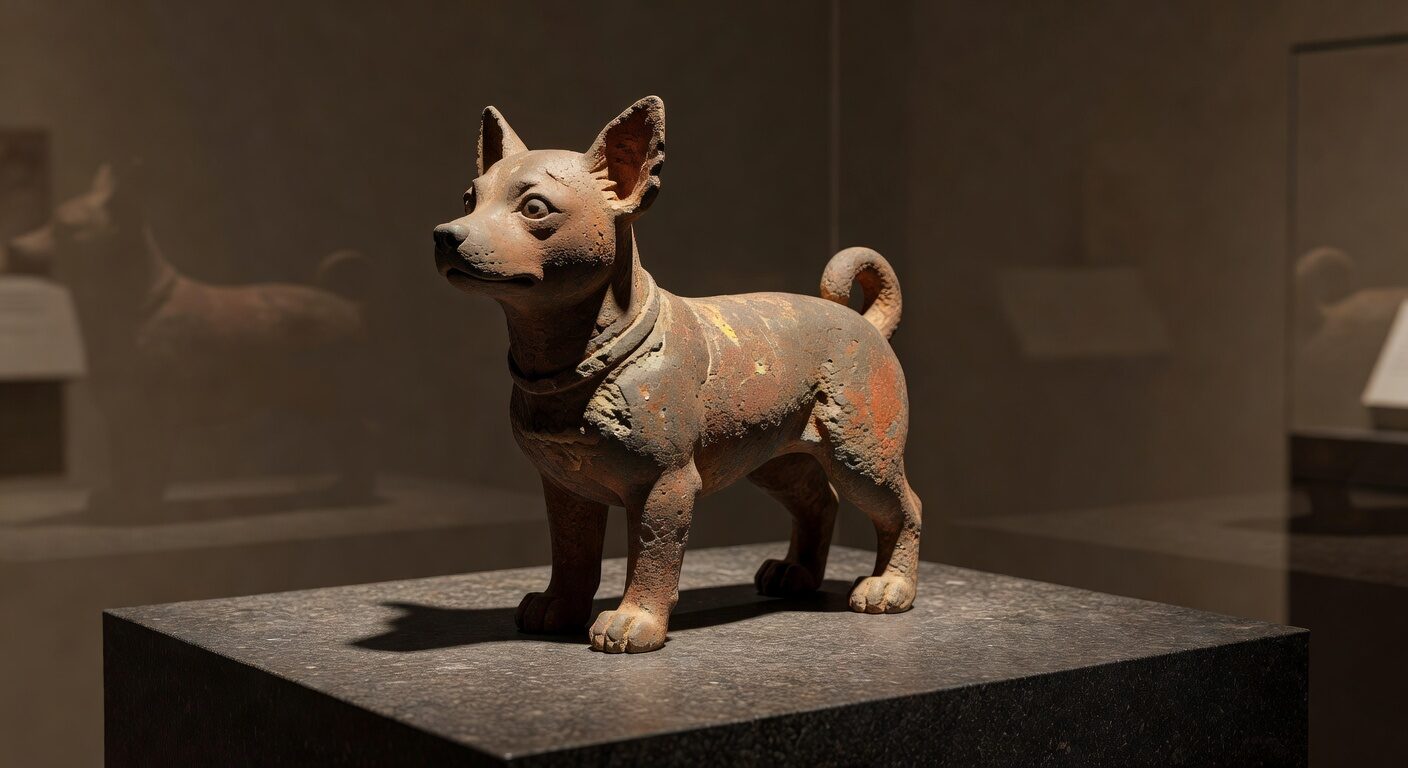
The pre-Columbian dog of central Mexico, called the Techichi by various Spanish chroniclers and described archaeologically as a small, mute, companion dog, is the closest documented ancestor of the modern chihuahua. The earliest reliable evidence is from Toltec ceramic figurines and burial sites dated to roughly 300 BCE through 1300 CE, with widespread dog imagery in Toltec, Aztec, and earlier Mexica cultures.
article_in_feed
A handpicked find for your tiny companion.
The 2018 paper by Ní Leathlobhair and colleagues in Science, on the genetic ancestry of the New World dogs, established that the indigenous American dog population was a single, distinct lineage that arrived with the first human migrations and was largely replaced after European contact. The chihuahua’s modern genome retains a small but detectable signature from this pre-Columbian lineage, particularly compared to most other modern breeds; this is the closest thing the field has to a settled finding on the breed’s deep ancestry.
The popular claim that the chihuahua is "the world’s oldest breed" is not, as commonly stated, accurate; the breed in its current form is a 19th-century construction. What is accurate is that the chihuahua carries more pre-Columbian American dog ancestry than most other modern breeds. The two claims are different, and the difference matters.
The 19th-century formation of the breed
The story of the modern chihuahua starts in the 1850s, in the Mexican state of Chihuahua, where small dogs of the Techichi-descended lineage were being kept by rural families and sold, often, to American visitors crossing the border. The breed name is geographic; the dogs were sold from Chihuahua, and the name stuck.
The first dogs registered with the American Kennel Club arrived in 1904, with a chihuahua named Midget being the first officially registered specimen. The early American breeders, working primarily in Texas and California, standardized the type around the smooth-coat short-haired specimen most familiar today; the long-coat variety, accepted as a single breed with two coat varieties, came later.
A small confession from the breed-history desk: the founding population of the modern AKC chihuahua was small, and the genetic bottleneck shows. Inbreeding-related conditions in the breed (hydrocephalus, patellar luxation, mitral valve disease) are partially the legacy of that founder effect. The common health issues list is, in some ways, a footnote to the founder population.
What the modern genetics actually show
A careful read of the modern canine genetic literature places the chihuahua near, but not within, the small ancestral cluster shared with several other small American breeds. Plassais and colleagues (2019, Cell Reports) mapped body size in dogs to a relatively small number of large-effect loci, including IGF1; the chihuahua sits near the smallest end of the body-size distribution, with the IGF1 variant fixed in the breed.
The widely repeated claim that the chihuahua descends from a fennec fox or some other non-canid ancestor is not supported by any genetic evidence; chihuahuas are Canis lupus familiaris, with a known ancestry that places them squarely within the dog clade.
Why? Because every modern chihuahua, like every modern dog, descends from the original Eurasian wolf domestication event approximately 15,000 to 40,000 years ago, with subsequent geographic and cultural lineage formation. The breed is small and ancient-feeling; it is not a separate species.
The modern breed, and how it became what it is
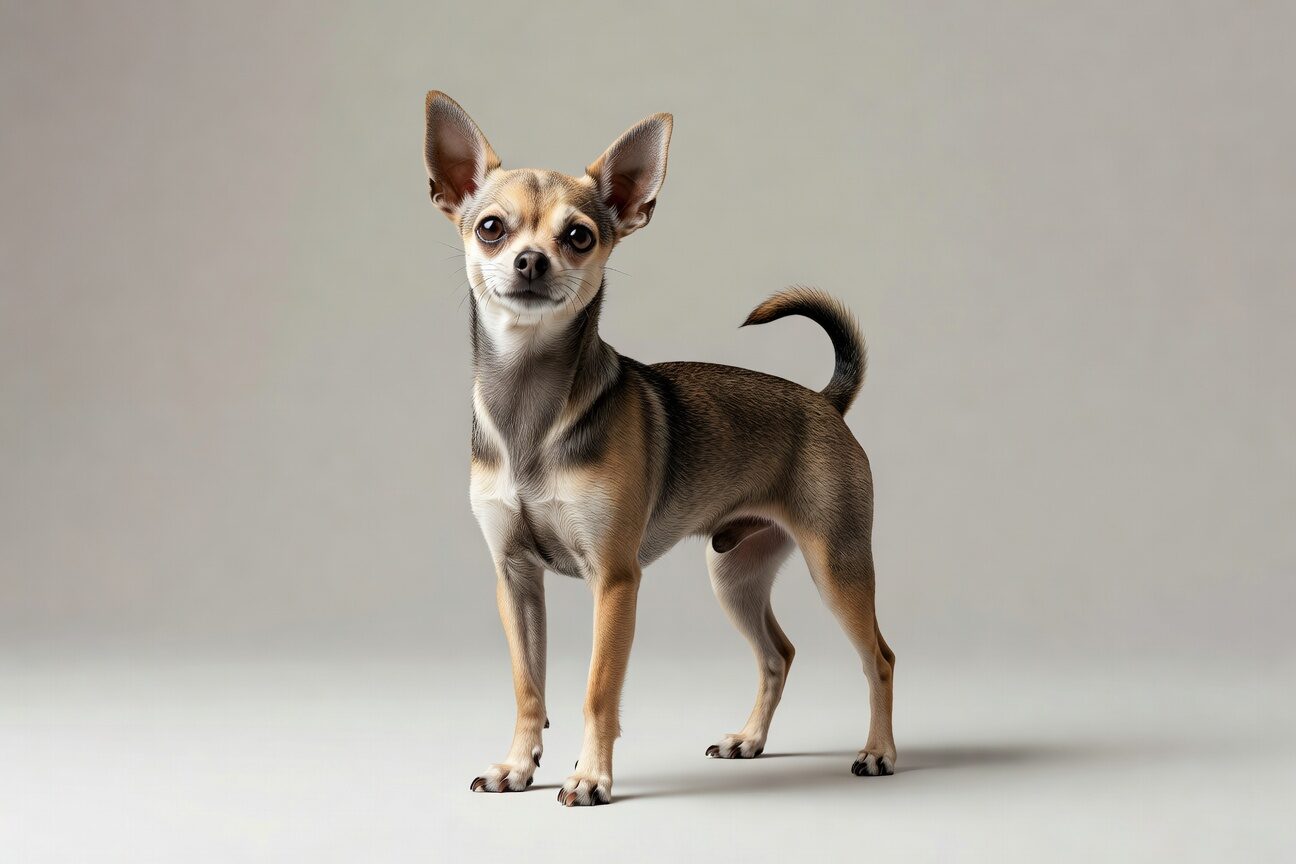
The modern chihuahua, as registered under the AKC breed standard, has been a stable type since roughly the 1920s, with two coat varieties (smooth and long) and a maximum weight of six pounds. The breed has been one of the AKC’s most consistently popular toy breeds since the 1950s; the popularity peaked in the early 2000s and has since stabilized at a high but lower level.
A few practical facts that often get lost in the romantic version:
- The molera, the soft spot on the skull retained by some chihuahuas into adulthood, is a breed trait, not a defect. It is a remnant of slow cranial closure and is usually clinically silent.
- The "apple head" and "deer head" terms are colloquial; the AKC standard recognizes only the apple-head conformation. Deer-head chihuahuas are common in the pet population but not in the show ring. The full taxonomy of chihuahua types covers the conformational variations.
- The breed’s color genetics are complex; merle is not part of the standard and is associated with health concerns when bred merle-to-merle.
What this history is good for
I am not going to argue that breed history matters for daily care. It does not, mostly. What it does do, when it is told honestly, is give an owner a more accurate sense of the dog they actually live with. The chihuahua is an old lineage with a young breed standard; she is not a recent confection of fashion, but she is also not a 3,000-year-old aristocrat.
What she is, in the end, is a small dog with a long memory in her genome and a short body in her bones. A working list of breed facts covers the practical bits. The history is the context.
If you have a chihuahua in the next room as you read this, the breed history I have just walked through is hers. She does not know it. You now know slightly more of it. The two of you can sit with that, on the couch, for the next hour.
Is this Chihuahua right for you? auto_awesome
Want to learn more about your Chihuahua? Compare breeds and find your perfect match.
favorite