


Which dog food is best for a chihuahua? The honest answer is the one that meets the AAFCO nutrient profile for your dog’s life stage, fits the calories your dog actually needs, and lands in a kibble small enough to chew without bolting whole. Brand loyalty is a small part of that conversation; the label is most of it.
I am going to walk you through what your veterinarian is looking at on the back of the bag, in plain language, so the next time you stand in the food aisle you are not picking by the dog on the front.
What an AAFCO statement actually means
The Association of American Feed Control Officials (AAFCO) sets the nutrient profiles that pet foods in the United States are expected to meet. The statement on the back of the bag tells you two things. First, the life stage the food is formulated for: growth (puppy), adult maintenance, all life stages, or supplemental. Second, how the food was substantiated: by formulation to a profile, or by feeding trial. Feeding trials are the higher bar.

For a chihuahua, the life stage matters more than most owners realize. A growth formula is built for the calorie load and the calcium-to-phosphorus ratio a puppy needs. An adult maintenance formula is leaner and lower in calcium. An "all life stages" food is built to satisfy the puppy line, which can mean it is too rich for a five-pound retiree. If you are feeding a senior the same kibble you fed at six months, that is the first thing to revisit.
Calories, kibble size, and the math the vet is doing
A typical adult chihuahua at 5 pounds (2.3 kg) needs roughly 150 to 200 kilocalories per day at a normal activity level. The arithmetic uses a resting energy requirement formula and then a multiplier for activity, neuter status, and life stage. The number is small. A few extra training treats matter at this size in a way they do not at fifty pounds.
Two practical numbers to read off the bag:
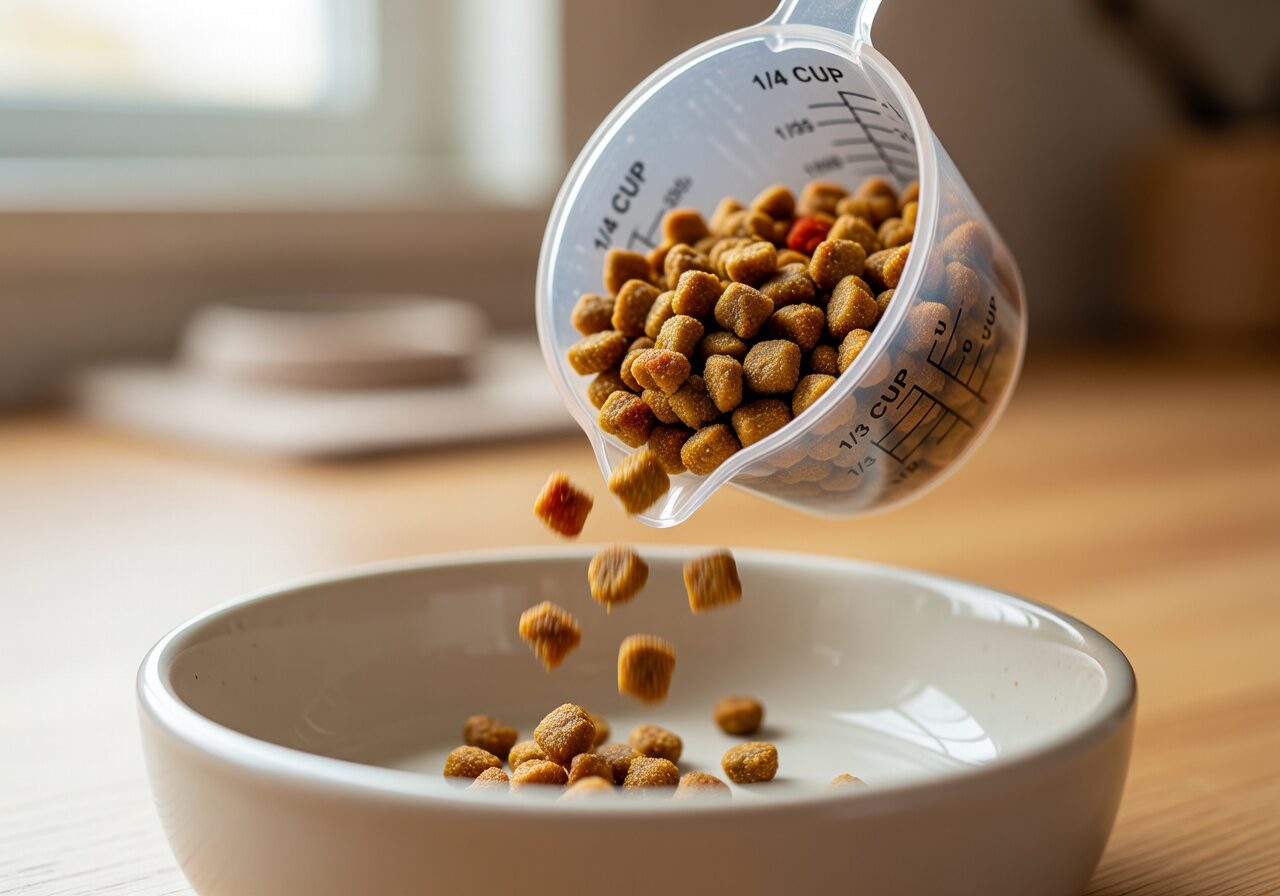
- Calories per cup or per gram. Premium brands often run 380 to 460 kcal per cup, which means a chihuahua’s daily portion is closer to a half cup than a full cup. Underfeeding fluffy-looking dogs and overfeeding lean ones is common because owners read the wrong column on the chart.
- Kibble diameter. Toy and small-breed lines use a smaller piece (often around 6 to 8 mm) for a reason. Chihuahuas have crowded jaws and a high rate of dental disease; a kibble they can crunch reduces the chance of swallowing pieces whole and increases mechanical cleaning, modestly.
How to actually pick a bag
When a client asks me what to buy, the framework is the same:
- AAFCO statement matches life stage. Puppy for under 12 months. Adult maintenance for 1 to 7 years at a healthy weight. Senior or adult maintenance for 8 and up, depending on weight and bloodwork.
- Calories sized to your dog. Use the body condition score, not the bag chart, to set portion. Your vet can show you a 1-to-9 BCS in 30 seconds at a wellness visit.
- Manufacturer transparency. The WSAVA Global Nutrition Guidelines publish a set of questions you can ask any brand: who formulates the diet, do they employ a board-certified veterinary nutritionist, where is it manufactured, and have feeding trials been done. The answers separate marketing from food science.
- A protein and a carbohydrate your dog actually digests. If your chihuahua has chronic loose stool or itchy skin on a particular formula, change the protein and the carbohydrate, not just the brand. Safe additions like green beans and blueberries can fill in fiber and antioxidants without tipping the calorie budget.
What to skip, and what is mostly noise
Grain-free is not the safety story it was marketed as. The FDA has been investigating a possible link between grain-free legume-heavy diets and a form of dilated cardiomyopathy. The link is not settled, but the precautionary read for a small dog with a healthy heart is to use a brand and a recipe with a feeding-trial substantiation, with grains, unless your veterinarian has steered you off them for a reason.
"Human-grade" and "natural" are regulated terms with narrow meanings; they are not synonyms for nutritionally complete. A diet that is human-grade and incomplete will still cause a deficiency. Conversely, a diet that is unfashionable on the bag’s front but meets AAFCO and has a transparent nutritionist is doing the job.
Homemade is a serious project. If you want to feed home-cooked, do it through a board-certified veterinary nutritionist’s recipe, not a Pinterest list. The errors I see most are calcium deficiency and protein excess, both of which are invisible until they are not.
A note on puppies and seniors
For puppies, kibble size and feeding frequency matter as much as the formula. A chihuahua puppy under twelve weeks needs three or four small meals a day, not two, to avoid hypoglycemia. My puppy-care primer walks through the schedule.
For seniors, watch the calorie load and the dental load. A 12-year-old chihuahua with two molars left has different chewing mechanics than a 4-year-old. Softening the kibble with warm water for ten minutes is a small kindness that adds compliance.
The bottom line
You do not need a boutique bag to feed a chihuahua well. You need a complete-and-balanced food that fits your dog’s life stage, that delivers the right calories at the size you serve, and that comes from a manufacturer who can answer the WSAVA questions without flinching. If your dog is at a healthy weight on the food you have, with a glossy coat and normal stool, you are probably already there.
If your dog is gaining or losing weight you did not budget for, or losing coat quality, or passing soft stool consistently, take a current bag, the feeding chart, and a written week of portions to your next vet visit. Ask for a body condition score and a calorie target on the chart. The fix is usually a change in portion or a change in life stage, not a change in brand.
Health at a Glance: What to Watch monitor_heart
| Condition | Key Signs | Prevention Tips |
|---|---|---|
| Dental Disease | Bad breath, tartar, red gums | Daily brushing, dental treats |
| Patellar Luxation | Limping, skipping, leg lifting | Weight control, avoid high jumps |
| Tracheal Collapse | Dry cough, gagging | Harness walking, avoid smoke |
| Heart Disease | Coughing, fatigue, fainting | Regular check-ups, heart-healthy diet |
| Hypoglycemia | Shaking, weakness, lethargy | Small, frequent meals |
Community Insights – FAQ help
help_outline When should I call my vet about a behavior change? expand_more
Sooner than feels reasonable. A change in appetite, energy, or routine that lasts more than 48 hours is worth a phone call, not a wait-and-see.
help_outline How often should a healthy adult chihuahua see the vet? expand_more
Once a year through age seven. Twice a year from eight on. Dental checks are part of every visit.
help_outline Do chihuahuas need different care than larger breeds? expand_more
Yes. Smaller medication dosing, more frequent dental work, and closer monitoring for tracheal and patellar issues are standard in toy-breed care.
Have a health question? Ask your question in the comments. We will bring it up with the vet team.
favorite