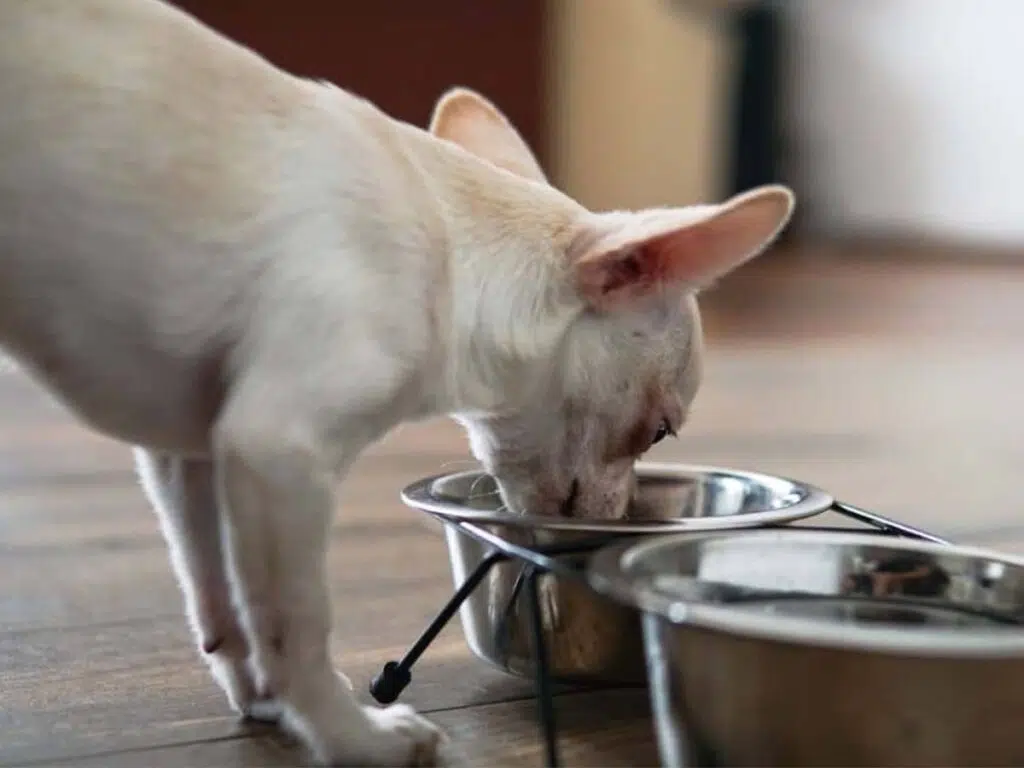


Your chihuahua refused breakfast, threw up the small bit she did eat, and is sleeping in a tight curl on the couch. What do you actually do? In a healthy adult dog with a single bout of vomiting and no other concerning signs, the answer is usually a short fast and a bland diet for 24 to 48 hours. In a small dog, the calculus is faster than at fifty pounds, and there is a short list of yellow flags that move "monitor at home" into "call the vet today."
I am going to walk through the home protocol, the yellow flags, and the timing your veterinarian wants you to use.
The home protocol, when home is appropriate
For an otherwise healthy adult chihuahua with one or two episodes of vomiting or soft stool and no other concerning signs, a conservative home approach is reasonable for 24 hours.
- Withhold food, not water, for 8 to 12 hours. A six-pound dog dehydrates quickly; do not extend the fast. Offer small amounts of water frequently rather than a full bowl.
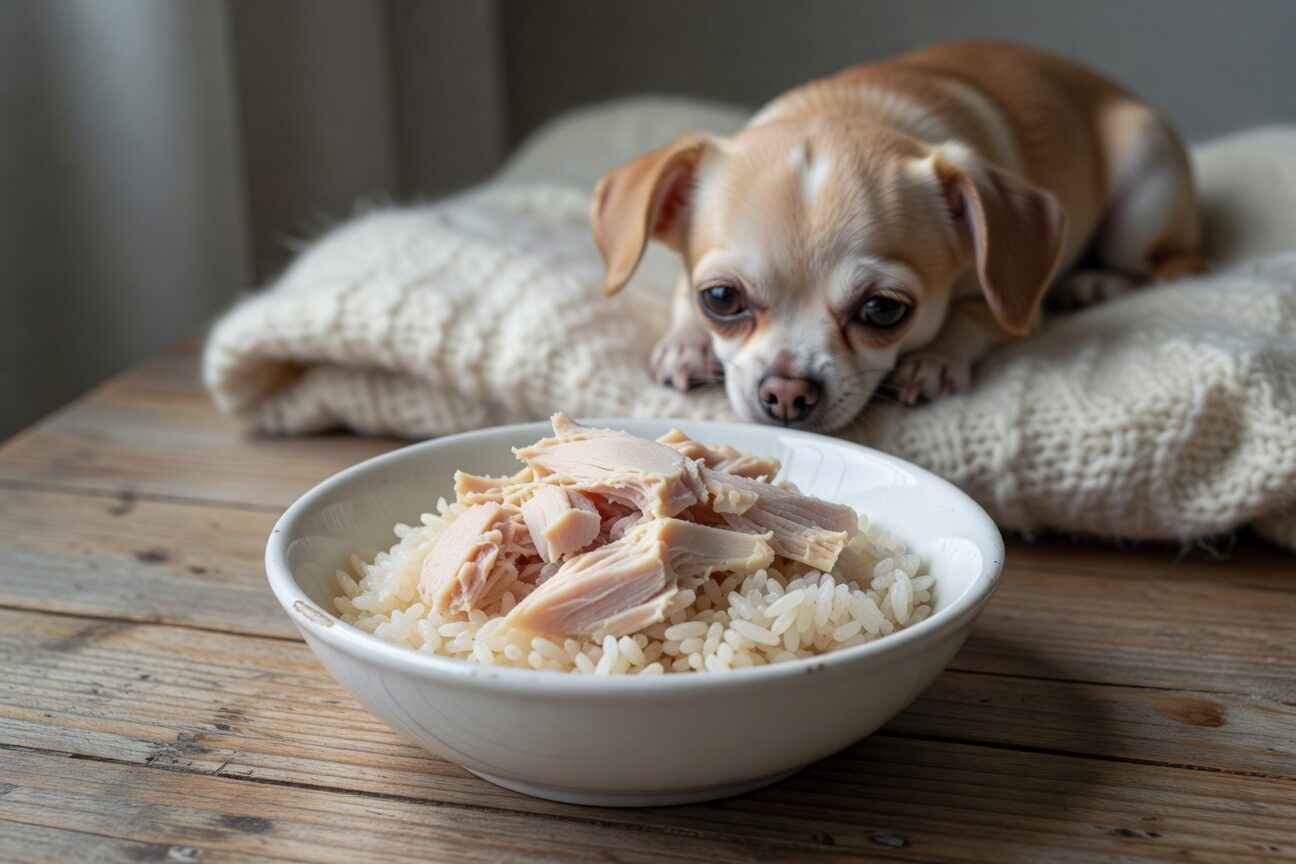
- Reintroduce a bland diet. Plain boiled chicken (skin off, fat off) and plain white rice in a 1:2 ratio, in small portions four times a day. Two tablespoons of bland mix per meal for an average adult chihuahua is plenty.
- Hold this for 48 hours. If stool firms and vomiting stops, transition back to the regular food over the next 48 hours by mixing the bland diet with regular kibble in decreasing proportion.
- Skip the human medications. Pepto-Bismol, Imodium, and ibuprofen are not safe to dose at home in a small dog without veterinary guidance.
The yellow-flag list
These move the situation from "monitor at home" to "call the veterinarian today." If two or more are present, or any one is severe, call the clinic.
- More than three episodes of vomiting in 12 hours, or any vomiting in a puppy under six months.
- Repeated diarrhea, especially with blood, mucus, or a black tarry appearance.
- Refusing water as well as food.
- Lethargy beyond a normal nap; the dog is hard to rouse, or the gum color is pale or muddy.
- A distended belly, or repeated unproductive retching (the dog tries to vomit but nothing comes up).
- A known or possible toxin exposure (chocolate, grapes, raisins, xylitol, household cleaners, plants). Call the ASPCA Animal Poison Control hotline at 888-426-4435 immediately.
- Pre-existing conditions that change the math: diabetes, Addison’s disease, kidney disease, recent surgery, or pregnancy.
A note on hypoglycemia in puppies: a chihuahua puppy under twelve weeks who is not eating and is becoming wobbly may be moving toward a hypoglycemic crisis, which is a same-hour emergency, not a same-day one. The emergency vet visit primer walks through what to bring.
What is probably going on
Most acute stomach upset in healthy adult chihuahuas falls into a few buckets. Dietary indiscretion (a found scrap, a treat from a child, a bite of something on a walk) is the most common; stress (travel, a new house, a new dog) is the next; mild gastritis from sudden food changes is third. The Merck Veterinary Manual on gastritis in small animals is the technical reference if you want to read more.
A few less common but important causes that mimic simple upset: foreign body ingestion (small toys, hair ties, sock fragments), pancreatitis (especially after a high-fat meal), and parasitic infection in younger or rescue dogs. Your veterinarian will run the differential based on the history you bring; the better your history, the faster the answer.
A practical tip: keep a quick log on your phone the day this happens. Time of last normal meal, what was in the bowl, what was in the trash, what was on the walk, time of first symptom, frequency since. The clinic appreciates the log and the answer comes faster.
Quiet prevention, week to week
A few small habits reduce the frequency of these calls.
- Slow food transitions. Switch foods over seven days, mixing in increasing proportions, even between bags of the same brand.
- Treat math. Treats should be no more than 10 percent of daily calories. For a chihuahua, that is one or two small treats a day, not a constant pocket supply.
- Trash and counter discipline. Most "mystery vomits" are not mysteries; they are countertops. A short list of safe human foods is more useful than a complete list of unsafe ones.
- Stress contributors. A stressed chihuahua eats less and vomits more. Stress-management protocols are the same in this context as in others.
When to act, in one paragraph
Healthy adult dog, one bout, otherwise normal: bland diet for 48 hours, then transition back. Repeated vomiting, blood, black tarry stool, lethargy, refusing water, possible toxin exposure, or any vomiting in a puppy: call the clinic today. If you are reading this on a Sunday at 11 p.m. and you cannot rouse your dog, that is the emergency room, not the morning. Trust the gut feeling that something is wrong; veterinarians would rather see a same-day call that turns out to be nothing than a Tuesday call that should have been Sunday.
If your chihuahua has had three or more episodes of stomach upset in the last six months without a clear trigger, ask your veterinarian for a focused work-up rather than another round of bland diet. Recurrent upset is its own diagnosis to chase, and the answer is rarely the food bowl alone.
Health at a Glance: What to Watch monitor_heart
| Condition | Key Signs | Prevention Tips |
|---|---|---|
| Dental Disease | Bad breath, tartar, red gums | Daily brushing, dental treats |
| Patellar Luxation | Limping, skipping, leg lifting | Weight control, avoid high jumps |
| Tracheal Collapse | Dry cough, gagging | Harness walking, avoid smoke |
| Heart Disease | Coughing, fatigue, fainting | Regular check-ups, heart-healthy diet |
| Hypoglycemia | Shaking, weakness, lethargy | Small, frequent meals |
Community Insights – FAQ help
help_outline When should I call my vet about a behavior change? expand_more
Sooner than feels reasonable. A change in appetite, energy, or routine that lasts more than 48 hours is worth a phone call, not a wait-and-see.
help_outline How often should a healthy adult chihuahua see the vet? expand_more
Once a year through age seven. Twice a year from eight on. Dental checks are part of every visit.
help_outline Do chihuahuas need different care than larger breeds? expand_more
Yes. Smaller medication dosing, more frequent dental work, and closer monitoring for tracheal and patellar issues are standard in toy-breed care.
Have a health question? Ask your question in the comments. We will bring it up with the vet team.
favorite