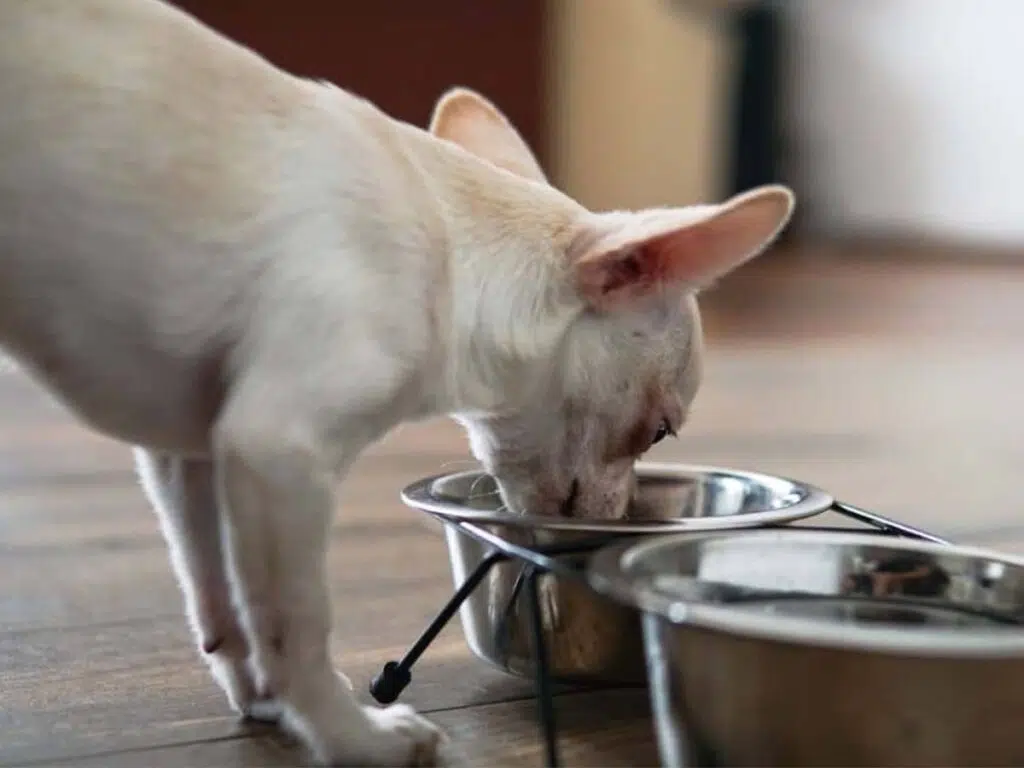


How can you tell if your chihuahua has anxiety, and what does anxiety actually mean in a clinical sense? In short: anxiety is a sustained, generalized state of arousal in anticipation of perceived threat, distinct from situation-specific fear. In a small dog, it shows up as a cluster of behavioral and physical signs, and the work of management is partly behavioral and partly, in some cases, medical.
I am going to walk through what veterinarians actually look for, the differential between fear and anxiety and phobia, and the workup your vet wants to do.
The clinical picture, in plain language
A chihuahua with significant anxiety often shows several of the following over weeks or months, not just in one situation:

- Frequent panting at rest, with no temperature trigger.
- Hypervigilance: head whipping toward small sounds, difficulty settling.
- Sleep disturbance: short, shallow naps; pacing at night.
- Trembling out of cold-related context.
- GI signs: intermittent loose stool, decreased appetite, vomiting on stress.
- Excessive grooming or licking, sometimes to the point of skin damage.
- Refusal to eat in unfamiliar environments.
- Persistent attachment-seeking that worsens, rather than improves, with reassurance.
Two or more of those, over a sustained period, is the picture. Any one in isolation may have an alternative explanation; the cluster is what matters.
Anxiety, fear, and phobia: what your vet means by each
These three words are used interchangeably in casual conversation; in clinical practice, they describe different things.
- Fear is the appropriate response to an actual threat. The car backfires; the dog jumps. This is normal.
- Anxiety is the anticipation of threat, sustained over time. The dog is on alert most of the day, even without a present trigger.
- Phobia is an extreme, persistent fear response to a specific stimulus. Storm phobia and noise phobia are the most common in dogs, and the response is disproportionate to the actual threat.
The treatment for each overlaps but is not identical. The general stress-reduction protocols apply to all three; phobias often need a more aggressive desensitization plan, and severe anxiety sometimes responds best to medication alongside behavior modification.
What your veterinarian will do at the visit
The first thing your veterinarian will do, before assuming a behavioral diagnosis, is rule out the medical mimics. Pain, especially dental pain or joint pain, can present as generalized anxiety in small dogs. Endocrine conditions (hypothyroidism, Cushing’s), GI disease, and cognitive dysfunction in seniors all overlap with the anxiety picture.
A focused work-up usually includes:
- A complete physical exam, with attention to the mouth and the joints.
- A senior or wellness bloodwork panel: CBC, chemistry, T4, urinalysis.
- A behavioral history, ideally with a written log of the last two weeks: when, where, how long, what came before, what came after.
- A discussion of the home environment: schedule, exercise, sleep, household stressors.
If the medical work-up is clean and the behavioral picture is consistent with anxiety, the conversation moves to a behavior plan, which usually has three components: management to reduce trigger exposure, structured reward-based training to build alternative responses, and (in some cases) medication to lower the baseline arousal enough for the training to take.
Medication: the honest conversation
There is still a stigma in some owner communities around medicating an anxious dog. I will say plainly that the veterinary-behavior community’s position is that for moderate-to-severe anxiety, medication is not a substitute for training, but it is often a prerequisite for training to work. The AAHA Working with Anxious Dog Guidelines are the document your vet is referencing.
The most commonly used medications are SSRIs (such as fluoxetine), SNRIs, and event-specific anxiolytics (such as trazodone for storm anxiety). These are not sedatives; they raise the threshold at which the dog’s nervous system tips into anxiety, which is a different mechanism. Decisions about medication, dose, and duration belong to your veterinarian or a veterinary behaviorist.
What to do this week
If you are reading this and recognizing your dog in the cluster above, three small steps for this week:
- Start a written log. Date, time, location, trigger if any, behavior, duration. Two weeks of data is enormously useful at the next visit.
- Schedule a wellness exam if you have not had one in the last six months. Mention the behavioral concerns when you book; ask about adding bloodwork to the visit.
- Reduce trigger exposure where you can. A baby gate that prevents the front-window patrol; a different walking route at a calmer hour; a quiet corner with a mat for the dog to retreat to. Threshold work sits in the same toolkit.
What to skip
A few interventions that are not, on the available evidence, helpful and sometimes hurt.
- "Toughening up" the dog. Forced exposure to triggers (flooding) without a graduated plan worsens fear and anxiety in most dogs.
- Aversive corrections at the moment of arousal. A leash pop or a verbal correction at the peak of an anxious response trains an additional negative association with the trigger.
- Switching to a "calming diet" without ruling out the medical mimics. Dietary changes can be part of the plan; they are not the plan.
A chihuahua with anxiety is not a broken dog. She is a small dog with a nervous system that has tipped into a sustained alert state, and the path back is a cadence of medical clearance, behavior work, and (sometimes) carefully-managed medication, on a timeline that is months, not weeks. Talk to your veterinarian; if the picture is severe or your dog is suffering, ask for a referral to a board-certified veterinary behaviorist (DACVB) early rather than late.
Health at a Glance: What to Watch monitor_heart
| Condition | Key Signs | Prevention Tips |
|---|---|---|
| Dental Disease | Bad breath, tartar, red gums | Daily brushing, dental treats |
| Patellar Luxation | Limping, skipping, leg lifting | Weight control, avoid high jumps |
| Tracheal Collapse | Dry cough, gagging | Harness walking, avoid smoke |
| Heart Disease | Coughing, fatigue, fainting | Regular check-ups, heart-healthy diet |
| Hypoglycemia | Shaking, weakness, lethargy | Small, frequent meals |
Community Insights – FAQ help
help_outline When should I call my vet about a behavior change? expand_more
Sooner than feels reasonable. A change in appetite, energy, or routine that lasts more than 48 hours is worth a phone call, not a wait-and-see.
help_outline How often should a healthy adult chihuahua see the vet? expand_more
Once a year through age seven. Twice a year from eight on. Dental checks are part of every visit.
help_outline Do chihuahuas need different care than larger breeds? expand_more
Yes. Smaller medication dosing, more frequent dental work, and closer monitoring for tracheal and patellar issues are standard in toy-breed care.
Have a health question? Ask your question in the comments. We will bring it up with the vet team.
favorite