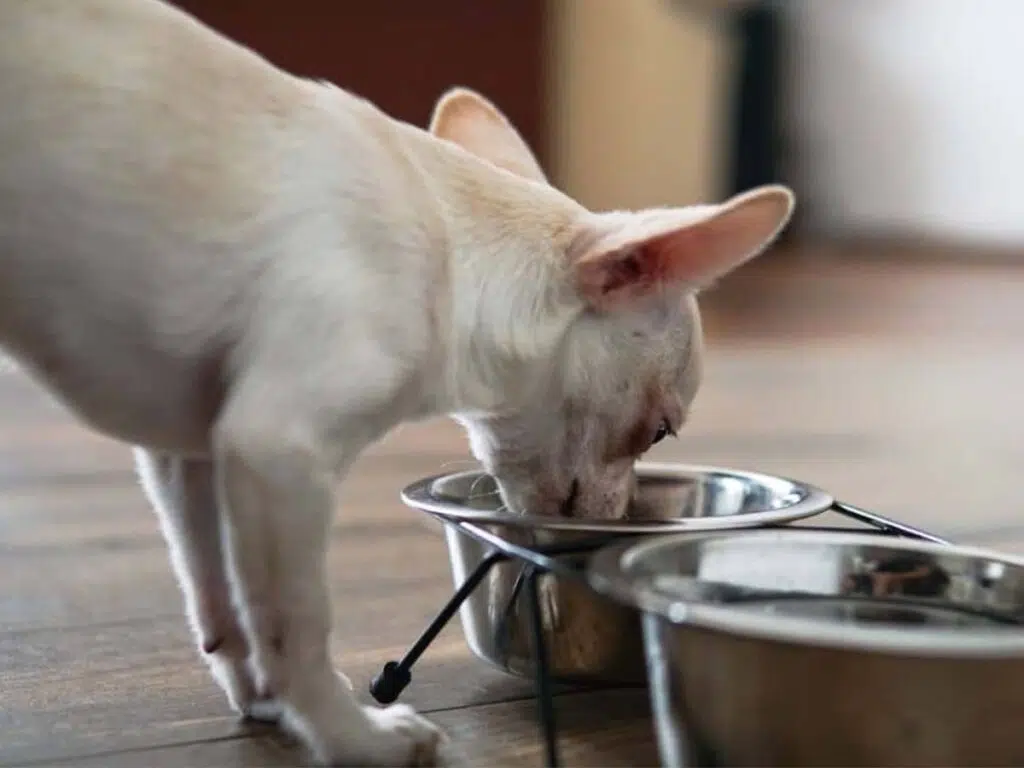


Should you be giving your chihuahua daily supplements, and if so, which ones actually have evidence behind them? In short: most chihuahuas on a complete-and-balanced diet do not need any supplements at all, a few specific ones (omega-3 fatty acids, joint support in seniors, dental products with the VOHC seal) have reasonable evidence, and the rest of the supplement aisle is marketing.
I am going to walk through what the literature supports, what is reasonable for a healthy adult chihuahua, what changes for puppies and seniors, and how to read the supplement aisle without being misled. Talk to your veterinarian about your specific dog before adding anything; the average is a starting point.
The baseline: a complete diet covers most needs
Any AAFCO-certified complete-and-balanced commercial dog food, by definition, contains the full vitamin and mineral profile a healthy adult dog needs. The certification process requires that the food meet established nutrient profiles for the dog's life stage. Adding additional vitamins on top of a complete-and-balanced diet is, in most cases, unnecessary and, in some cases, harmful.

The exceptions, where supplementation has evidence, are narrower than the supplement aisle suggests.
Omega-3 fatty acids: reasonable evidence
The strongest evidence among general supplements is for omega-3 fatty acids (specifically EPA and DHA from fish oil) in dogs with skin, coat, joint, or cardiac conditions. The Merck Veterinary Manual covers the supporting research; the practical dose for a chihuahua is roughly 75 to 100 mg combined EPA and DHA per kilogram of body weight per day.
For a five-pound chihuahua, that is roughly 170 to 230 mg combined EPA/DHA, which corresponds to about half of a small fish-oil capsule from a quality brand. Look for products with third-party testing for purity (mercury, PCBs); the IFOS or USP verification logos are reasonable signals. Not every chihuahua benefits noticeably; the supplementation is most useful in dogs with documented skin, joint, or cardiac issues.
Joint support in seniors and orthopedic-prone dogs
For chihuahuas with documented patellar luxation, hip issues, or arthritis, glucosamine and chondroitin supplements have modest but real evidence in the veterinary literature. The effect size is smaller than the marketing suggests; in good clinical trials, the magnitude of pain reduction is roughly comparable to a low-dose anti-inflammatory but with a much better safety profile.
The common health-issues primer covers patellar luxation in detail. For affected dogs, a chondroitin-glucosamine supplement starting at the dose on the label, given for at least eight weeks before assessing effect, is reasonable. Healthy adult chihuahuas without joint issues do not, on the data, benefit measurably from preventive use.

Dental supplements and additives
A few dental products carry the VOHC (Veterinary Oral Health Council) seal, which indicates documented plaque or tartar reduction in clinical testing. The current list includes specific water additives, dental chews, and a few dental gels. The seal is, in my view, the most useful single quality signal in this category. Products without the seal have not been independently tested.
These are supplementary, not a substitute for daily brushing. The daily brushing primer covers the home dental care that does most of the work; the VOHC products help with the back teeth that the brush often misses.
Probiotics: mixed evidence
The probiotic literature in dogs is mixed. The strongest evidence is for short-term use during gastrointestinal disturbance (post-antibiotic, post-diarrhea) rather than chronic daily use. Specific strains (Enterococcus faecium SF68, several Lactobacillus species) have published studies; many products on the market do not specify strains and are difficult to evaluate.
Practical guidance: probiotics are a reasonable short-term tool during a known GI disturbance. Chronic daily use in a healthy chihuahua does not have strong evidence and is, in my reading, optional.
CBD and hemp products, briefly
The CBD-for-dogs market has grown substantially. The published clinical evidence is limited, mostly small-trial work in osteoarthritis pain. Dose ranges are not well-established. Quality control across products is uneven.
I do not recommend CBD as a first-line intervention for any condition in chihuahuas. For specific cases (refractory anxiety, refractory pain), a conversation with your veterinarian about whether to add a quality-tested product is reasonable. The AVMA's cannabis-in-veterinary-medicine guidance covers the current state of the literature.
The supplements I do not recommend, briefly
A short list of categories where the marketing substantially exceeds the evidence:
- Multivitamins for healthy adult dogs on complete-and-balanced food. Redundant with the food.
- "Immune support" blends with vague ingredient lists. The claims are not supported.
- "Detox" or "liver support" supplements in healthy dogs. The liver is, on the available data, capable of doing its own work without supplementation.
- "Anxiety support" herbal blends. Most have small samples, weak evidence, or both. The behavioral protocols (covered in the separation-anxiety piece) are more reliable.
- "Coat enhancer" supplements. Most of the benefit, in good trials, comes from the omega-3 content; buy the omega-3 directly.
The practical kitchen-counter shelf, for most households
For a healthy adult chihuahua on complete-and-balanced food, the supplement shelf should contain, at most:
- One quality omega-3 fish oil, dosed appropriately for body weight, used as needed for skin or coat support.
- A VOHC-listed dental product (water additive or chews) as part of the dental routine.
For a senior chihuahua or one with documented joint issues, add a chondroitin-glucosamine product. For a dog with documented anxiety, talk to your veterinarian about behavioral or pharmaceutical options before adding herbal supplements.
The bottom line, with the usual caveat
Most chihuahuas need fewer supplements than the pet-store aisle suggests. The ones with evidence (omega-3, dental products, joint support in seniors) are useful in specific cases; the rest are mostly optional. Talk to your veterinarian about your specific dog; the supplement question is one we are happy to walk through case by case in clinic, and the right answer for your dog is more reliable than any general article.
Health at a Glance: What to Watch monitor_heart
| Condition | Key Signs | Prevention Tips |
|---|---|---|
| Dental Disease | Bad breath, tartar, red gums | Daily brushing, dental treats |
| Patellar Luxation | Limping, skipping, leg lifting | Weight control, avoid high jumps |
| Tracheal Collapse | Dry cough, gagging | Harness walking, avoid smoke |
| Heart Disease | Coughing, fatigue, fainting | Regular check-ups, heart-healthy diet |
| Hypoglycemia | Shaking, weakness, lethargy | Small, frequent meals |
Community Insights – FAQ help
help_outline When should I call my vet about a behavior change? expand_more
Sooner than feels reasonable. A change in appetite, energy, or routine that lasts more than 48 hours is worth a phone call, not a wait-and-see.
help_outline How often should a healthy adult chihuahua see the vet? expand_more
Once a year through age seven. Twice a year from eight on. Dental checks are part of every visit.
help_outline Do chihuahuas need different care than larger breeds? expand_more
Yes. Smaller medication dosing, more frequent dental work, and closer monitoring for tracheal and patellar issues are standard in toy-breed care.
Have a health question? Ask your question in the comments. We will bring it up with the vet team.
favorite