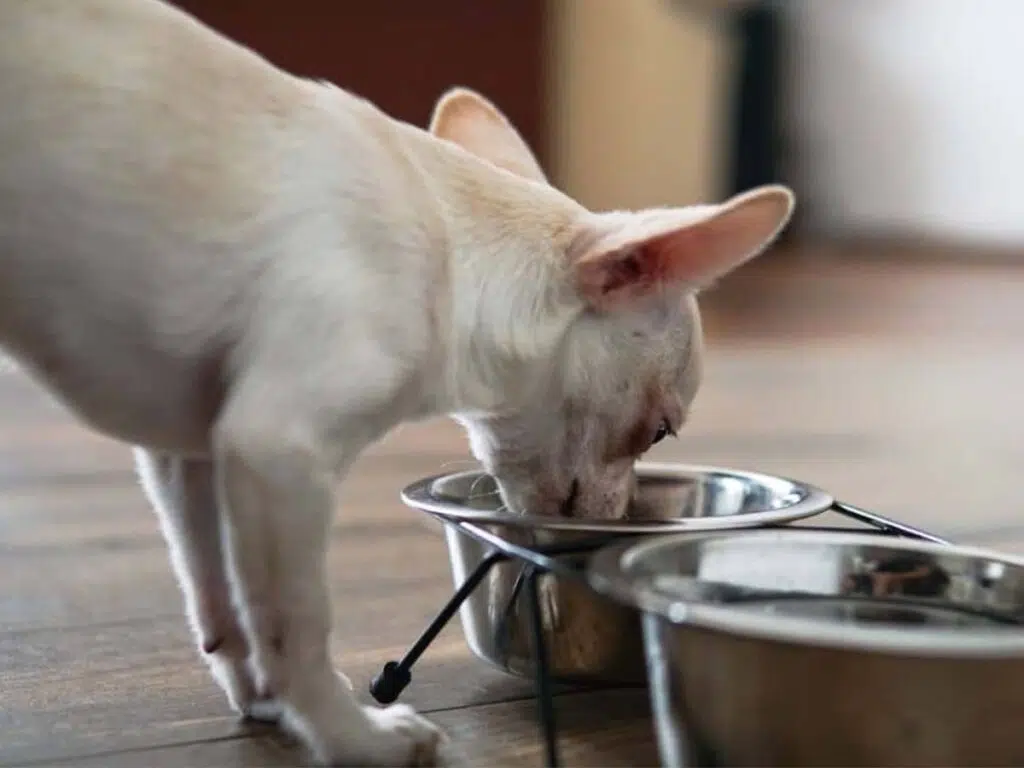


Why is separation anxiety so common in chihuahuas, and what is the protocol that actually produces measurable improvement? In short: the breed's strong attachment baseline, combined with insufficient gradual alone-time training in puppyhood, produces a population in which separation anxiety is meaningfully overrepresented. The protocol that works in our practice is a structured desensitization plan run over six to twelve weeks, sometimes with a short course of medication as an adjunct.
I want to be clear about what I am and am not covering. This piece covers true separation anxiety in the clinical sense: a dog who shows distress signals when left alone, not a dog who is mildly bored. The distinction matters for the protocol and for when to call the clinic.
What separation anxiety actually looks like, clinically
True separation anxiety is identified by a constellation of signs that occur specifically when the dog is left alone:
- Vocalization (whining, barking, howling) starting within minutes of departure and continuing.
- Destruction directed at exit points (doors, windows) rather than general household items.
- Inappropriate elimination in a fully housetrained dog, occurring only when alone.
- Hypersalivation, panting, or trembling visible on a returning camera or noted by a roommate.
- Loss of appetite when alone, even when food is left available.
A camera (a phone propped on a shelf, an inexpensive pet camera) is the single most useful diagnostic tool. The owner's observation is limited to "she was upset when I came back"; the camera tells you what happened during the interval, which is the data you actually need.
Why chihuahuas specifically
Two factors converge. The first is the breed's high baseline attachment behavior. Chihuahuas were bred for companion work and have, by selection, a strong drive to remain in proximity to their primary person. The second is that many chihuahua households inadvertently reinforce the attachment by providing constant proximity in puppyhood, which means the puppy never learns that brief alone time is normal and not a threat.
The result is that a meaningful fraction of chihuahuas show separation-related behavior on the C-BARQ behavioral assessment. The Merck Veterinary Manual entry on separation anxiety covers the underlying neurobiology; the practical implication is that the prevention work in puppyhood is much easier than the treatment work in adulthood.
The desensitization protocol, in stages
The protocol below is a standard force-free desensitization plan, adapted for chihuahuas in our practice. Total duration: six to twelve weeks, depending on baseline severity. Daily time investment: twenty to thirty minutes.
Week 1: Departure cues, decoupled. Pick up your keys, put on your coat, walk to the door, and then sit back down. Repeat ten times a day. The point is to break the association between the cue (keys, coat) and the event (departure). The dog should stop reacting to the cue within a week.
Weeks 2 to 3: Brief absences. Step out the door and immediately return. Then step out for ten seconds and return. Then thirty. Then a minute. Build duration gradually, always returning before the dog escalates. The camera tells you whether the dog escalated.
Weeks 4 to 6: Building duration. Five minutes. Ten. Twenty. Forty-five. The threshold builds at a different rate for every dog; the rule is to stay below the threshold of distress. If the camera shows the dog escalating at twenty minutes, the next session is at fifteen, not twenty-five.
Weeks 7 to 12: Real-world durations. Most chihuahuas reach reliable two-to-four-hour alone time by this stage. The protocol is then maintained with regular practice rather than abandoned.
Management during the protocol
While running the protocol, the dog should not be left alone for durations she cannot handle. This is the most counterintuitive part for owners; the protocol works because the dog is not flooded with above-threshold experiences in parallel. If you have to be at work for eight hours, arrange a daycare, a friend's care, or a daytime walker for the protocol period. The continued at-threshold exposure undoes the work.
The anxiety-recognition primer covers the body-language reading that supports the protocol; the stress-management piece covers the in-the-moment interventions.
When medication is appropriate, briefly
For dogs with severe baseline separation anxiety, a short course of anti-anxiety medication (typically fluoxetine or trazodone, prescribed by a veterinarian) substantially improves the protocol's success rate. The medication is not a substitute for the behavioral protocol; it is an adjunct that lowers the dog's baseline arousal enough that the desensitization work can succeed.
Talk to your veterinarian if your dog is at the severe end of the spectrum. The medication question is one I review case by case in clinic; the right answer depends on the dog's history, the household's situation, and the severity of the baseline anxiety.
Prevention in puppyhood, plainly
The most useful single intervention is preventive, in puppyhood. From week eight onward, the puppy should experience structured brief alone time as part of normal household routine: ten minutes in a crate or pen while the owner is in another room, gradually increasing. The goal is that "I am alone" becomes a known and safe state by week sixteen, not a novel and threatening one.
The crate-training primer covers the underlying setup; the puppy socialization guide covers the broader window of which alone-time training is one component.
When to call the clinic, in one paragraph
Call your veterinarian if the dog's separation behavior is causing self-injury (door-scratching to the point of paw injuries, chewing through carriers), if the dog is failing to eat or drink during alone time, or if the protocol has been running for six weeks without measurable improvement. A credentialed veterinary behaviorist (board-certified through the American College of Veterinary Behaviorists) is the right escalation for severe cases; most general-practice veterinarians can refer.
The bottom line, with the usual caveat
Chihuahua separation anxiety is treatable, the protocol is known, and the time investment is finite. The single biggest avoidable error is to leave the dog alone for above-threshold durations during the protocol; the second is to escalate to medication without the parallel behavioral work. Talk to your veterinarian about your specific dog; the general protocol is the starting point, and the local clinical read is the refinement.
Health at a Glance: What to Watch monitor_heart
| Condition | Key Signs | Prevention Tips |
|---|---|---|
| Dental Disease | Bad breath, tartar, red gums | Daily brushing, dental treats |
| Patellar Luxation | Limping, skipping, leg lifting | Weight control, avoid high jumps |
| Tracheal Collapse | Dry cough, gagging | Harness walking, avoid smoke |
| Heart Disease | Coughing, fatigue, fainting | Regular check-ups, heart-healthy diet |
| Hypoglycemia | Shaking, weakness, lethargy | Small, frequent meals |
Community Insights – FAQ help
help_outline When should I call my vet about a behavior change? expand_more
Sooner than feels reasonable. A change in appetite, energy, or routine that lasts more than 48 hours is worth a phone call, not a wait-and-see.
help_outline How often should a healthy adult chihuahua see the vet? expand_more
Once a year through age seven. Twice a year from eight on. Dental checks are part of every visit.
help_outline Do chihuahuas need different care than larger breeds? expand_more
Yes. Smaller medication dosing, more frequent dental work, and closer monitoring for tracheal and patellar issues are standard in toy-breed care.
Have a health question? Ask your question in the comments. We will bring it up with the vet team.
favorite