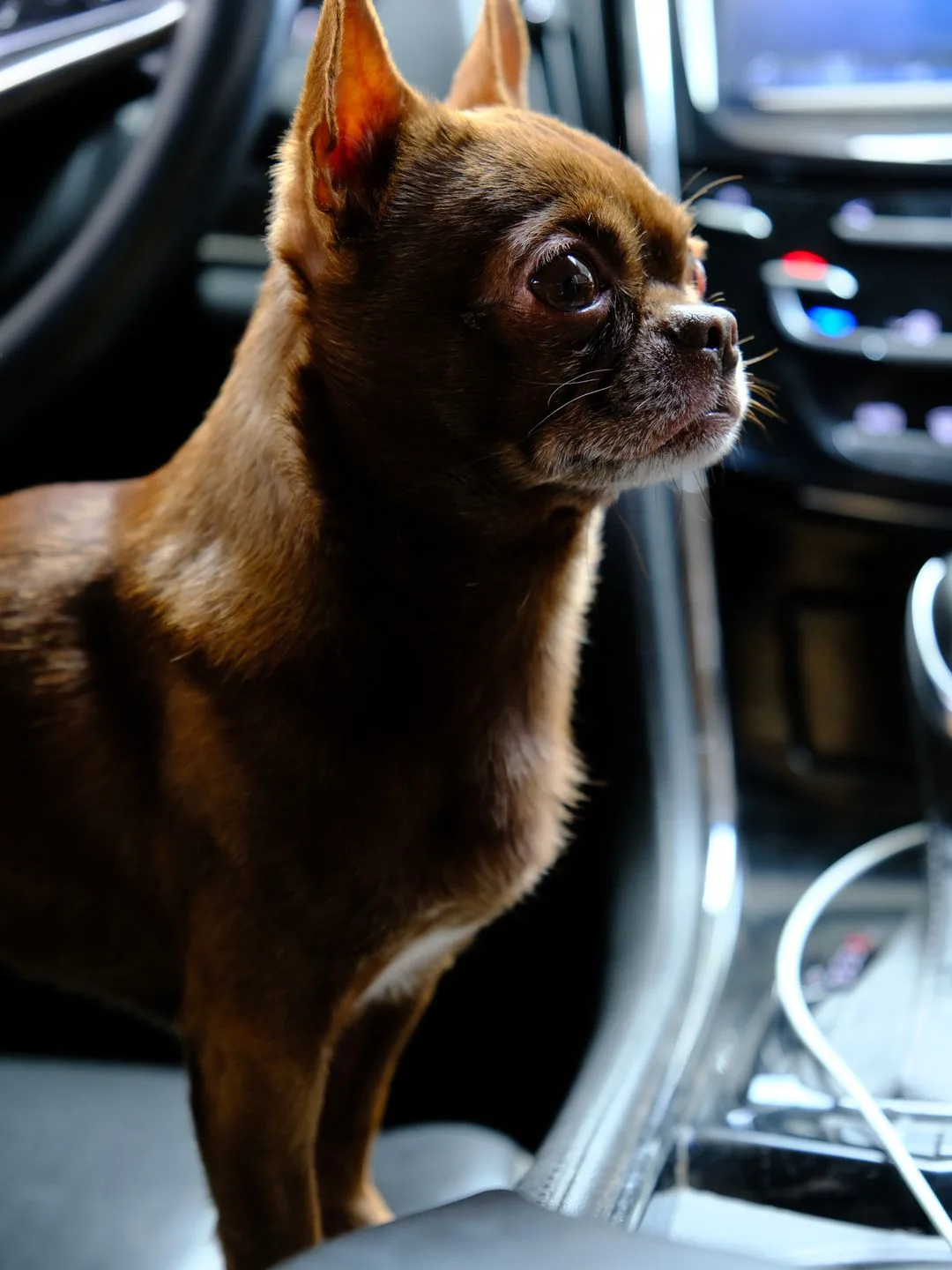
Planning a long drive with a chihuahua? Start with the good news: these are excellent road dogs. They are small, portable, and most of them settle into a warm carrier or a padded seat within a few miles. The work is in the preparation, not the driving itself.
Here is what actually matters when you point the car down the highway with a four-pound passenger.
Quick answer: Chihuahuas make excellent road dogs, and the work is in the preparation rather than the driving. Restrain the dog in the back seat in a crash-tested harness or a secured carrier, away from the front airbag and off your lap; stop every two to three hours for a leashed break and water; clip the leash on before you open any door; and never leave the dog alone in a parked car.
Before you pull out of the driveway
For a long trip, a quick veterinary check is worth the visit, especially for a senior dog or one with a heart or breathing condition. Confirm vaccinations are current, refill any medication so you are not hunting for a pharmacy in another state, and mention carsickness if your dog has struggled with it before. Update the microchip registration and the phone number on the ID tag while you are thinking about it. Five minutes of admin now prevents the worst kind of road-trip surprise.
Restrain the dog, every single time
A loose dog in a moving car is a danger to itself and to everyone in the vehicle. In a crash, or even a hard stop at highway speed, an unrestrained chihuahua becomes a projectile. A dog riding on a lap can be thrown into the dashboard or an airbag.
Two setups work. The first is a crash-tested harness clipped to the seat belt. The Center for Pet Safety, a nonprofit that crash-tests pet travel gear, publishes which products have actually passed testing rather than simply being labeled a safety harness. The second is a hard-sided carrier or crate, secured so it cannot slide or tip. Either way, keep the dog in the back seat. The front passenger airbag is built for an adult human and can injure a small dog badly.
Plan the stops before you plan the miles
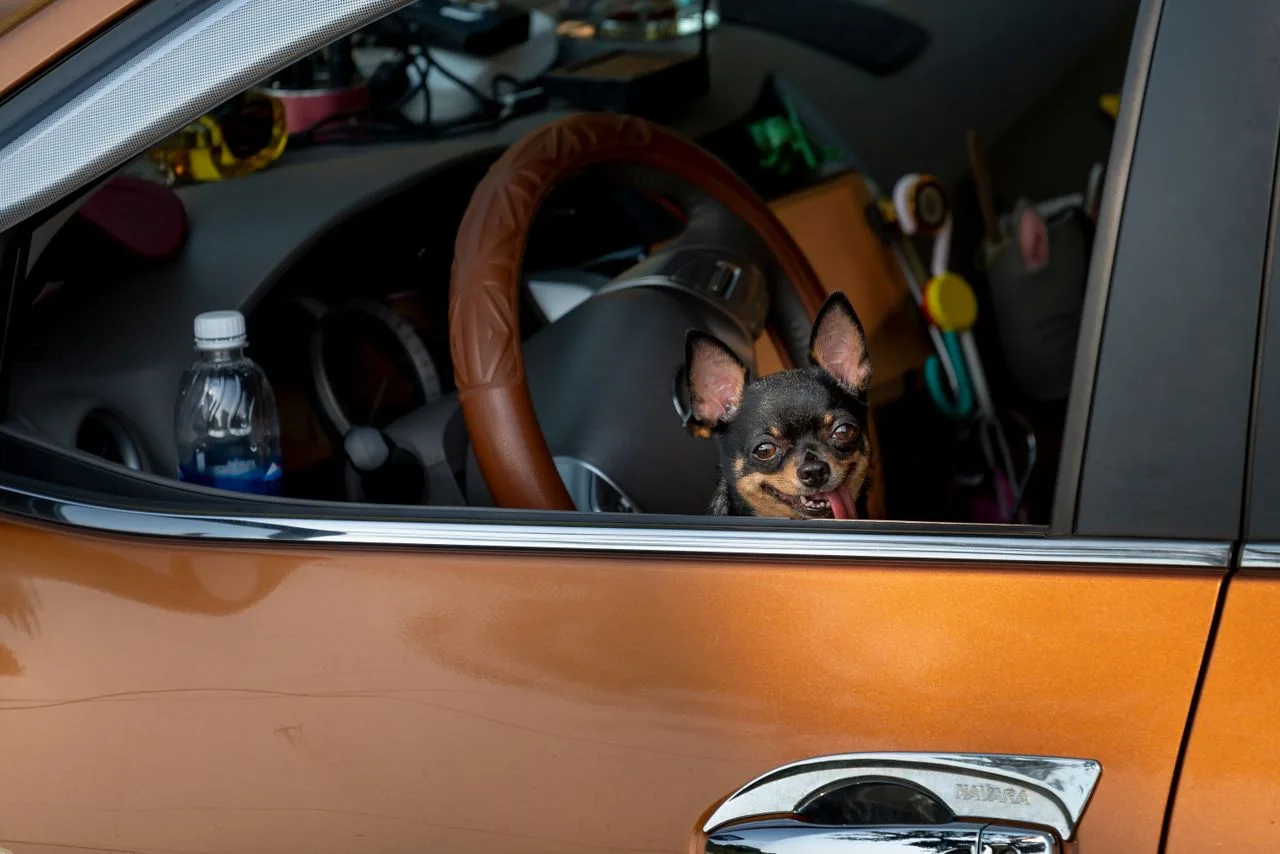
Chihuahuas have small bladders and less patience for being cooped up than a big dog does. Build in a break roughly every two to three hours. Use it for a leashed walk, fresh water, and a minute of sniffing to reset.
Two rules make stops safe. Clip the leash on before you open a door, never after. A startled chihuahua that bolts at a busy rest area is hard to catch and easy to lose for good. And double-check the collar tag and microchip details before you leave the driveway, so a lost dog has the fastest possible route home.
The parked-car rule is not negotiable
Never leave a chihuahua alone in a parked car. Interior temperatures climb fast, even on a mild day and even with the windows cracked, and the American Veterinary Medical Association warns that a car can become dangerous within minutes. A chihuahua's small body has almost no buffer against heat, and in winter the same car turns dangerously cold just as quickly. If you cannot bring the dog inside with you, someone stays with the car or you skip that stop.
Pack one bag that is only the dog's
Keep everything the dog needs for the trip in a single bag so nothing gets left at a gas station. The short list: the food they already eat, since switching brands on the road invites an upset stomach, a collapsible bowl, any medication, poop bags, a familiar blanket or bed that smells like home, a spare leash, and a copy of their vaccination records. Pack more water than you think you need.
Add a recent photo of the dog to your phone before you leave. If they ever go missing on the road, a clear picture is the single most useful thing you can hand a stranger or a shelter.
If your chihuahua gets carsick
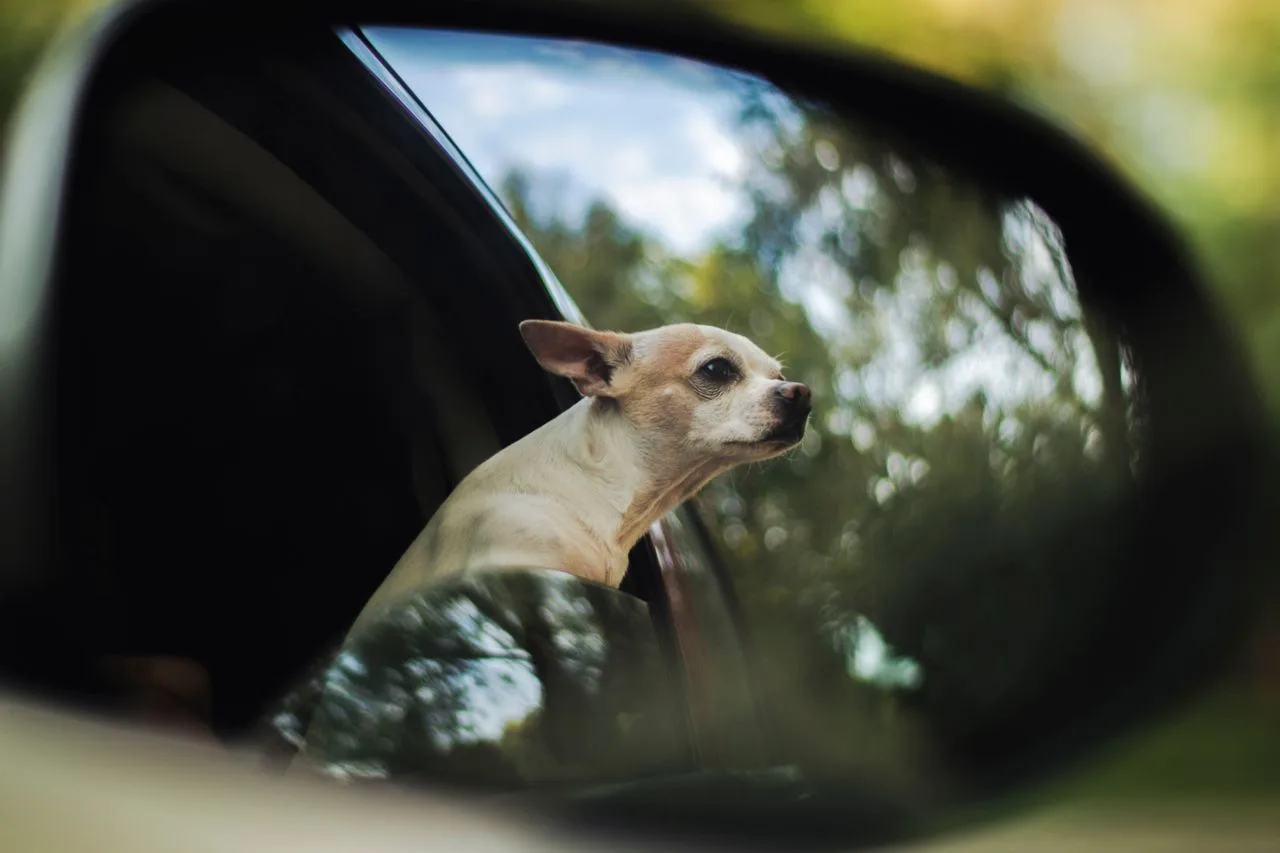
Motion sickness is common, especially in dogs that rarely ride. The signs are drooling, whining, restlessness, and vomiting. A few adjustments help: face the carrier forward, keep the cabin cool and quiet, and skip the big meal right before departure. In the weeks before a long trip, take a few short practice drives that end somewhere good, like a park, so the car stops meaning nausea and starts meaning fun. If the carsickness is severe, talk to your veterinarian, who can prescribe anti-nausea medication made for dogs.
Keep the daily rhythm intact
Dogs travel best when the rest of the day still looks familiar. Feed on the normal schedule, keep the usual bedtime, and hold the daily care routine as steady as the road allows. Chihuahuas are true velcro dogs who mostly want to be near their person, which is the one thing a road trip guarantees. Give them a warm layer for an over-air-conditioned cabin and they will likely sleep through most of the drive. And if the trip ends at an airport instead of a driveway, our guide to traveling internationally with a chihuahua picks up where the highway ends.
Frequently asked questions
Where should a chihuahua sit in the car?
In the back seat, restrained in a crash-tested harness on the seat belt or inside a secured carrier. Keep them off your lap and away from the front airbag, which can seriously hurt a small dog if it deploys.
How often should I stop on a road trip with a chihuahua?
Every two to three hours for a leashed potty break and water. Clip the leash on before you open any door, and never leave the dog alone in a parked car.
How do I keep my chihuahua from getting carsick?
Keep the cabin cool and quiet, face the carrier forward, skip the pre-drive meal, and build up with short, positive practice drives. If it continues, your veterinarian can prescribe anti-nausea medication for dogs.
Is it ever safe to leave my chihuahua in the car for a few minutes?
No. A parked car can reach dangerous temperatures within minutes in warm weather and turn dangerously cold in winter, and a small dog has almost no margin. Take them with you or keep someone with the car.
