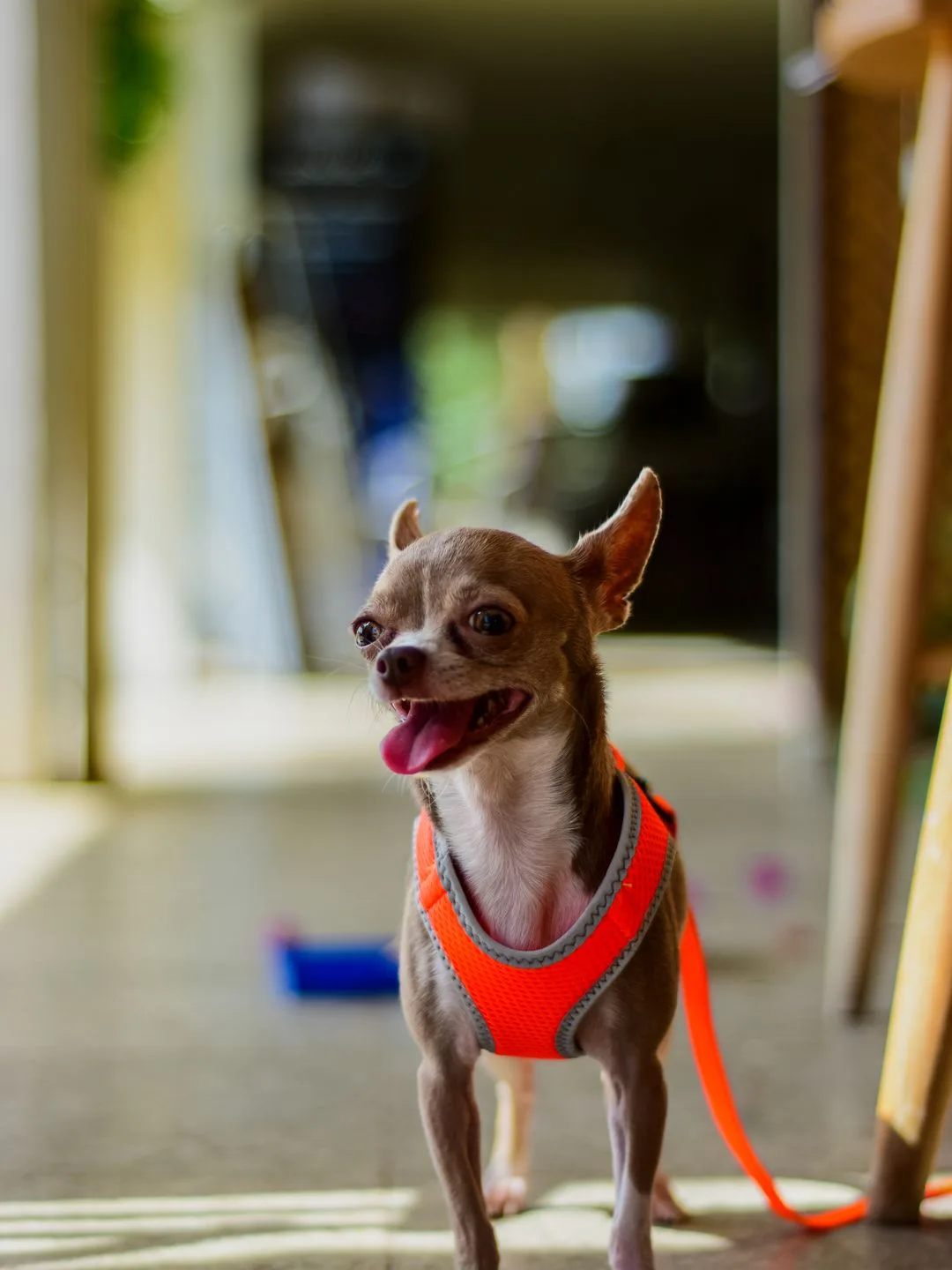
Here is a story I have heard more times than I can count. A man who is, by his own account, a big-dog person, with unkind opinions about chihuahuas. Then his girlfriend wants one for Christmas, he loses the argument, and a six-pound dog arrives in a blanket. Within a month he is carrying that dog around the house like a small loaf of warm bread and getting offended when strangers call it yappy. The propaganda said one thing; the breed quietly proved him wrong.
What's the real story with chihuahuas? The reputation did not come from nowhere, so let's be honest about all of it: where the ankle-biter label comes from, what behavior research actually shows (the unflattering parts included), why these dogs act the way they do, and whether you should bring one home.
Quick answer: Chihuahuas are not born aggressive. Owner-survey research including the C-BARQ study does score the breed high on aggression measures, but the same dogs score high on fearfulness, and behaviorists read most of the snapping as fear plus missed socialization during the critical window in the first three to four months. An adult dog with the habit can still be retrained with reward-based work; it just takes longer than starting early.
Where the "Mean, Yappy, Snappy" Reputation Comes From
The chihuahua's image problem is mostly a numbers-and-optics problem. Picture the stereotype: a tiny dog quivering in a purse, lunging at a Great Dane four hundred times its size, barking like it has something to prove. It's a cartoon. It's also, sometimes, accurate, and that is exactly why it sticks.
A few things feed the myth. First, chihuahuas are everywhere; they are one of the most common small breeds in American shelters, especially across the Southwest, so people simply encounter a lot of them. Second, a chihuahua's "aggression" is cheap to display and impossible to ignore. A growling Lab makes you nervous.
A growling chihuahua makes you laugh, which the chihuahua hears as disrespect, which makes the chihuahua louder. Third, and this is the uncomfortable one, a lot of chihuahuas genuinely are undersocialized and undertrained, for reasons that have far more to do with us than with them. More on that shortly.
What Canine-Behavior Research Actually Shows
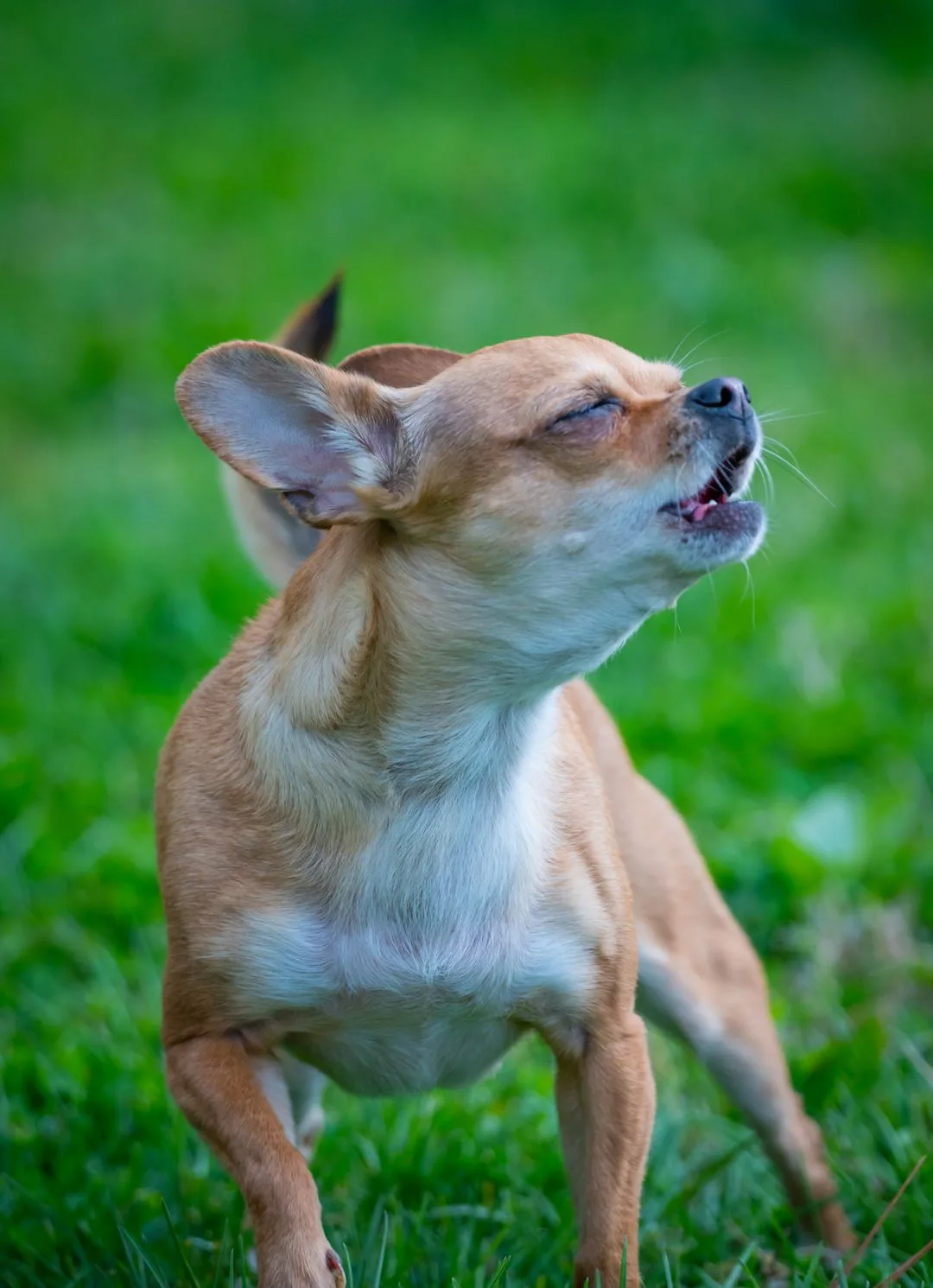
I am not going to pretend the science exonerates the breed, because it doesn't, not entirely. The most-cited work here is Duffy, Hsu, and Serpell's 2008 study "Breed differences in canine aggression," built on the University of Pennsylvania's C-BARQ owner survey, published in Applied Animal Behaviour Science. The researchers used the C-BARQ, the Canine Behavioral Assessment and Research Questionnaire developed at the University of Pennsylvania, to survey owners across dozens of breeds. The finding people love to quote: chihuahuas and dachshunds scored relatively high for aggression, and also high for fearfulness and for attention-seeking attachment.
So, case closed, chihuahuas are mean? Not so fast. Read the rest of the sentence. They scored high for fearfulness too, and that pairing is the whole point. A second body of work, including research on dog bites, has repeatedly noted that small breeds bite at surprisingly high rates relative to their size, but that these are typically defensive, fear-driven responses rather than the confident, damaging aggression of a large guarding breed.
The honest read of the data is not "chihuahuas are vicious." It is "chihuahuas are easily frightened, and a frightened animal with teeth uses them." A six-pound dog cannot bluff its way out of a scary situation by looking imposing. It has exactly one tool.

Why It Actually Happens: Fear, Size, and Us
Now we get to the part that matters, because behavior always has a why. Why is a chihuahua so reactive? Because of three things stacked on top of each other, and only one of them is the dog.
The world is genuinely terrifying when you weigh six pounds. A coffee table is a cliff. A toddler is a predator. A friendly stranger reaching down to pet you is a hand the size of your whole body descending from the sky. The defensiveness reads as attitude, but from the dog's eye level it is rational threat assessment. The barking and snapping are a small animal trying to make a large world keep its distance.
Under-Socialization and the Critical Window
Under-socialization compounds it. Puppies have a critical socialization window in roughly their first three to four months, when positive exposure to new people, dogs, surfaces, and sounds wires them for confidence later. A lot of chihuahuas miss it, partly because owners worry, not unreasonably, about a tiny puppy getting stepped on or hurt at the dog park, and so they keep it home and carried. The dog stays safe and stays sheltered, and an unsocialized dog grows into a suspicious adult.
And then there is us, the part nobody wants to own. Behaviorists sometimes call it "small dog syndrome," and the syndrome is in the human, not the dog. We let small dogs do things we would never tolerate from a German Shepherd. Lunging at the mail carrier is "feisty" instead of a problem to fix. Growling over the couch is "sassy." We don't enforce a recall, we don't reward calm, we don't teach an off switch, because the dog is too small to actually hurt anyone, so why bother?
Then we act surprised when the untrained dog behaves like an untrained dog. A chihuahua that nobody trained is not a flawed chihuahua. It is an untrained dog that happens to be tiny. The same neglect in a Rottweiler would land you in a lawsuit; in a chihuahua it just lands you a snappy ankle-biter and a reputation for the whole breed.
The Real History: Bred to Be a Companion
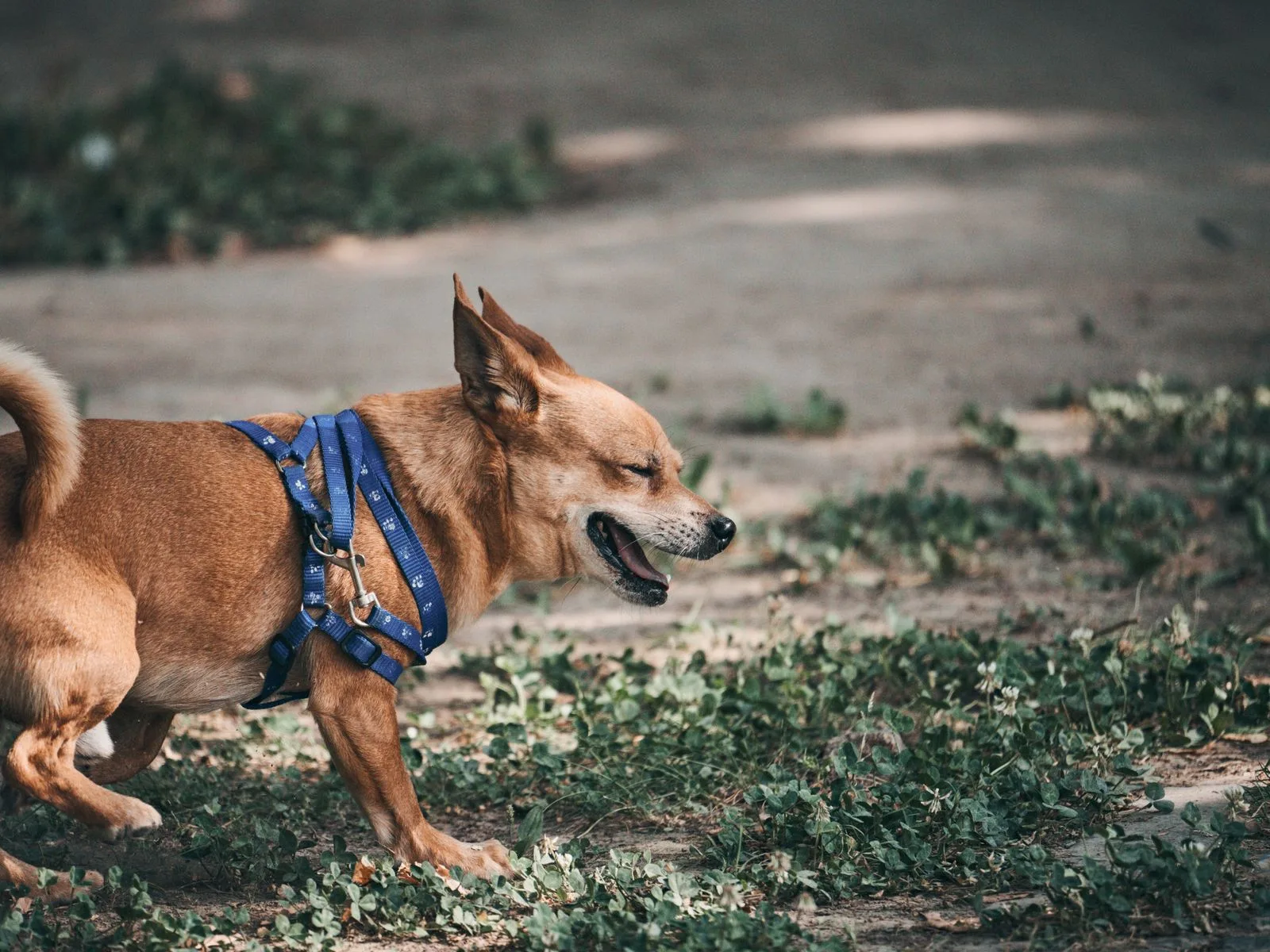
Here is what the cartoon leaves out. The chihuahua is one of the oldest companion breeds in the Americas, and "companion" is not a soft modern marketing word; it is the entire job description, going back roughly a thousand years.
The breed descends from the Techichi, a small dog kept by the Toltec civilization in what is now Mexico, later valued by the Aztecs. These were not herders, not guard dogs, not vermin-killers. They were kept close to people, woven into daily and ceremonial life. The modern dog gets its name from the Mexican state of Chihuahua, where Americans encountered the little dogs in the mid-to-late 1800s, and the American Kennel Club registered its first Chihuahua, a dog named Midget, in 1904. The Chihuahua Club of America followed in 1923. It remains the smallest breed the AKC registers.
That history is written into the temperament. The same C-BARQ research that flagged the reactivity also flagged intense attachment and attention-seeking, which is a clinical way of describing a dog that was bred for a millennium to bond hard to one or two people and stay glued to them.
The loyalty the surprised boyfriend discovered is not a fluke or a personality quirk in his particular dog. It is the feature. The fierce devotion and the fierce defensiveness come from the same root: this is an animal designed, over centuries, to attach itself to a human and take that bond extremely seriously.
Is a Chihuahua Right for You? An Honest Answer
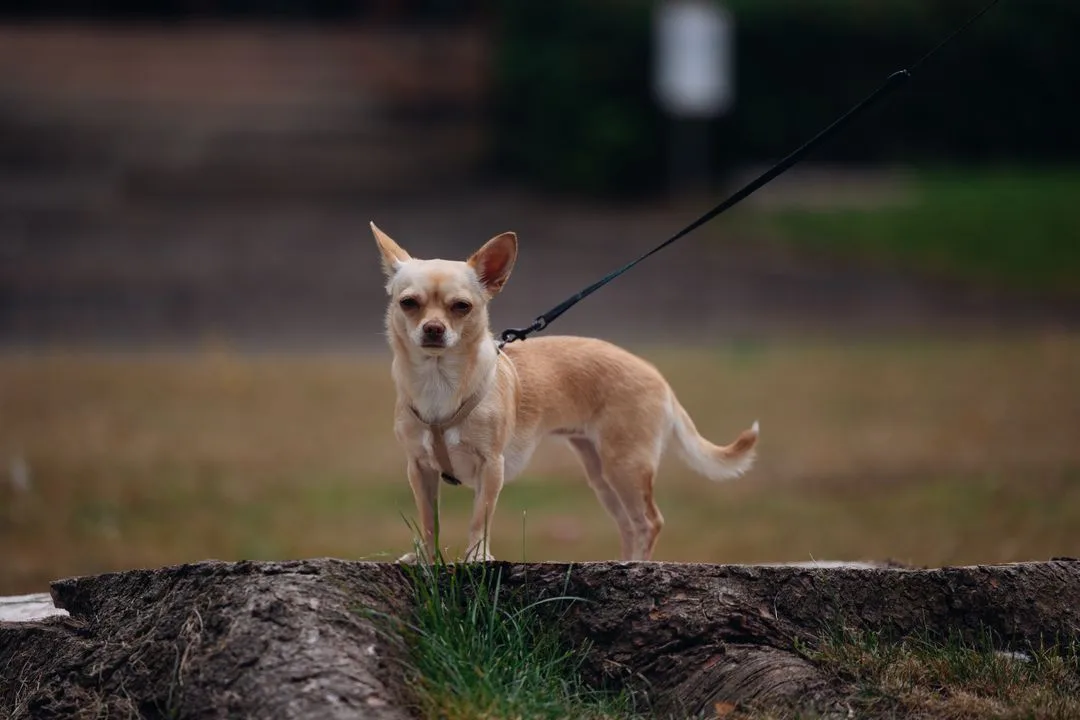
It depends, and I would rather tell you the truth than sell you a fantasy. A chihuahua can be one of the most devoted, portable, genuinely funny companions you will ever live with. It can also be a barky, one-person, suspicious-of-everyone handful if you treat it like a stuffed animal instead of a dog.
A chihuahua may be a great fit if:
- You want a true companion dog, the kind that follows you room to room, and you actually want that level of attachment rather than finding it claustrophobic.
- You will socialize and train it like a real dog, early and consistently, and not give it a pass because it's small.
- Your home is relatively calm, or you are willing to manage interactions carefully around very young children and much larger dogs, both of which can genuinely injure a six-pound animal.
- You can commit to the long haul; chihuahuas frequently live into their mid-teens, so this is a twelve-to-eighteen-year relationship, not a phase.
It is probably the wrong dog if you want something aloof and independent, if a barking dog will fray your nerves past repair, or if you are not going to do the training. And if you do bring one home, please consider adoption first. Shelters across the country are overflowing with chihuahuas, many of them surrendered by people who fell for the cute and skipped the work.
If you are weighing it, our guide to adopting a rescue chihuahua walks through what to expect, and there is a quieter, deeply rewarding case to be made for opening your home to a senior chihuahua whose personality is already fully formed and no longer a mystery. Owners hear the same lines in the park for years, and the standard repertoire is a fair record of how far the reputation travels. The genre has its own logic, which the case for the prosecution, written by an owner, takes to its conclusion.
Frequently Asked Questions
Are chihuahuas actually aggressive, or is that a myth?
It's complicated. Owner-survey research, notably the Duffy, Hsu, and Serpell C-BARQ study, did find chihuahuas scoring relatively high on aggression measures. But the same dogs scored high on fearfulness, and behaviorists read most chihuahua "aggression" as defensive and fear-based rather than predatory or dominant. They are not a vicious breed. They are a small, easily frightened one that was often never taught better.
Why does my chihuahua bark at everything?
Usually a mix of fear and learned habit. The world is physically overwhelming at their size, so barking is how they try to create distance from things that feel threatening. It also gets reinforced when the scary thing (the mail carrier, the visitor) leaves anyway, which the dog reads as "my barking worked." Counter-conditioning and rewarding calm behavior help far more than scolding does.
Can a snappy adult chihuahua still be trained?
Yes, though it takes patience. Adult dogs are absolutely capable of learning; you are working with an established habit rather than a blank slate, so progress is slower. Reward-based training, careful and gradual socialization, and consistency from everyone in the household are what move the needle. A force-free trainer or veterinary behaviorist is worth the money for a serious case.
Are chihuahuas good with children?
They can be, with supervision and the right ages. The real risk runs in both directions: a small child can seriously injure a fragile six-pound dog by accident, and a frightened chihuahua may snap when handled roughly. They tend to do best with older, gentle children who understand that the dog is not a toy.
Are chihuahuas really that loyal?
The loyalty is the genuine article and it is the heart of the breed. They were bred as close human companions for around a thousand years, and that intense, sometimes one-person devotion is baked in. Plenty of self-described skeptics have walked in expecting a yappy nuisance and walked out completely devoted to a dog that decided they belonged to it.
