
Every so often I get the same question, usually from someone whose friend's chihuahua just had puppies: I work from home, I've never owned a dog, we might have kids. Should I say yes? What's the real story? The toy-sized tyke is, in my biased opinion, the most rewarding small dog going. It is also the breed people most often get wrong. Chihuahuas are different, and nobody briefs you on the differences. This is the briefing.
Quick answer: The things owners most often wish they had known: the breed standard caps a chihuahua at six pounds with bones to match, so a sofa jump or a child's dropped grip causes the classic toy-breed fracture; toddlers and toy dogs are a genuinely risky mix in both directions and need gates and supervision; the breed suits someone home all day, provided short absences are practised from puppyhood; and the honking, freezing episode that panics new owners is usually harmless reverse sneezing.
A four-pound body comes with no crumple zone
Start with the physics. The AKC standard caps the breed at six pounds, with bones to match. A leap off the sofa back, a wriggle out of a child's arms, a misjudged stair: any can end in a fractured foreleg, the classic toy-breed injury. Pet stairs and ramps sound fussy. They are seatbelts.
Two habits to install early. First, check before you sit: chihuahuas are dedicated burrowers, and that lump under the throw blanket may be your dog. Second, curate the dog friends. A cheerful body slam from a Labrador can break something; a predatory grab (rare, real, over in seconds) can kill. Pick playmates by size and manners.
Habits like these add up to a rhythm, and we've mapped the whole thing in our chihuahua daily care routine.
Luxating patella, a kneecap that slips out of its groove, is among the most common orthopedic problems in toy breeds. The tell is the skip: a three-legged hop for a few strides, then back to normal. Mild cases need little beyond lean body weight; severe ones need surgery. Ask whether the parents have sound knees. Even when the breeder is your friend. Especially then.
The socialization window closes fast, so use it
The American Veterinary Society of Animal Behavior says socialization should begin before the shot series ends, as early as seven to eight weeks; a bubble-raised puppyhood costs more, behaviorally, than the infection risk it avoids. For a chihuahua it matters double. Why? Because an undersocialized chihuahua becomes the barking, lunging cliché people laugh at instead of help.
Do the same work on the dog's own body: from day one, handle paws, mouth, gums, and ears, and pair it all with something delicious. Trainers call this cooperative care, the difference between a dog who accepts nail trims and one who needs three people and a towel. I say this as someone whose own dogs treat "come" as an opening offer; the paw-handling habit, at least, I got right.
Training: short sessions, real pay, no debates
Chihuahuas have a reputation for stubbornness. It depends on who you ask and how you define stubborn. What I see is a clever companion breed with no history of taking orders; it works for payment, not approval. Keep sessions to a few minutes, several times a day, and pay in something real (chicken outranks kibble, and both outrank praise). Skip punishment; it teaches a fearful ten-week-old one lesson, that you are dangerous too.
Barking and leash reactivity, the breed's signature sins, are almost always fear, turned up loud. A tiny dog lunging at a Labrador is not picking a fight; it is trying to make the scary thing leave before it arrives. The famous temper is mostly mythology stacked on mismanagement; we've covered what the ankle-biter reputation gets wrong.
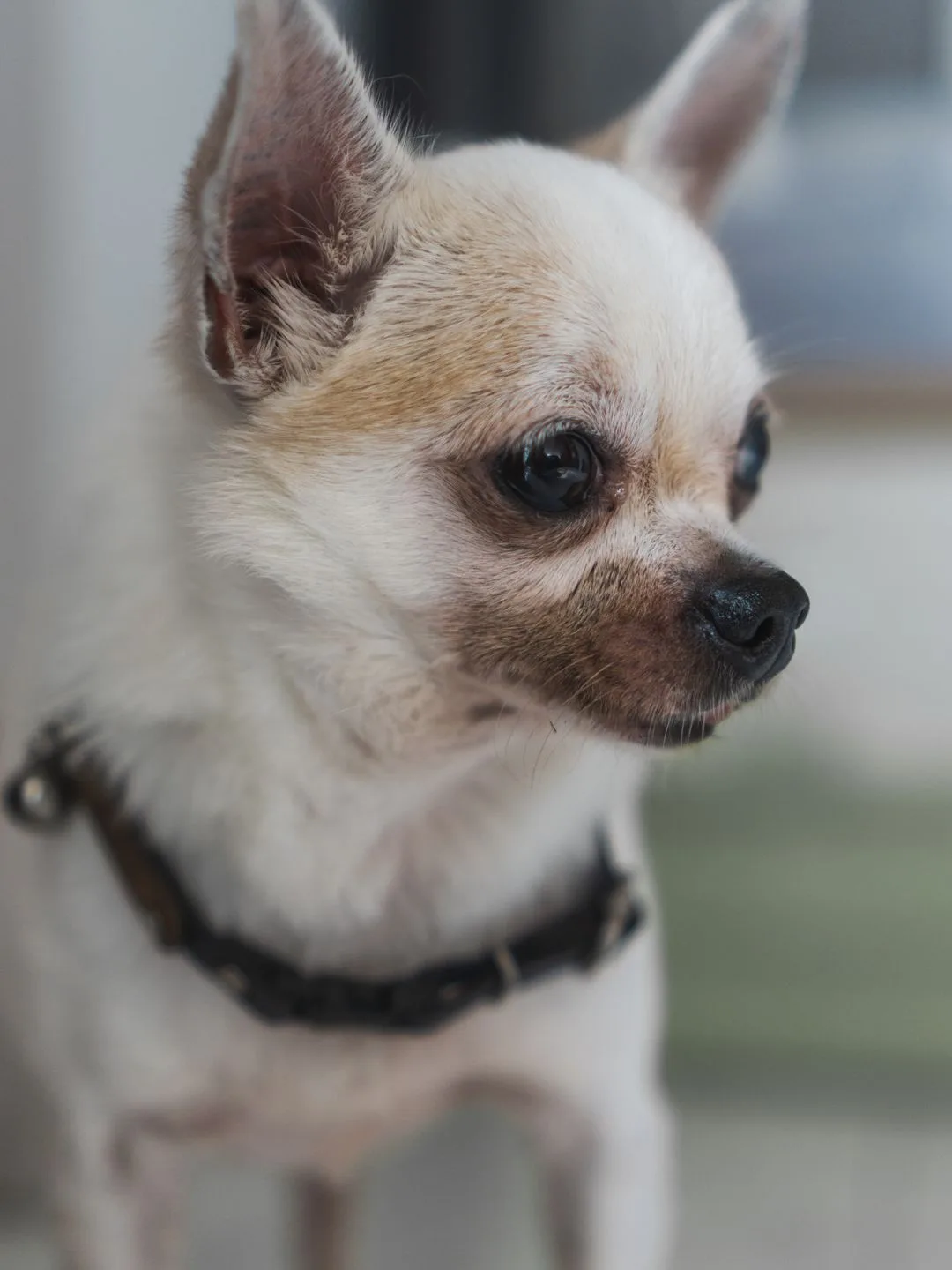
The health fine print, read aloud
Reverse sneezing first, because it will scare you. One evening the puppy stands stiff, elbows out, neck extended, honking violently, and you will swear it's choking. It almost never is. Reverse sneezing is a throat spasm (your vet may call it the pharyngeal gag reflex) common in small breeds, and typically passes in under a minute. Stay calm and stroke the throat. Better yet, film it for your veterinarian. My first episode involved a very fast, entirely unnecessary drive.
Teeth next, because it's nearly universal. A chihuahua carries the same forty-two adult teeth as a Great Dane in a jaw the size of your thumb, and that crowding means periodontal disease starts early; most dogs show signs of it by age three, and toy breeds top the list. Brushing from puppyhood buys you years, but plan on professional cleanings too, and read how anesthesia and dental cleanings work for chihuahuas before the first one.
Hypoglycemia last. Toy-breed puppies have immature livers with almost no glycogen in reserve and almost no body fat, so a skipped meal or hard play can crash their blood sugar, most often in the first three months. Watch for weakness, wobbling, a glassy stare. Feed three to four small meals a day, keep corn syrup handy to rub on the gums, and treat any episode as a same-day veterinary visit. Not a wait-and-see.
The velcro clause
Now the good news, and it is genuinely good news if you work from home. Chihuahuas were bred for companionship and take the job literally: yours will spend all day in your lap, your hoodie, or the blanket beside you. A dog left alone nine hours a day is quietly miserable, so practice short, boring absences early. They travel well (a six-pound dog fits an airline carrier under the seat) and suit apartments, provided the barking homework got done.

And the timeline. Most references put life expectancy at 14 to 16 years; the AKC's longevity article stretches that to 17. A puppy arriving this year could plausibly watch a child not yet born start high school. It's a contract, not a purchase.
About those future children
I won't cheerlead this one: toddlers and toy dogs are a risky mix, in both directions. A falling two-year-old can break a chihuahua's leg or back, and a cornered chihuahua defends itself at toddler-face height. Baby gates, a dog zone the child cannot enter, no unsupervised contact ever. Plenty of chihuahuas live happily with respectful school-age kids. With toddlers, the management is the plan.
One puppy has a way of becoming three
A friend's litter is an honest way to meet your first chihuahua; you know the mother and can watch the temperaments sort themselves. But let's face it: shelters in much of the country are full of chihuahuas waiting on a couch like yours, so before you commit, read what adopting a rescue chihuahua actually looks like. If you are still deciding, we also weigh male versus female chihuahuas and answer how big they actually get. And once the puppy is home, our chihuahua puppy training timeline walks the first year.
Which brings us to the breed's running joke: they're addictive. Nobody sets out to own three; the arithmetic that starts at one has a well-known tendency to arrive there. Ask us how it happened and you'll get the same answer. It's complicated.
Frequently asked questions
Is a chihuahua a good first dog for someone who works from home?
Genuinely yes. Chihuahuas are companion dogs to the bone; a human home all day is their preferred setting. The catch: practice short absences from puppyhood so the dog can cope when you leave.
Can a chihuahua live safely with a toddler?
Not always, and never without full-time supervision. A toddler's fall can seriously injure a six-pound dog, and a frightened dog may bite. Baby gates, separate zones, and no unsupervised contact are the minimum.
My chihuahua makes a honking, snorting noise and freezes. Is it choking?
Almost certainly not. That is reverse sneezing, a usually harmless spasm common in small breeds; episodes generally end within a minute. Film one for your veterinarian, and call the clinic if they turn frequent.
How do I prevent hypoglycemia in a chihuahua puppy?
Feed three to four small meals a day until at least four months old, and know the signs: weakness, wobbling, glassy eyes. Rub corn syrup on the gums and get to a veterinarian the same day.
So: the puppy from the friend's litter, or not? If the fine print reads like a fair deal rather than a warning label, you'll do fine. Within a month you'll wonder how you ever worked without a small tyrant asleep against your ankle. Just check the blanket before you sit. Always check the blanket.
