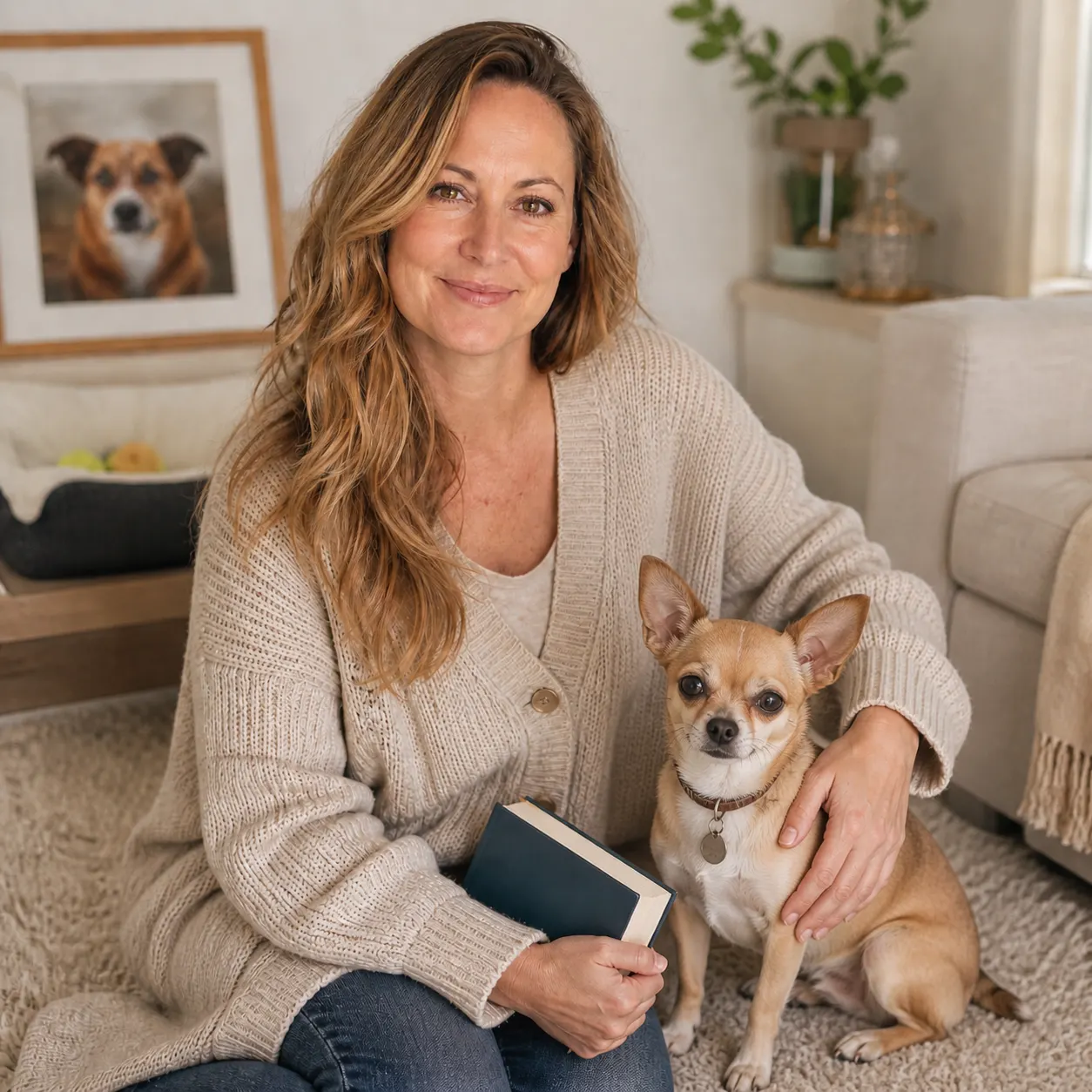
Can you actually train an older chihuahua, or is the "you cannot teach an old dog new tricks" framing accurate? In short: yes, you can, the trajectory is different from puppy training in specific ways, and the older-dog protocol is in some respects more efficient because the dog is more emotionally regulated and has a longer attention span. The myth that older dogs cannot learn is, on the available behavioral evidence, flatly wrong.
I want to walk through what actually changes between puppy training and adult or senior training, what works specifically for older chihuahuas, and what the realistic timeline looks like.
Why the myth persists, briefly
The "old dog, new tricks" framing has, on examination, two underlying sources. The first is that older dogs have, by definition, more established behavioral patterns; new behaviors compete with established ones, and the competition takes time to resolve. The second is that older dogs sometimes have medical or sensory limitations (mild arthritis, slight hearing loss, cognitive change in seniors) that affect training in ways that go unrecognized.
article_in_feed
A handpicked find for your tiny companion.
Neither source supports the conclusion that older dogs cannot learn. Both inform how the training should be structured.
What changes between puppy and adult training
A few specific differences:
Attention span. Adult and senior chihuahuas typically have longer attention spans than puppies. A 10-week puppy can sustain perhaps two to three minutes of focused work; a four-year-old chihuahua can often sustain ten to fifteen minutes. The session length scales accordingly.
Established competing behaviors. The adult dog has, by years in the household, developed reliable behavioral responses to many situations. Teaching a new response in a familiar situation requires displacing the established one, which takes more reps than building a behavior from a blank slate.
Emotional regulation. Adult dogs are typically calmer than puppies during training. The puppy who is too excited to focus is replaced, in adult training, by a dog who can sit quietly through the setup phase.
Reward calibration. The high-value treat that produces enthusiasm in a puppy may produce mild interest in an adult. Identifying the specific reward that the adult dog cares about is the first step of the training.
Physical considerations. Older chihuahuas may have joint or vertebral issues that affect what behaviors are reasonable to ask for. Sit, down, and stand transitions can be uncomfortable for arthritic dogs; the protocol may need to substitute alternatives.
The adult-dog training protocol, plainly
The protocol I run with clients training adult or senior chihuahuas:
Step 1: Reward identification. Spend a session figuring out what the dog actually cares about. Try several options: kibble, small pieces of cheese, plain chicken, a specific commercial treat, verbal praise paired with petting. The strongest reward becomes the training currency.
Step 2: Short structured sessions. Five to fifteen minutes, two or three times a day. The sessions are short enough that the dog stays engaged; the spacing across the day produces meaningful repetition.
Step 3: One behavior at a time. Pick one new behavior and work on it until reliable before adding another. Adult dogs benefit from clarity; introducing multiple behaviors simultaneously confuses the learning.
Step 4: Generalize gradually. Once the behavior is reliable in the kitchen, work on it in the living room, then on the porch, then on a walk. Adult dogs do not automatically generalize; the behavior has to be practiced in each context.
Step 5: Maintenance. Once a behavior is in the dog's repertoire, occasional refresher sessions keep it reliable. Adult behaviors fade if not practiced; ten or fifteen reps a week of each established behavior keeps them sharp.
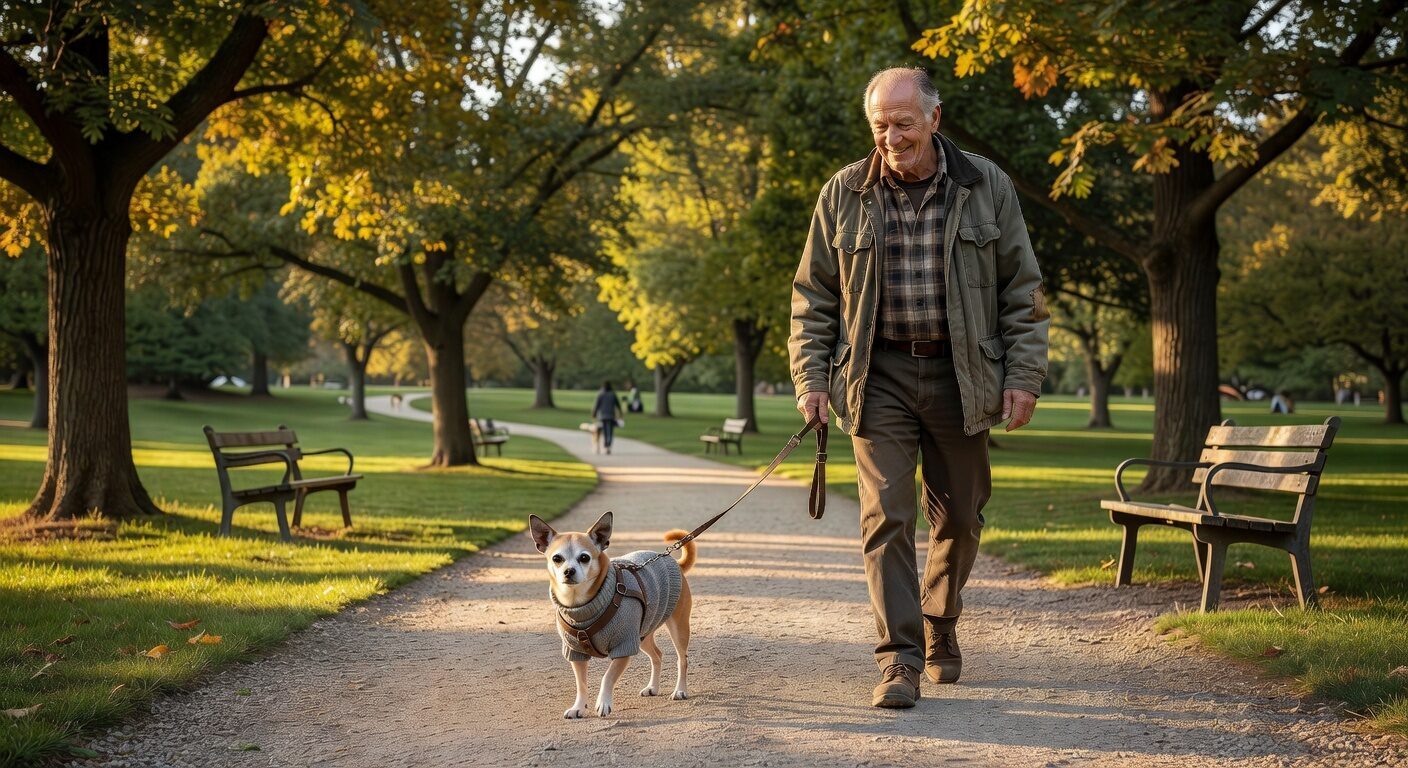
Behaviors that work especially well for older dogs
A few behaviors I prioritize with adult-and-senior chihuahuas:
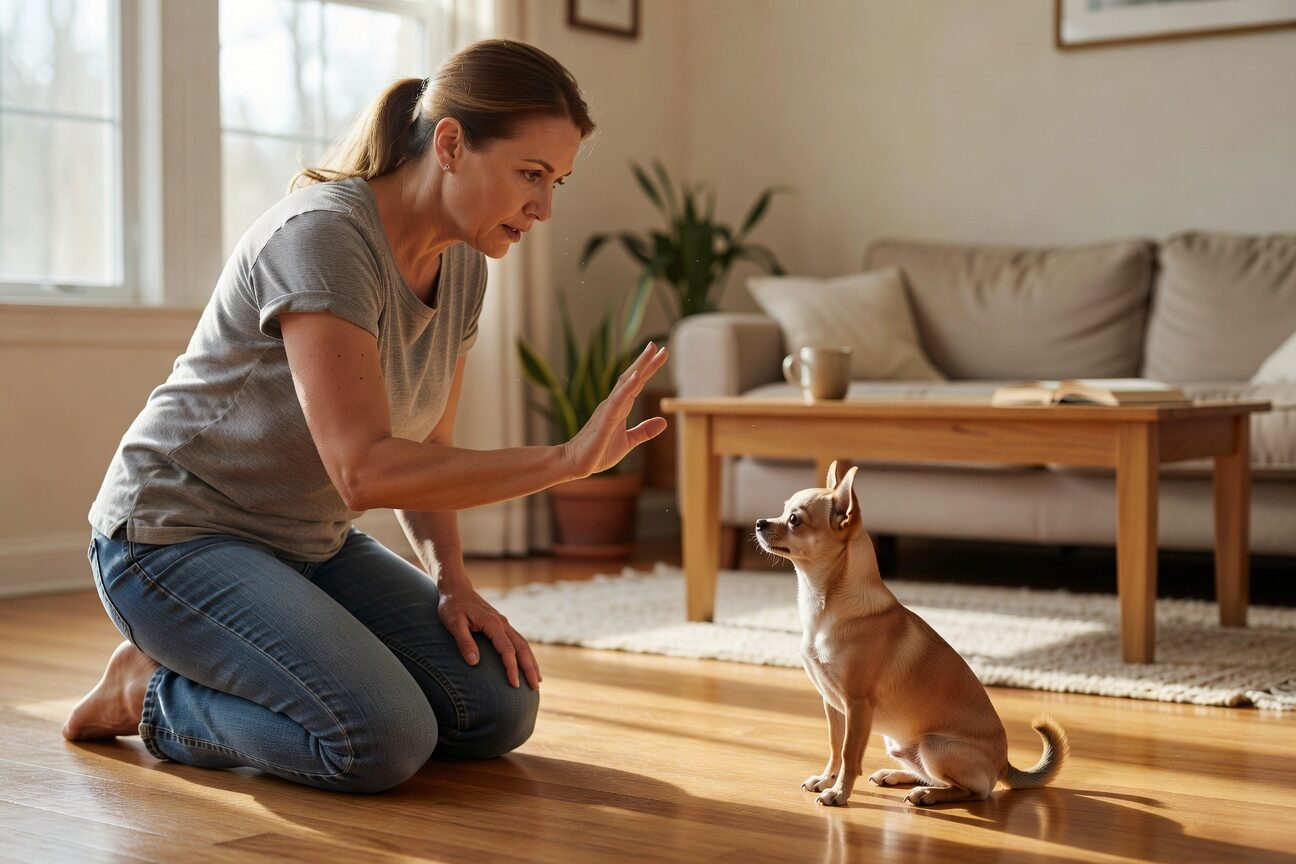
- Hand targeting. The dog touches her nose to your offered hand. Useful as a foundation behavior for many other things; gentle on aging joints.
- Place command. The dog goes to a designated mat or bed and settles. Useful for management around guests, mealtimes, and stress events. A separate piece on jumping covers a related application.
- Settle on cue. The dog relaxes on command in a specific spot. Useful for vet visits, restaurant patios, and any sustained-stillness situation.
- Recall. Coming when called, reliably, at varying distances. The single most useful safety behavior for a small dog.
- Trick behaviors (spin, paw, bow). Mental engagement, useful for senior cognitive maintenance, and fun for the household.
What to avoid with older dogs, briefly
A few protocols that work for puppies but produce frustration with older dogs:
- Yelping high-pitched corrections. The puppy "yelp like a littermate" advice produces, in adult chihuahuas, a confused or dismissive response. Calm verbal markers work better.
- Long sessions. Twenty-minute training sessions produce diminishing returns and sometimes negative associations. Multiple short sessions are more effective.
- High-rep, fast-pace work. Older dogs do better with deliberate, slower pacing. Asking for fifteen sits in a row produces fatigue; asking for three sits, three downs, three stands across five minutes produces engagement.
- Punishment-based methods. The AVSAB position statement covers the underlying logic; with older dogs, the cumulative effect of punishment over years is more visible than with puppies.
Medical considerations, briefly
A few points that are easy to miss with older chihuahuas:
- Hearing changes. Senior chihuahuas sometimes lose hearing gradually. A senior who appears to ignore cues is, in many cases, a senior who cannot hear them clearly. Visual hand signals are useful for these dogs.
- Vision changes. Cataracts and other vision issues affect cue recognition. Verbal cues work for vision-impaired dogs in a way that hand signals do not.
- Joint pain. Sit-to-stand transitions, in particular, can be uncomfortable for arthritic seniors. A separate piece on chihuahua hip dysplasia covers the orthopedic considerations.
- Cognitive change. A small fraction of senior chihuahuas develop cognitive dysfunction, which affects learning and memory. The behavioral signs are worth recognizing; the medical workup catches it.
The wellness visit is the right place to catch any of these and to adjust the training protocol accordingly.
The trajectory you should expect
A reasonable timeline for an adult chihuahua learning a new moderate-difficulty behavior (place, settle, hand target):
Week 1. The dog learns the basic mechanics in a quiet kitchen setting. Reliability is intermittent.
Weeks 2 to 3. Reliability improves with short daily sessions. The dog generalizes to other rooms in the house.
Weeks 4 to 6. The behavior holds in moderately distracting situations (doorbell, brief outside noises). The dog is, at this point, performing reliably in most household contexts.
Months 2 to 3. Generalization to high-distraction situations (visitors, walks, vet office). Maintenance work continues at lower frequency.
A puppy might compress this timeline somewhat, but the adult-dog version is workable and produces durable learning.
The bottom line, with the usual caveat
Older chihuahuas can absolutely be trained. The protocol differs from puppy training in attention span, reward calibration, and pacing. Talk to your veterinarian about any medical considerations that may affect what behaviors to prioritize; the wellness exam is the right place to catch sensory or orthopedic issues that change the protocol. The puppy-training primer covers the early-life version; the adult-dog protocol is a different and equally workable framework.
Gear That Works backpack
Harness (Not Collar)
A step-in harness is safer and more comfortable.
Lightweight Leash
4–6 feet gives freedom without losing control.
Treat Pouch
Keep rewards accessible and distraction-free.
ID Tag & Microchip
Always be prepared in case of separation.
Trainer Tip: Success on walks starts with reading your Chihuahua's signals and respecting their pace.
Was this guide helpful?
Was this guide helpful? Save it for later or share with a fellow Chi parent.
favorite