

Why do dogs hide illness, and what are the small specific signs in a chihuahua that often precede a more obvious problem? In short: the hiding behavior is an inherited survival adaptation that persists in modern dogs even when no longer adaptive, and the early signs in chihuahuas are typically small changes from the dog's specific baseline rather than dramatic symptoms. The owner who knows the baseline catches problems several days to several weeks earlier than the owner who is watching for textbook symptoms.
I want to start with the framing that matters. The chihuahua is not hiding the illness from you in any deceptive sense. She is, on her inherited behavior, masking signs of weakness that her ancestors would have presented as targets to predators or to higher-ranking members of the social group. The behavior is automatic and pre-cognitive. The owner's job is to know the baseline well enough to notice the small departures from it.
Why dogs hide signs of illness
The behavioral inheritance is well-documented across canids. A wild dog showing weakness was, in evolutionary terms, more likely to be displaced by competitors or targeted by predators. The adaptive response is to maintain normal-looking behavior even when the dog is unwell. Modern domestic dogs retain this behavior, including chihuahuas; the wolf ancestor's pre-cognitive masking is still in the wiring.

The clinical implication is that, by the time a dog shows obvious signs of illness, the underlying issue has typically been present for some time. A chihuahua presenting with obvious lethargy is, in many cases, a chihuahua who has been subtly off for several days. The early detection window is in the small-changes phase, before the obvious symptoms.
The baseline you actually need to know
A practical baseline includes a small set of regular observations:
- Eating pattern. Time of day she shows up at the bowl, how quickly she eats, whether she finishes the portion.
- Drinking pattern. Approximately how much water disappears from the bowl per day.
- Bathroom pattern. Frequency of urination and defecation, stool quality, any straining.
- Energy and activity level. Whether she initiates play, whether she comes to greet you at the door, whether she settles into her usual sun spot at the usual time.
- Social pattern. Whether she seeks human contact at the usual rate, whether she retreats from interactions she would normally accept.
- Resting pattern. Where she sleeps, how she settles, how she reacts to the household's normal noises during rest.
You do not need to track these formally; you only need to know them well enough to notice when one of them changes. A small notebook on the kitchen counter helps for the first several months of a new dog; after that, the baseline is internalized.
The early signs that often precede obvious illness
A non-exhaustive list, in rough order of how commonly I see these in the early phase:
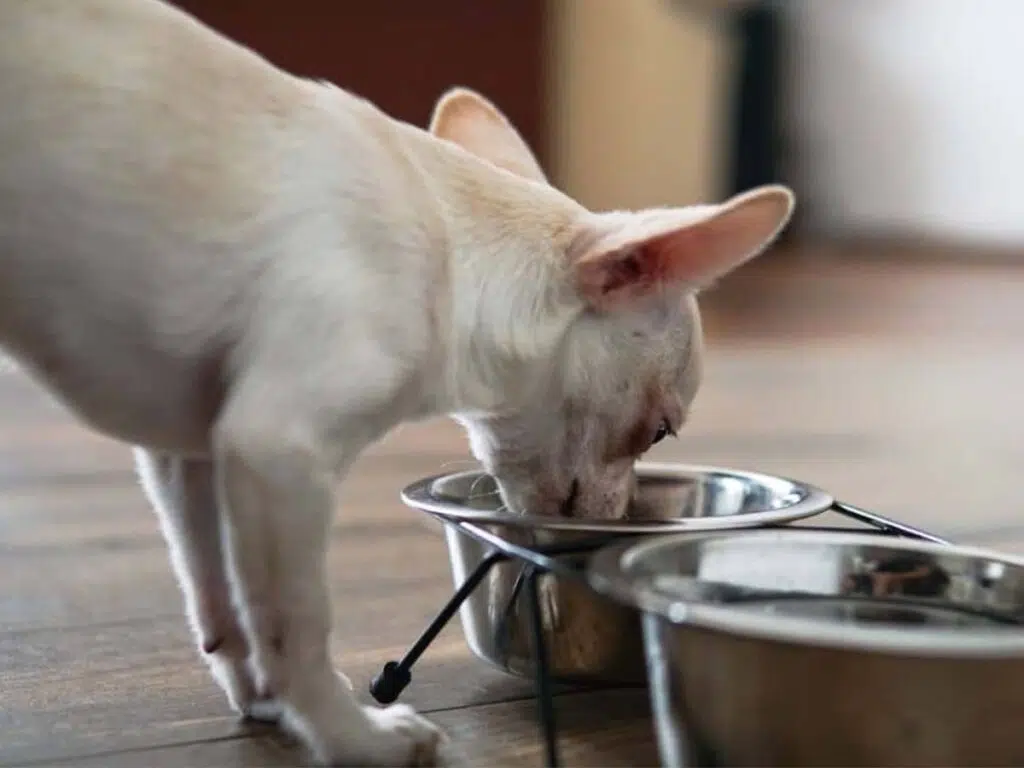
Subtle change in eating pace. A dog who normally finishes breakfast in three minutes now takes seven, or stops twice and resumes. Often signals dental discomfort, mild GI upset, or beginning of nausea.
Slightly increased water intake. Refilling the bowl a day earlier than usual. Can signal early kidney issues, beginning of diabetes, or hormonal change.
One extra bathroom trip per day. A pattern that has been four trips per day becomes five. Often signals beginning of urinary tract infection, mild GI inflammation, or, in seniors, early kidney issues.
Reluctance to jump up onto a familiar piece of furniture. She used to jump onto the couch in one motion; now she pauses, considers, and asks for help. Often signals joint discomfort or vertebral pain.
Slightly diminished greeting. She still comes to the door but the wiggle is less. Often a generalized "off" signal that resolves to a specific cause within a few days.
Selecting a different sleep position. Curled rather than splayed; tucked into a corner rather than the usual spot. Sometimes signals abdominal discomfort or generalized pain.
Reduced willingness to be picked up under the chest. A handling change. Often signals neck or chest discomfort.
Bad breath becoming worse. The breath has been mildly doggy for years; this week it is noticeably more sour. Often signals progression of dental disease or, less commonly, GI issues. The dental-care primer covers the underlying issue.
When to call the clinic, plainly
Any single small change that persists for more than two days, or any combination of small changes appearing together, is worth a vet call. The honest version of the threshold is that owners who err on the side of calling tend to catch issues meaningfully earlier than owners who wait for obvious signs.
The visit can often be a quick triage, sometimes by phone, sometimes a brief in-person exam. The cost of an early call that turns out to be nothing is a few dollars and an hour of time. The cost of a late call that should have been earlier is, in toy breeds with limited reserve, often substantially larger.
The general warning-signs primer covers the broader watch-list; this piece focuses on the very-early-detection phase before the obvious signs.
What not to do, briefly
A few patterns I see in clinic that delay early detection:
- Asking the internet first. A symptom search produces every possible diagnosis from benign to catastrophic, often increases owner stress, and rarely produces actionable next steps. Call the clinic.
- Waiting for the next regular wellness visit. A new symptom that has not been there before is worth a separate call, not a "I will mention it next time" plan. The reserve in a four-pound body is small.
- Treating at home with human medications. Many human OTC products (ibuprofen, acetaminophen, certain antihistamines) are toxic to dogs. The ASPCA's poison control resource is the standard reference if anything has been given accidentally.
- Discounting the small change because the dog seems "mostly fine." A chihuahua who is mostly fine and has one specific small change is, on the available clinical data, often in the early phase of an issue that becomes obvious only later.
The baseline as a skill, briefly
A chihuahua owner who has lived with the same dog for years develops a finer-grained sense of the baseline than any veterinarian can produce in a fifteen-minute exam. The owner's "she is just slightly off today" is, on every measure I track in clinic, more reliable than I would have predicted before working in this field. The skill is built by paying attention; once built, it is unusually useful.
The anxiety primer covers the body-language reading that overlaps with illness detection; the two skills reinforce each other.
The bottom line, with the usual caveat
Chihuahuas hide illness as inherited behavior, and the early signs are typically small changes from the dog's specific baseline. The owner's developed sense of the baseline is the most useful single early-detection tool. Talk to your veterinarian when you notice anything off; the small early call is, on the math, the better choice than the larger late one.
Health at a Glance: What to Watch monitor_heart
| Condition | Key Signs | Prevention Tips |
|---|---|---|
| Dental Disease | Bad breath, tartar, red gums | Daily brushing, dental treats |
| Patellar Luxation | Limping, skipping, leg lifting | Weight control, avoid high jumps |
| Tracheal Collapse | Dry cough, gagging | Harness walking, avoid smoke |
| Heart Disease | Coughing, fatigue, fainting | Regular check-ups, heart-healthy diet |
| Hypoglycemia | Shaking, weakness, lethargy | Small, frequent meals |
Community Insights – FAQ help
help_outline When should I call my vet about a behavior change? expand_more
Sooner than feels reasonable. A change in appetite, energy, or routine that lasts more than 48 hours is worth a phone call, not a wait-and-see.
help_outline How often should a healthy adult chihuahua see the vet? expand_more
Once a year through age seven. Twice a year from eight on. Dental checks are part of every visit.
help_outline Do chihuahuas need different care than larger breeds? expand_more
Yes. Smaller medication dosing, more frequent dental work, and closer monitoring for tracheal and patellar issues are standard in toy-breed care.
Have a health question? Ask your question in the comments. We will bring it up with the vet team.
favorite