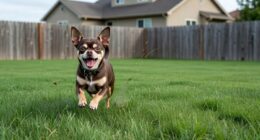
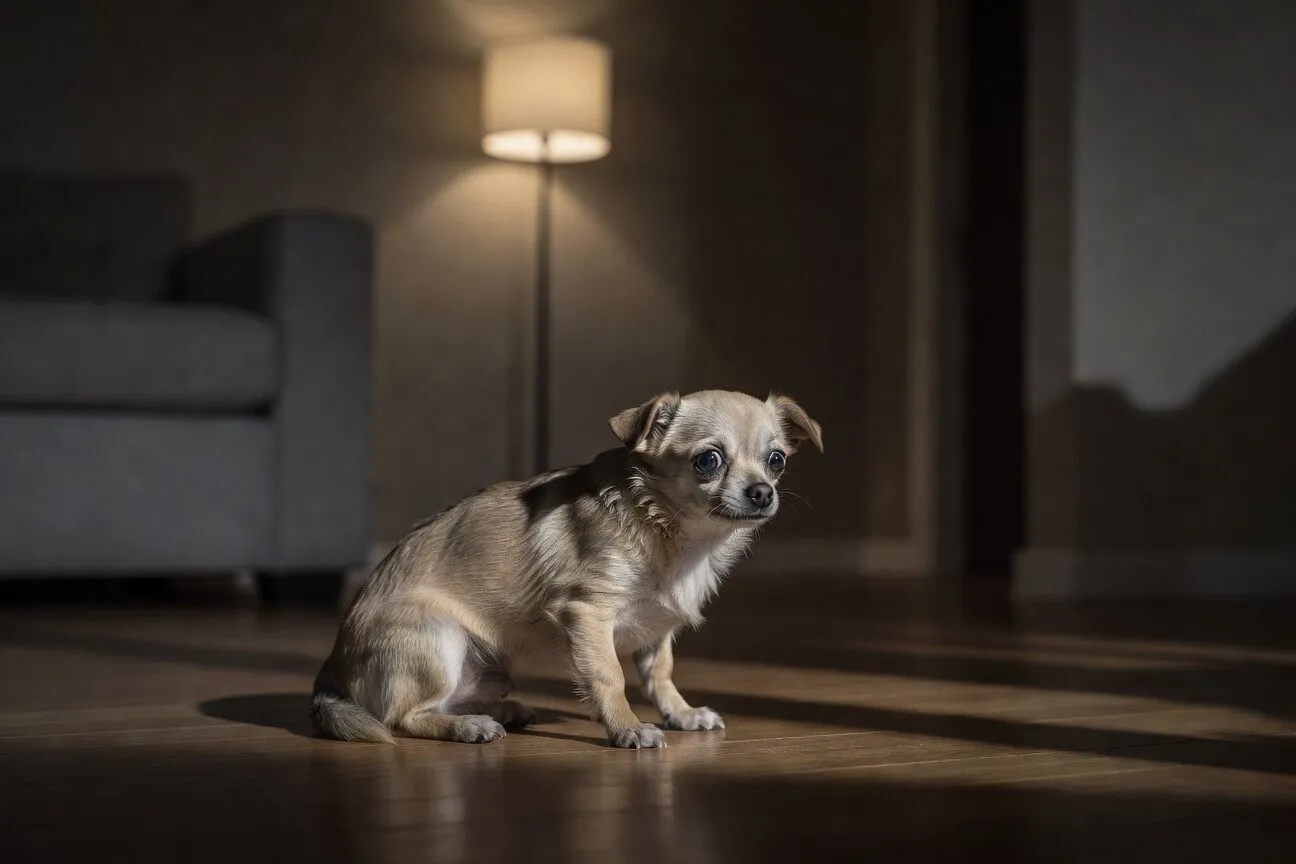

I noticed the shaking first. Not the cold kind of shaking, which every chihuahua owner knows on sight, but a different frequency altogether. My chihuahua, Rosie, was standing in the middle of the living room trembling like something terrible was about to happen, and I could not figure out what. The house was quiet. Nobody had knocked. There was no thunder. She just stood there, eyes wide, body vibrating, and I realized I had absolutely no idea what chihuahua anxiety actually looked like until that moment.
What Chihuahua Anxiety Actually Looks Like
The tricky part about recognizing anxiety in chihuahuas is that so many anxiety behaviors overlap with things we consider normal chihuahua behavior. Barking at strangers, hiding under blankets, following you from room to room. We laugh about these things and post them on social media, but sometimes the dog is genuinely distressed and we are treating it like a personality quirk.
Rosie started panting when there was no reason to pant. She would pace the hallway at two in the morning. She began refusing food, which for a chihuahua who once ate an entire slice of pizza off the coffee table was genuinely alarming. Her ears stayed pinned back for hours at a time. She would lick her paws until they were raw and pink and I had to wrap them in little socks to stop the damage.
According to the American Kennel Club, anxiety in dogs manifests through destructive behavior, excessive vocalization, restlessness, and compulsive habits. In chihuahuas, the signs can be subtler because the breed already tends toward alertness and vocal expression. You have to know your specific dog well enough to notice when normal becomes something else entirely.
The Common Triggers Nobody Warns You About
Separation is the obvious one. I work from home most days, and on the rare occasion I leave for more than a few hours, Rosie acts like I have been drafted into a war. But separation is not the only trigger, and it was not even the main one for us.
Changes in routine hit chihuahuas hard. I rearranged the living room furniture one Saturday and Rosie spent the next three days refusing to walk across the rug. A new couch. New curtains. Even a new brand of laundry detergent that made the blankets smell different. These tiny shifts in their world register as seismic events when you weigh four pounds.
Noise sensitivity is another major one. Fireworks are obvious, but chihuahuas can develop anxiety around sounds most of us barely notice. The garbage truck on Tuesday mornings. The neighbor’s leaf blower. A specific ringtone. Rosie once spent an entire afternoon hiding behind the toilet because I dropped a pan in the kitchen.
Past trauma plays a role too, especially in rescue chihuahuas. If you adopted your chi and do not know their full history, certain sounds or situations might trigger responses that seem irrational until you consider what that dog might have experienced before you. I have a friend whose rescue chihuahua panics at the sight of rolled-up newspapers. She has never used one on the dog. Someone else did.
How I Started Helping Rosie
The first thing I did was stop accidentally reinforcing the anxiety. This is harder than it sounds. When your chihuahua is trembling and looking at you with those enormous brown eyes, every instinct tells you to scoop them up, cradle them, and whisper that everything is fine. The problem is that scooping and cradling can teach the dog that trembling earns comfort, which means more trembling.
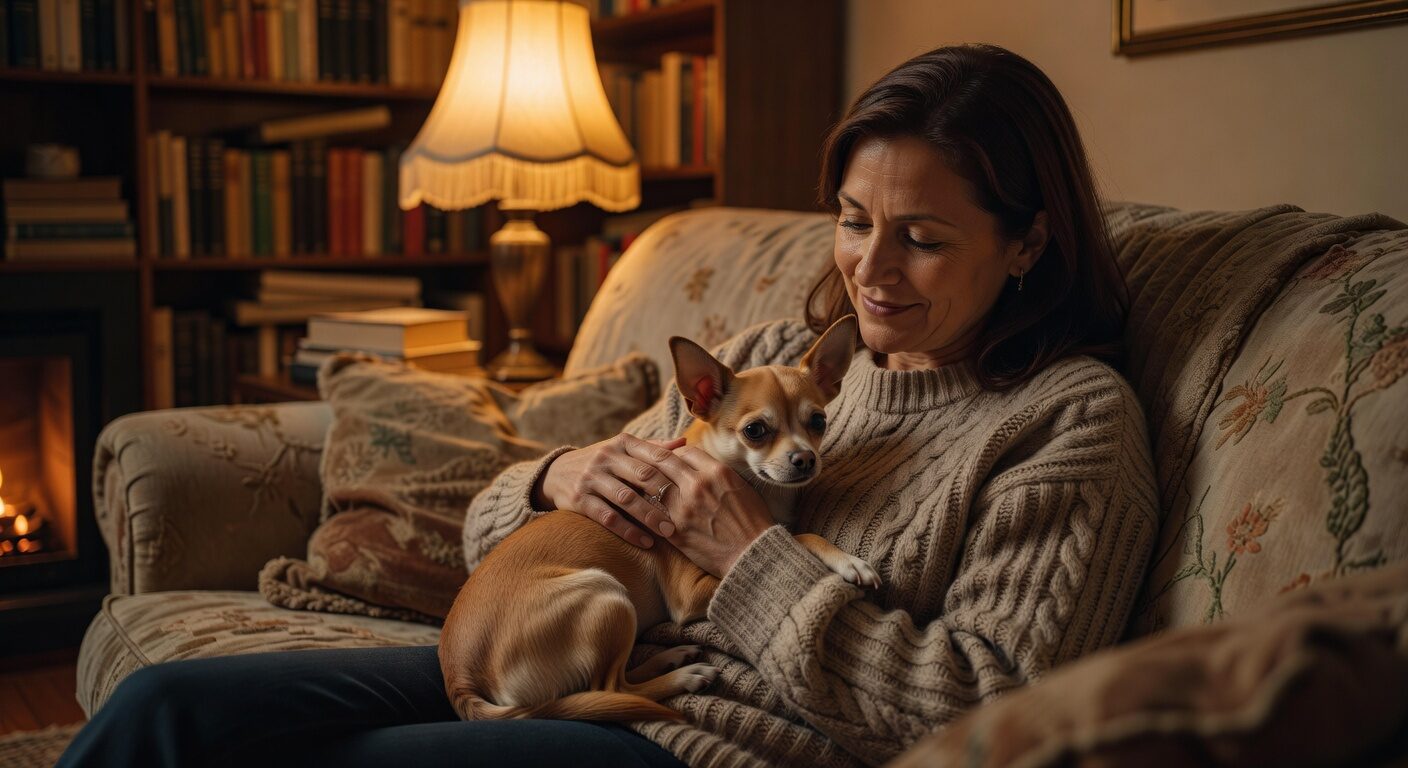
I started practicing what our vet called calm acknowledgment. I would notice Rosie’s anxiety, sit near her without picking her up, and speak in a steady neutral tone. Not excited, not worried, not cooing. Just present. It felt cold at first. It felt like I was ignoring her distress. But within a couple of weeks, the episodes started getting shorter because she was not getting the big dramatic response that was accidentally feeding the cycle.
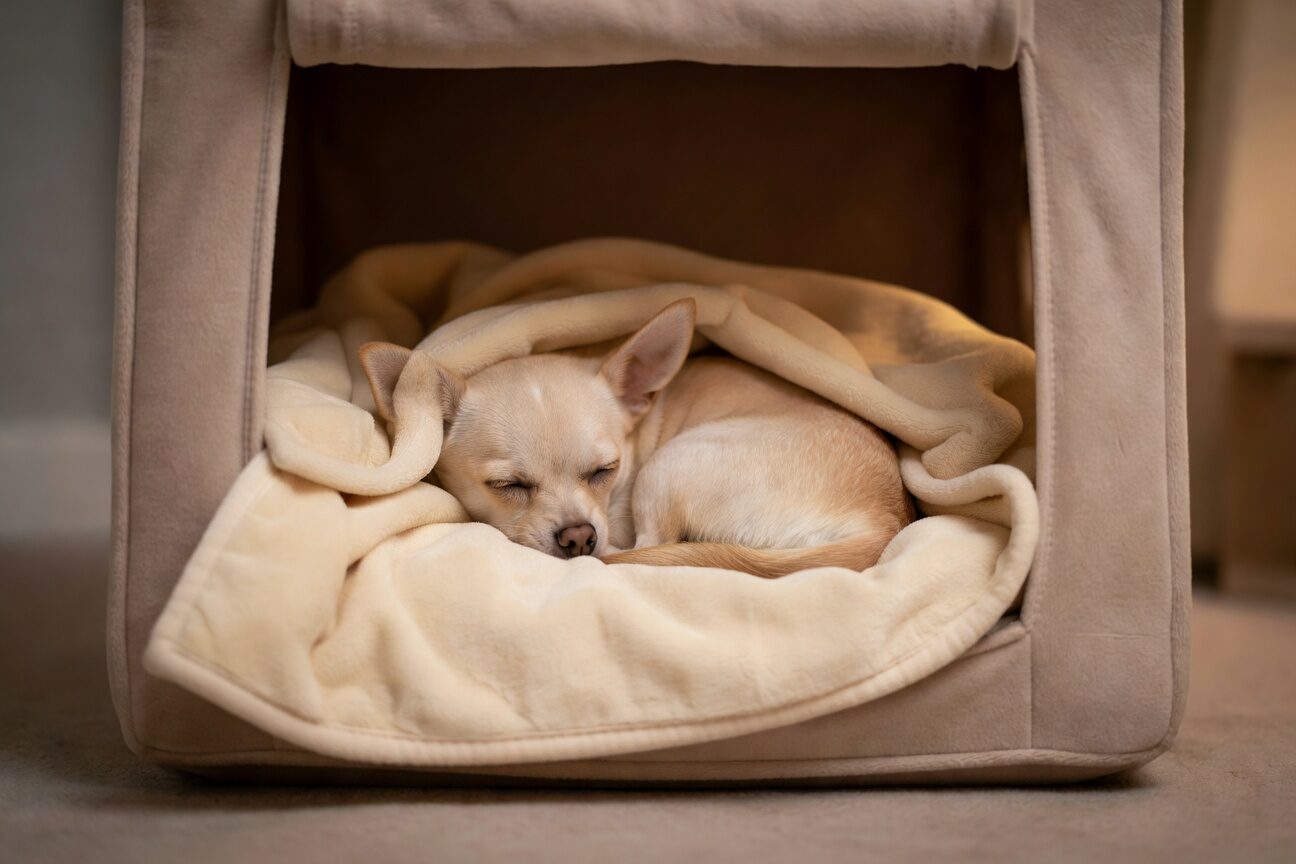
I also created a safe space that was always available. A covered crate in the corner of the bedroom with a blanket that smelled like me and a shirt I had worn. Not as punishment, not as containment, just an open den she could retreat to whenever the world got too loud. She started using it on her own within days. If you are looking for more ways to help your chi cope, our chihuahua separation anxiety guide covers the specific routines that work.
When Anxiety Becomes a Health Problem
Chronic anxiety is not just a behavioral issue. It is a medical one. Dogs living in a constant state of stress produce elevated cortisol, which suppresses the immune system, disrupts digestion, and can lead to skin conditions. Rosie’s paw licking was not a habit. It was her body’s way of trying to self-soothe, and it was causing secondary infections.
Weight loss is another consequence. An anxious chihuahua who refuses food for days at a time can become dangerously underweight fast. At four or five pounds, there is almost no margin. Two missed meals for a lab is nothing. Two missed meals for a chihuahua is a vet call.
Gastrointestinal issues show up regularly in anxious chihuahuas. Stress diarrhea is real, and in a dog this small, dehydration from ongoing digestive problems can escalate quickly. Our guide to caring for a sick chihuahua at home walks through the warning signs.
The Medication Conversation
I resisted medication for months because I wanted to solve this through training and environment alone. And for mild anxiety, that approach absolutely works. But Rosie’s anxiety was not mild. It was affecting her eating, her sleep, her skin, and her quality of life. Our vet prescribed a low dose of fluoxetine, and I will be honest, it made a noticeable difference within about three weeks. Understanding chihuahua anxiety makes a real difference.
Medication is not a failure. It is a tool. The veterinary behaviorists at PetMD emphasize that medication works best alongside behavioral modification, not as a replacement for it. Rosie still has her safe space. I still practice calm acknowledgment. The medication just brought her baseline anxiety down enough that the training could actually stick.
Daily Routines That Reduced Her Anxiety
Predictability became our best friend. Same wake-up time. Same feeding time. Same walk route. Same bedtime ritual. Chihuahuas thrive on knowing what comes next, and when Rosie could predict her day, the random anxiety spikes dropped significantly.
Exercise matters more than people think for a tiny dog. A twenty-minute walk in the morning is not just physical activity. It is mental stimulation, scent processing, and confidence building. Rosie comes home from walks calmer and more settled, and the afternoons that follow morning walks have noticeably fewer anxiety episodes than the days we skip.
Mental stimulation through puzzle feeders and sniff mats gave Rosie something productive to focus on instead of whatever invisible threat her brain had invented. A frozen Kong stuffed with peanut butter can occupy her for forty-five minutes. That is forty-five minutes of calm, focused activity instead of pacing and panting. For more ideas, check out our piece on reading your chihuahua’s health signals.
What I Wish I Had Known Earlier
I wish someone had told me that chihuahua anxiety is not a character flaw. It is not because you got a bad dog or because you did something wrong. The breed is predisposed to anxiety because of their size, their sensitivity, and honestly, because of how we tend to raise them. We carry them everywhere. We shelter them from experiences. We laugh when they growl at bigger dogs instead of addressing the fear behind the growl. We create the conditions for anxiety and then act surprised when it shows up.
Rosie is not cured. That is not how anxiety works, in dogs or in people. But she is managed. She sleeps through the night now. She eats her meals. She still retreats to her crate when the garbage truck comes, but she comes out ten minutes later instead of spending the entire morning behind the couch. Progress does not look like perfection. It looks like a chihuahua who can hear a loud noise and recover from it in minutes instead of hours.
If your chihuahua is showing signs of anxiety, start by talking to your vet. Not the internet, not the dog park advice crowd, your actual vet who knows your dog’s medical history. Get a baseline. Rule out pain or illness that might be mimicking anxiety. Then build from there, one small change at a time, because your chihuahua did not develop this overnight and they will not recover from it overnight either. But they can get better. Rosie is proof of that. That is the reality of chihuahua anxiety.
What are the most common health issues in chihuahuas?
Dental disease, luxating patellas, hypoglycemia, tracheal collapse, and heart murmurs are the most frequent. Regular veterinary checkups catch most conditions early when they are easiest to manage.
How often should a chihuahua see the vet?
Annual checkups for adults, bi-annual for seniors over eight years old. Puppies need visits every three to four weeks until their vaccination series is complete at around 16 weeks.
When should I worry about my chihuahua's health?
Seek veterinary care for lethargy lasting more than 24 hours, refusal to eat for two or more meals, difficulty breathing, persistent vomiting or diarrhea, and any sudden behavior change. With small dogs, early intervention is always safer than waiting.
What should I know about chihuahua anxiety?
Understanding chihuahua anxiety requires attention to breed-specific needs. Chihuahuas are small dogs with unique health, behavioral, and care requirements. Consulting your veterinarian and learning from experienced owners provides the most reliable guidance for your specific situation.