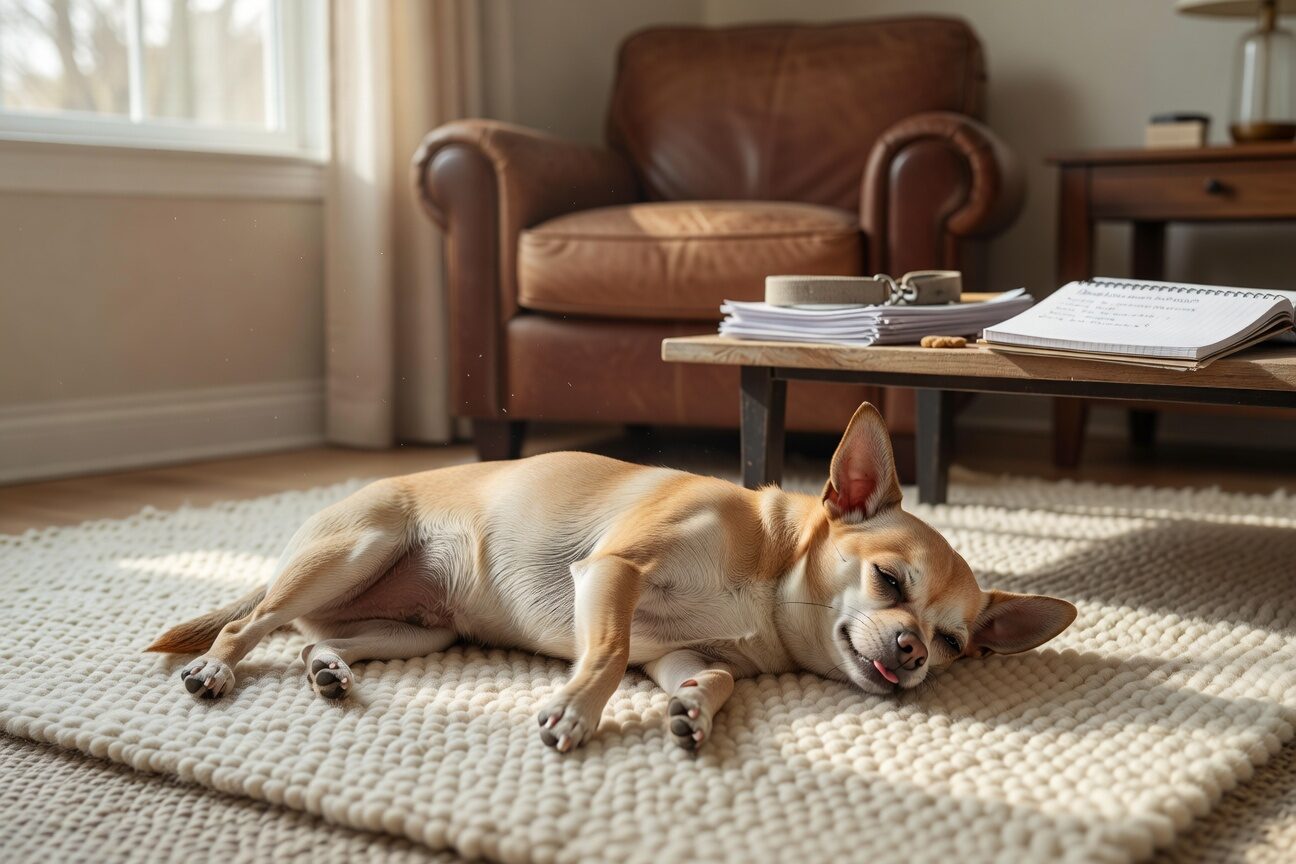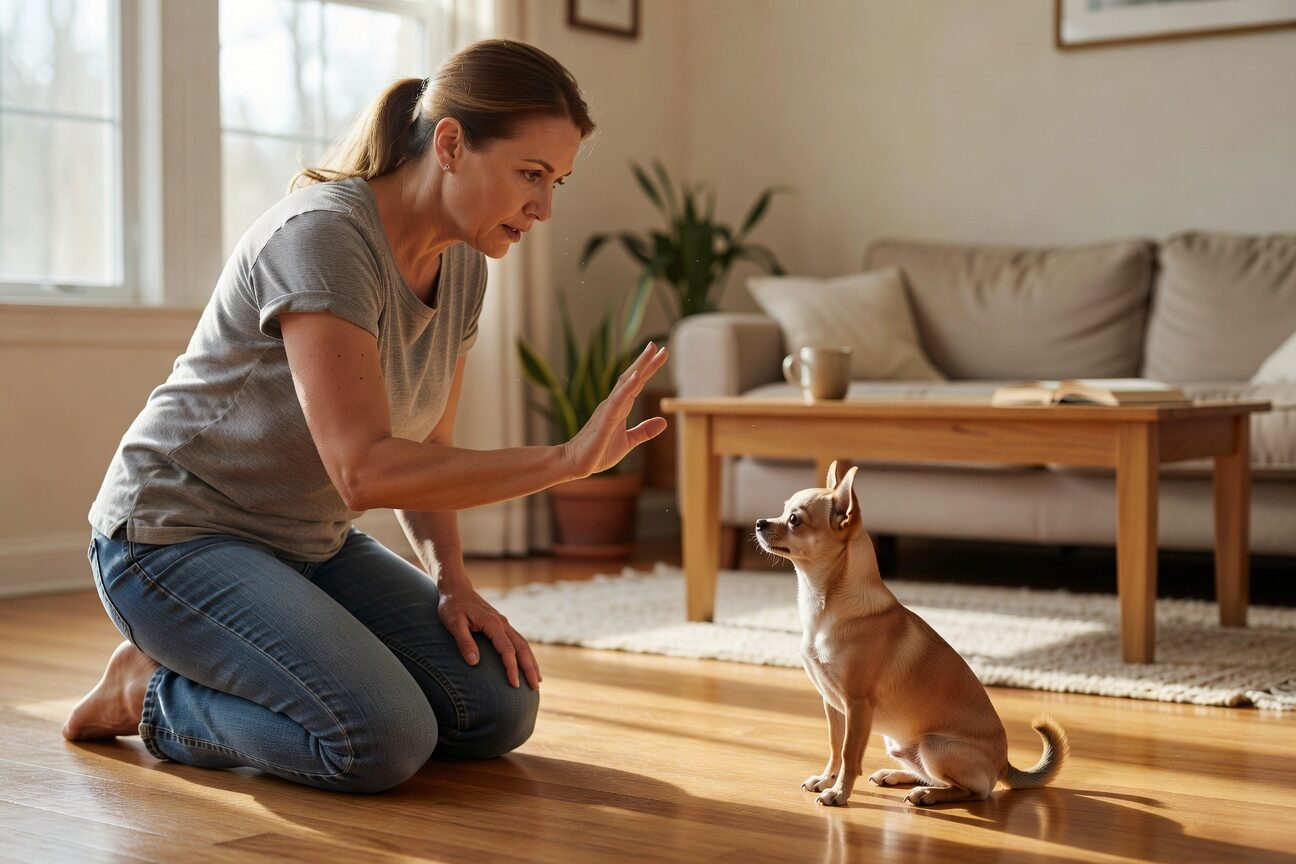

Behavior problems in chihuahuas are not breed defects. The 2014 review by Casey and colleagues, in Journal of Veterinary Behavior, found that the most commonly cited toy-breed "behavior problems" trace, on closer assessment, to under-socialization, owner-tolerated mismanagement, or a treat-the-small-dog-like-a-toy framing that the dog inherits and the owner reinforces. The good news is that what works is well-documented; the harder news is that what most owners try first is the wrong tool.
Below are the ten most-cited problems, in plain order, with the intervention that has evidence behind it.
1. Excessive Barking
Patrol-bark, anxiety-bark, demand-bark. The interventions are different. Patrol-bark responds to redirection and a covered window. Anxiety-bark responds to the protocol covered in the companion four things to do when your chihuahua is stressed guide. Demand-bark responds to extinction (do not reinforce; reward quiet alternatives). What does not work: punishment, shock collars, or yelling. The 2008 AVSAB position paper is the standard reference.
article_in_feed
A handpicked find for your tiny companion.
2. Resource Guarding
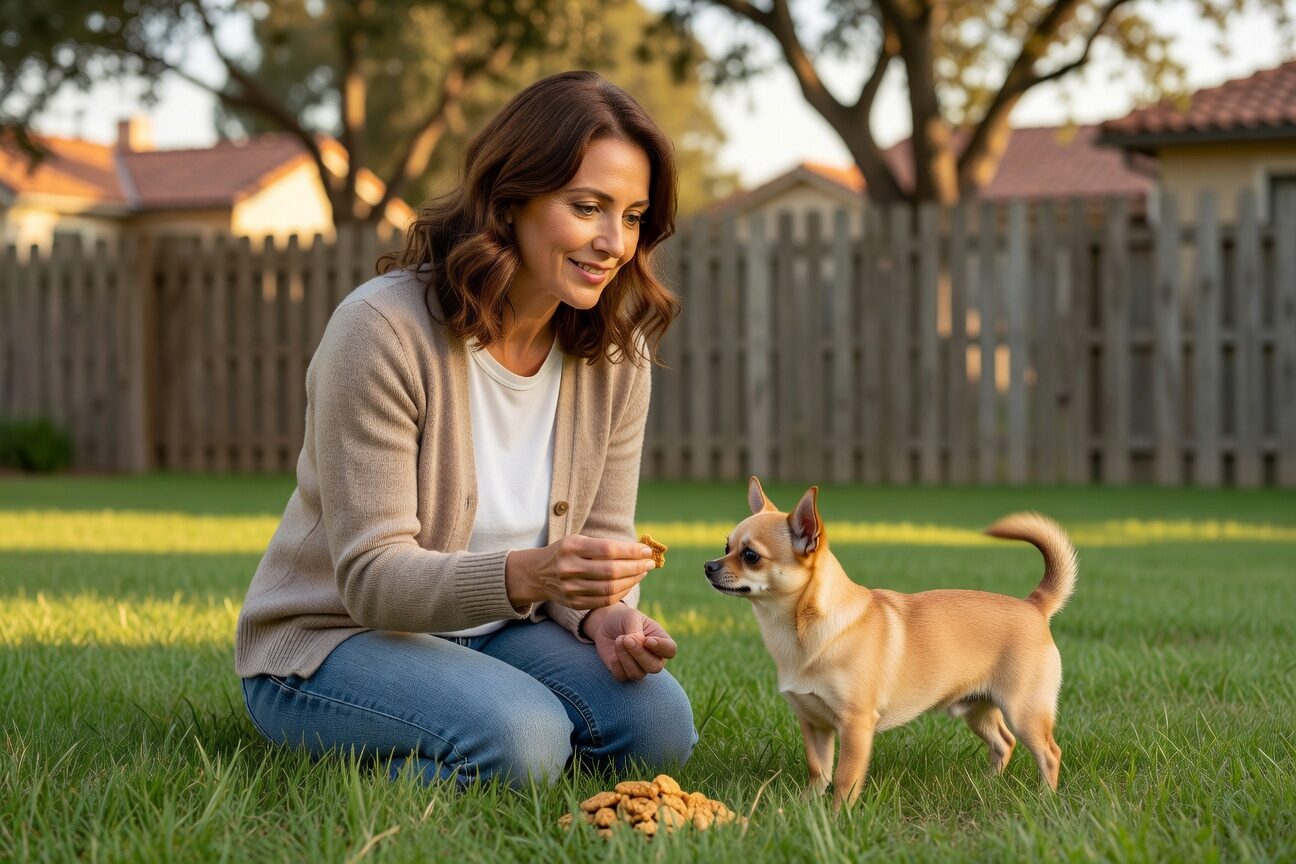
Food, toys, beds, the owner's lap. The intervention is desensitization to approach during high-value activities, paired with high-value treats delivered from a distance. The 2014 work by Jacobs and colleagues in Applied Animal Behaviour Science documents the protocol. What does not work: taking the resource away to "show who is in charge."
3. Nipping and Biting
The full differential lives in the companion chihuahua nipping and biting piece; the short version is that nipping is communication, the four causes are fear, pain, frustration, and developmental, and the intervention depends on which.
4. Separation Anxiety
The full protocol is in the companion four things to do when your chihuahua is stressed piece. The short version: graduated absences below the distress threshold, a defended safe spot, environmental load reduction.
5. House-Training Failures
Toy breeds often take longer to house-train than larger breeds. The 2018 study by Hsu and Sun, in Companion Animal Practice, attributes this to the smaller bladder volume and the weather-tolerance constraints. The intervention is short, frequent outdoor trips on a fixed schedule, paired with high-value reinforcement at the moment of elimination outside.
6. Reactivity on Lead
Lunging, barking, fixating on other dogs or people while on the lead. The intervention is a Y-front harness, six-foot lead, threshold-based desensitization, and consistent counter-conditioning with high-value treats. The companion walking piece covers the equipment and pace; the reactive-walking framework lives in Companion Animal Psychology's reactive-dog reference.
7. Jumping on People
A four-pound dog jumping is, in scale terms, what a forty-pound dog jumping would be on a person twice your size. The intervention is the same: ignore the jumping (no eye contact, no touch, no voice), reward four-on-the-floor with attention.
8. Excessive Submissive Urination
Common in fearful or under-socialized chihuahuas. The intervention is to lower the arousal of greetings: enter quietly, ignore the dog for the first thirty seconds, do not lean over the dog, and reward calm with calm.
9. Begging at the Table
The companion safe foods piece covers the calorie math. The behavioral intervention is to feed the dog before the household meal, in a separate room with a snuffle mat or puzzle, and to stop reinforcing the behavior with table scraps.
10. "Stubborn" Refusal to Train
The word "stubborn" is the wrong frame. A dog who is not learning is, in the behavioral literature, a dog who is not finding the reinforcement valuable enough or the training environment quiet enough. The intervention is higher-value treats and shorter, lower-distraction sessions. Positive-reinforcement training research consistently outperforms aversive methods in toy breeds.
What to Do This Week
Pick one behavior. Run one intervention. Five minutes a day, two sessions, for two weeks. The behavioral effect is observable in most cases by the end of week one.
For more evidence-based training, browse the Training desk or subscribe for the next dispatch.
Gear That Works backpack
Harness (Not Collar)
A step-in harness is safer and more comfortable.
Lightweight Leash
4–6 feet gives freedom without losing control.
Treat Pouch
Keep rewards accessible and distraction-free.
ID Tag & Microchip
Always be prepared in case of separation.
Trainer Tip: Success on walks starts with reading your Chihuahua's signals and respecting their pace.
Was this guide helpful?
Was this guide helpful? Save it for later or share with a fellow Chi parent.
favorite