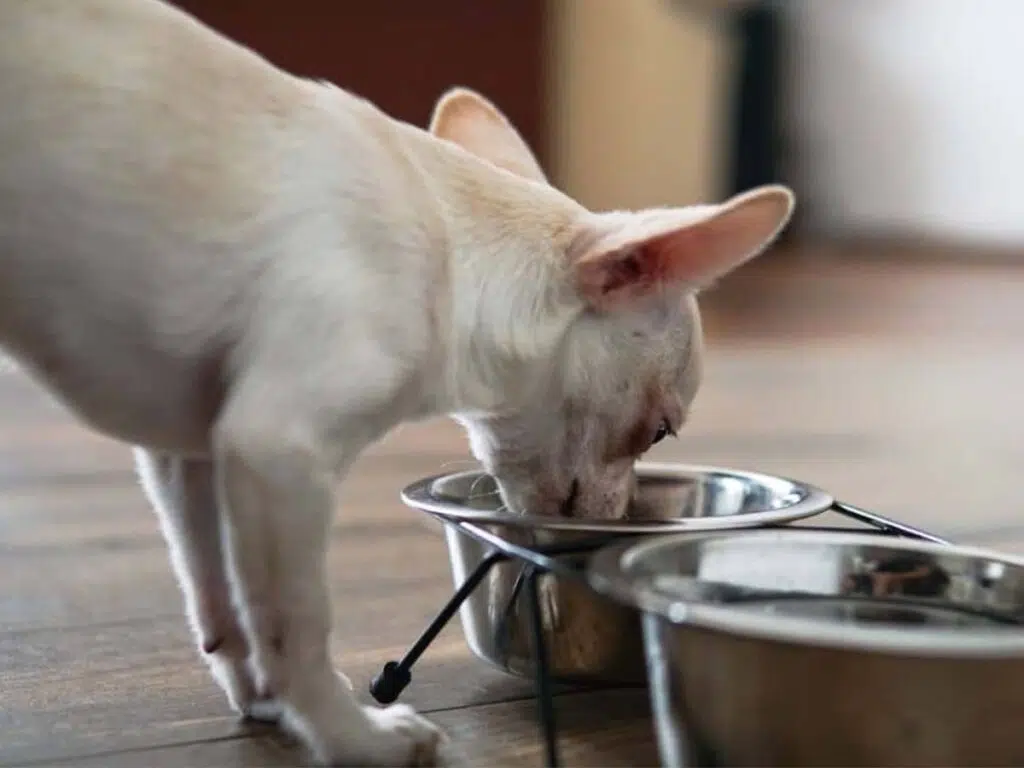


How can you tell if your chihuahua has a food allergy, and what do you do about it? In short: true food allergies in dogs present mostly as chronic skin issues (itching, ear infections, sometimes GI signs), and the only reliable diagnostic is a structured elimination diet trial. The work is methodical and unglamorous; the shortcuts (over-the-counter blood tests, switching brands at random) tend to delay the diagnosis by months.
I am going to walk through what food allergies actually look like in a chihuahua, what the diagnostic process is, and the practical steps for the next eight weeks if your dog is itching.
What food allergies actually look like
The clinical picture in dogs is most often skin-driven, not stomach-driven. Common signs:

- Persistent itching, especially around the face, paws, ears, armpits, and groin.
- Recurrent ear infections, especially yeast.
- Hot spots, repeated bacterial skin infections (pyoderma).
- GI signs in some dogs: chronic loose stool, more than three bowel movements a day, occasional vomiting.
- Symptoms that are non-seasonal and persistent, rather than seasonal and intermittent.
The seasonal pattern is the key differentiator from environmental allergies (atopic dermatitis), which spike in spring and fall. A dog who is itchy year-round is more likely to have a food component; a dog who is itchy in May and October is more likely environmental. Many dogs have both, which is part of why the diagnostic process is structured. A more detailed itch primer walks through the differential.
Why blood tests do not, on the available evidence, work
The over-the-counter "food allergy panels" advertised online are not, in the published veterinary literature, accurate. Studies by Mueller and colleagues (2016) and Bernstein and colleagues (2019) both found poor correlation between serum or saliva food-allergy tests and actual food challenge results. The tests return many false positives and miss true positives.
The current standard of care, endorsed by the American College of Veterinary Dermatology, is the elimination diet trial.

The elimination diet, in practice
A correctly run elimination diet trial takes eight to twelve weeks and follows a tight protocol. Done casually, it does not work; this is where most home attempts fail.
- Pick the right diet. Either a veterinary hydrolyzed protein diet (where the proteins are broken down to a size the immune system does not recognize) or a strict novel-protein diet (a protein and carbohydrate the dog has never eaten, e.g., kangaroo and oat). Your veterinarian picks the diet; pet-store "limited ingredient" diets often have cross-contamination and are not, in the published literature, reliable for an elimination trial.
- Feed only that. No treats, no chews, no flavored medications, no human foods, no scraps. The usual safe-foods list does not apply during the trial; a single small treat of the wrong protein resets the clock.
- Hold for eight weeks. Most dogs improve in weeks four to eight. If improvement is partial, your vet may extend to twelve weeks.
- Re-challenge. If symptoms have resolved, reintroduce the original diet. If symptoms return within two weeks, the diagnosis is confirmed.
- Identify the trigger. Once confirmed, your vet can systematically reintroduce single proteins to identify which one is responsible, if you want to feed something other than the trial diet long-term.
The most common mistake is "I tried a salmon diet for two weeks and it didn’t work." Two weeks is too short, and the dog often had salmon in earlier foods. The trial has to be the right diet, fed strictly, for the right duration.
When to start the conversation
If your chihuahua has been itchy or had recurrent ear infections for more than three months, please book a vet appointment. The work-up usually includes a skin scrape (to rule out parasites and infection), a fungal culture if needed, and the start of the elimination trial. The common health issues list covers other dermatologic differentials; not everything is allergy.
A note on cost: a hydrolyzed-protein diet is more expensive than a regular small-breed kibble, sometimes substantially. The vet conversation usually includes a frank discussion of the price difference and whether a strict novel-protein diet is more financially sustainable for a long-term feeding plan.
Environmental allergies and flea allergy, briefly
A few related differentials worth keeping in mind, since the picture often overlaps. Atopic dermatitis (environmental allergies) is more common than food allergy in dogs and is treated differently, often with a combination of medicated baths, antihistamines or modern targeted medications (Apoquel, Cytopoint), and environmental management. Flea allergy dermatitis can be triggered by even a single bite in a sensitized dog and presents as a localized itchy rash, especially around the rump and tail base; year-round flea prevention is the standard answer.
A useful sequence in a chronically itchy chihuahua is to rule out flea allergy first (it is the cheapest and easiest to manage), then run the food elimination trial, then evaluate for atopic dermatitis if the picture remains. Skipping the flea step is a common shortcut that costs months. A reasonable bathing and skincare routine sits alongside the medical work-up.
The bottom line, in plain language
Food allergies in chihuahuas are not common in the absolute sense, but they are over-represented as a cause of chronic itch in dogs whose owners have been switching brands for a year. The path to a real answer is the elimination trial, run with your veterinarian, on the right diet, for the right duration. The shortcuts do not, on the available evidence, work.
If you are reading this with an itchy chihuahua at home, three small steps for this week: book a dermatology-focused vet visit; bring a written log of when the itching started and what you have tried; and stop adding new things to the diet between now and the visit. The cleaner the recent history, the faster the diagnosis.
Health at a Glance: What to Watch monitor_heart
| Condition | Key Signs | Prevention Tips |
|---|---|---|
| Dental Disease | Bad breath, tartar, red gums | Daily brushing, dental treats |
| Patellar Luxation | Limping, skipping, leg lifting | Weight control, avoid high jumps |
| Tracheal Collapse | Dry cough, gagging | Harness walking, avoid smoke |
| Heart Disease | Coughing, fatigue, fainting | Regular check-ups, heart-healthy diet |
| Hypoglycemia | Shaking, weakness, lethargy | Small, frequent meals |
Community Insights – FAQ help
help_outline When should I call my vet about a behavior change? expand_more
Sooner than feels reasonable. A change in appetite, energy, or routine that lasts more than 48 hours is worth a phone call, not a wait-and-see.
help_outline How often should a healthy adult chihuahua see the vet? expand_more
Once a year through age seven. Twice a year from eight on. Dental checks are part of every visit.
help_outline Do chihuahuas need different care than larger breeds? expand_more
Yes. Smaller medication dosing, more frequent dental work, and closer monitoring for tracheal and patellar issues are standard in toy-breed care.
Have a health question? Ask your question in the comments. We will bring it up with the vet team.
favorite